
4.9
From 1
to 5
Reviews
7083
Recommend
10 / 10
TrustScore
9.9 / 10
Cyril J
Verified Email
Under the Laurel Tree: Grieving Infertility with Saints Joachim and Anna
Under the Laurel Tree hit home for this reviewer, and on a number of levels. First, the author, Dr. Roccas speaks not only from her own trials of infertility, but for the many people with whom she has shared these trials, and they theirs with her. Thus the book is not merely one person's odyssey through heartache and struggle, but a reflection informed through research, study, conversation, a large dose of difficult but fruitful reflection. This book’s audience, however, is not just those who have faced, are facing, or will face the trauma of infertility, but for all those seeking how to address relatives and friends facing this rather strange loss of “what might have been.” Dr. Roccas’s lively writing goes through a few chapters addressing the usual themes, questions, and commonplaces about infertility, but moves beyond them to address how Christians, and for her especially, Orthodox Christians, can face this extended, frustrating reality with hope, faith, and love.
Second, while this text was clearly written to address the burdens and weights of infertility, it as well, whether or not intended by the author, has application to almost any struggle that one faces, especially in marriage, and how those involved can work through them. Frequently I was struck with the thought "this really speaks to X," in my own life.
Third, Dr. Roccas’s text hit home for me, as my wife and I began facing infertility more than 25 years ago, and it represented a long, difficult chapter in our lives and marriage, one that medicine certainly could not address (we got no answers to why we couldn't have children). Such a book would have been greatly appreciated then, and indeed, in reading it, it is appreciated now. Thus this was a brutally hard book to read, but one necessary for anyone going through the pain, uncertainty, and often hidden trials that infertility and childlessness bring (and there are many). And it was also one that helped me reflect on the course of the journey my wife and traveled in a very different light.
The last five chapters assumed for this reviewer easily the best parts of the book, an extended meditation and commentary on Joachim and Anna, the parents of the Blessed Virgin Mary, and their struggles with infertility and childlessness. Though rough reading--not because the writing is poor, indeed it is wonderful--in its grit and raw emotion, persistently the themes of hope, thanksgiving, and faith emerge, develop, and grow as we reflect on the lives of these the "ancestors of God." Even in the midst of not seeing God everywhere present and filling all things, we find nonetheless the Divine presence insinuating itself in the lives of Joachim and Anna, and by extension, the life of both the author and the reader.
I can only recommend this book highly.
Anne L
Verified Buyer
My Daily Orthodox Prayer Book: Classic Orthodox Prayers for Every Need
Beautiful prayerbook - it’s so well done!
Manuel r.
Very instructive
Heaven Meets Earth: Celebrating Pascha and the Twelve Feasts
Excelent a beautiful book, perfect por catechism and family learning.
 Originally Posted on Amazon
Bethany
Verified Email
Under the Laurel Tree: Grieving Infertility with Saints Joachim and Anna
I was so excited to get a review copy of this book because so many of my friends and loved ones have struggled with infertility and it's hard to know what to say and how to respond in a way that supports the faith we share and acknowledges the struggle of not conceiving. Roccas addresses the topic personally and faith-fully looking to the story of Joachim and Anna, the parents of Mary the mother of Jesus, as a framing story for the path so many couples travel. There are questions at the end of each chapter for a discussion group or reflection and a helpful appendix for people who want to support people walk the road of infertility.
Laura B
Verified Email
Under the Laurel Tree: Grieving Infertility with Saints Joachim and Anna
I’ve long wanted to know how to better understand and walk with couples experiencing infertility, and Nicole Roccas has provided a valuable guidebook. Using the story of Saints Anna and Joachim (the parents of Mary, the Mother of Christ), Roccas offers a fresh lens, a literal icon, of hope and consolation through which to view infertility and grief—both for those bearing the burden and those walking alongside them.
Roccas’ medical and psychological language around infertility and childlessness is clear, well-documented, and helpful, and her literary and theological perspective is likewise plainspoken, relatable, and rich. While her primary audience is men and women in the Greek Orthodox faith who are experiencing infertility (and they will be most familiar with the narrative), she provides spiritual perspective and language accessible to readers of any Christian faith tradition.
Through Anna and Joachim, her own story, and the voices of others experiencing infertility, Roccas has created a beautiful reading companion for those grieving childlessness, and simultaneously provided an instructive and insightful work for those of us who desire to better love and support them.
Lindsey M
Verified Email
Under the Laurel Tree: Grieving Infertility with Saints Joachim and Anna
“Under the Laurel Tree” by Dr. Nicole Roccas is for anyone who has experienced infertility AND anyone who knows and loves someone who has. (That’s just about everyone, actually!)
Infertility is a life-altering struggle that affects a sizable minority of couples, though it is rarely treated with the care and compassion it deserves. (One study actually concluded that women with infertility felt as anxious or depressed as those diagnosed with cancer, hypertension, or recovering from a heart attack!) But this is not just a female problem, as Dr. Roccas makes us aware in her book. Couples struggle, both the male and female, though male grief frequently goes completely unacknowledged. While most people understand and expect that a marriage undergoes significant strain after the death of a child, they might not realize that infertility often has a similar effect. With infertility, rather than the loss of a living child, couples experience the painful loss of hopes and dreams. Research has shown us that this kind of loss demands great attention and care from the couples themselves as well as their Priests, relatives, and therapists. Marital conflict is, understandably, a taboo topic in public and polite conversations. But unfortunately, this often means that couples who need help and wisdom don’t find it. Dr. Roccas’s “Under the Laurel Tree” is a carefully researched, beautifully written, Orthodox Christian response to marriages in this crisis.
By recounting the struggle, reconciliation, and sanctification of two ancient Saints, Joachim and Anna, “Under the Laurel Tree” provides couples with a realistic and healthy pattern for grieving. It invites readers to explore their own process with discussion questions at the end of each chapter, and it invites Priests and therapists to reflect upon their pastoral interactions with its appendix of resources for professionals. As an Orthodox Christian, I thought I loved Saints Joachim and Anna already, but Dr. Roccas truly breathed new life into their stories, deepening my connection to them ways I didn’t expect. For instance, I gained an appreciation for how remarkable and countercultural it was that the source text, the Protoevangelium of James, first portrays grief of St. Joachim, a man, and how important it is that we allow the men in our lives time and space to grieve in the ways that they need.
I was also immensely encouraged by Nicole’s honesty and good humor, as she recounts anecdotes from her own journey with infertility. She is the patient, knowledgeable, and wise friend that you hope for in a time of crisis. She comes alongside couples, gives them space to process their grief, and, ultimately, offers hope and the good news of the Gospel, even if some of it is hard news. In this book, you will not hear Dr. Roccas repeat the platitudes, misguided advice, and empty promises that infertile couples often hear from well-intentioned friends and family members. But, you will get a sense for how she and her husband Basil, and many other couples who were interviewed, have responded to unwelcome comments while keeping both their faith and sanity in tact.
I’ll close with a profound passage from one of the last chapters of the book, in which we reflect upon the thanksgiving of Sts. Joachim and Anna, who faithfully offered the gift of their child back to Christ by presenting her at the Temple in Jerusalem shortly after she was weaned. Nicole’s prose in these last chapters is just so golden, it’s hard to choose just one passage, and it’s worth re-reading, but here’s the one quote that struck my fancy, today anyway:
“We need a dark sky to see the stars, we need depth and shadow to see an image in relief, and maybe we need a little barrenness in the world to see with clarity the gift of life. It’s not easy for me to write these words—In fact, it is crushing. I frankly don’t like that God’s ways are often harder—not just higher—than my ways. But the possibility that barrenness can bear witness to God’s glory, and that maybe He even ordains some of us for this struggle, remains the single most excruciating and comforting thought I’ve had in all my years of infertility.”
Or maybe this one…
“Perhaps it all comes down to this: “Rejoice always, pray without ceasing, in everything give thanks; for this is the will of God in Christ Jesus for you” (1 Thess. 5:16). These words, to me, crystallize the whole journey of infertility: don’t stop praying—but don’t stop rejoicing, either. Prayer in one hand, thanksgiving in the other. If we can manage that, even faintly and brokenly and tearfully, we will— undoubtedly—bring new life into the world. It may not be the kind of life we anticipated, it may not be the kind of life our heart yearns for, but it is life—wholly and holy.”
Amen!
Michelle D
Verified Email
Under the Laurel Tree: Grieving Infertility with Saints Joachim and Anna
Author Nicole Roccas has done a great service to the Orthodox world—and beyond—by creating Under the Laurel Tree: Grieving Infertility with Saints Joachim and Anna. The premise of the book is a necessary one in so many ways. For one thing, speaking of infertility from an Orthodox perspective makes her work a rarity. More than that, focusing on the grieving process means that the work is fitting for a variety of audience members. In my experience, there are more books written about how an author waited on God and finally received children. While I think that Under the Laurel Tree would still appeal to people whose infertility ended with the birth of a child, I really value the book’s focus on the journey of walking with God through the grief of infertility—on the spiritual growth to be gained through the struggle of infertility—rather than on the idea that being “cured” is defined by becoming a parent. As Dr. Roccas eloquently states in one of the “golden lines” of the book: “Healing from the shame of infertility comes not when/if we finally get pregnant, but rather when we ultimately surrender to our full worth as men and women, children of the living God whose image we bear and whose love we can never escape.”
I also really enjoyed her in-depth look at the story of Joachim and Anna, as told in the second-century work The Protoevangelium of James. Dr. Roccas discusses the somewhat controversial nature of the source material (some in the Orthodox Church have questioned its authenticity, but the Church has drawn upon it heavily to design the feasts of the Virgin Mary that are celebrated during the Church Year). As Dr. Roccas explains—and I agree—even if there are any historical inaccuracies in the details, they do not diminish the value and authenticity of the emotional experience that The Protoevangelium portrays. Each chapter of the book’s main section begins with an excerpt from the story of Joachim and Anna. I found that the parts of the story that Dr. Roccas quotes were at times confusing, but her commentary helped to clarify what could be gleaned from the story even when the details were hard to understand for someone coming from our modern context.
Dr. Roccas expertly weaves humor into the book, so that I found it surprisingly funny despite the serious subject matter. Her writing style is so relatable and goes a long way toward making the reader feel understood and accepted for whatever feelings he or she may have experienced during infertility. That being said, I would recommend this book both for those who have experienced or are experiencing infertility, and for those who have not but wish to better understand the experience.
I am so thankful that this book is available now as a resource in the Orthodox world. I so enjoyed reading my review copy and am delighted to recommend it to others!
Sarah G
Verified Email
Under the Laurel Tree: Grieving Infertility with Saints Joachim and Anna
As one who is walking alongside friends and family who are experiencing infertility, I am so deeply glad to have read this beautifully written and thoughtful book. Following the story of Joachim and Anna, Dr. Roccas speaks both to those grieving and those who are seeking to support them in their journey. Of particular interest to me were the do's/don'ts when it comes to those in a supportive role; we just often don't know what to do/say, but so desperately wish to help. I feel more equipped now to be a listening, compassionate parishioner/sister/friend.
Phoebe F
Verified Email
Under the Laurel Tree: Grieving Infertility with Saints Joachim and Anna
Under the Laurel Tree is a gift. For all of us who long to be truly supportive to friends, family, and congregation members who suffer from infertility, Nicole Roccas has given us all the gift of sharing the grief of infertility that couples face and increasing our empathy. I read an advance copy of this book from Ancient Faith Press, and once I started reading I was done in two days. Nicole manages to traverse painful ground and deep theology while still writing a readable book that is useful for everyone, not just those who face the challenges of infertility.
By following the lives of Sts. Joachim and Anna, Nicole has also developed a hopeful and life-giving framework for couples to turn to when facing infertility. She frankly (and sometimes humorously) points out the pain that can be caused by the words of otherwise well-intentioned loved ones (I’m guilty, more than once, of telling someone facing infertility “don’t stress,” or wondering why a couple does not consider adoption). At the same time, she writes about living in the space of forgiveness and understanding towards those whose words and actions, while sometimes hurtful and embarrassing, also carry within them love and hope.
Most eye-opening for me was Nicole’s request to a friend who had recently given birth to a baby. Her friend asked her how she could be supportive, and Nicole told her to continue to “hope with her.” I learned that urging couples facing infertility to “accept” their situation is not helpful, but can lead to more grief, as if we’ve given up. I’ve resolved to hope with my friends and pray for them.
I also found this book helpful to my own marriage. Nicole points out that the challenges infertile couples face are closer to those faced by empty nesters than by couples their own age. These challenges relate to finding a common purpose in the absence of children, and in this the story of Sts. Joachim and Anna are a model for all married couples.
This isn’t just a book about infertility. It is a book about marriage, grief, friendship, ministry and hope. Nicole’s willingness to share her and other couples’ experiences is truly a gift for all of us.
Emily
Verified Email
Under the Laurel Tree: Grieving Infertility with Saints Joachim and Anna
“...healing from the shame of infertility comes not when/if we finally get pregnant, but rather when we ultimately surrender to our full worth as men and women, children of the living God whose image we bear and whole love we can never escape.” Pg 209 Under the Laurel Tree. This quote comes from the very last sentence in the Epilogue. This is the sentence that I was waiting to hear throughout the entirety of the book. In fact, I was really hoping when I chose to read this book, that everything would begin from this point. I understand that with great loss comes great grieving. But it would be toxic if we dwell in our grief and not learn the process of healing. Unfortunately, this is not the book’s focus. There is no guidance to walk us through the path of healing while dealing with infertility, we’re just supposed to do it. Instead, what we get is the raw, bitter emotions of someone in the midst of a very painful experience in life. While I understand how it is important to be able to be candid and honest with feelings, in a book that promises comfort in the midst of infertility, it feels like bitter thoughts are more provoked than they are tamed.
While the book is geared towards women dealing with infertility, there are many aspects that apply to married couples in many different situations. “..what I firmly believe is the single biggest predictor of marital satisfaction in infertility, is the ability to create and maintain a shared sense of purpose that doesn’t rely solely on children.” YES! This is also so very, very important for couples that do have children. The lack of/abundance of children is not going to save our marriages, it is the uniting as one and living as a couple, with the purpose of living in holiness.
There were also misunderstood sufferings projected. I almost wish this book had been written by someone in their 60’s or more who has run the race of infertility and has the ability to calmly look back and reflect on the process. Or even co-written with a women with no children and a woman with many. The chapter on Anger proves my point. The author comes from the point that the handmaiden is rude, almost evil and that Anna has every right to send her out. That’s not how I see the scene. I see the handmaiden, at a loss for how to comfort her mistress and doing the best that she can with a prized possession. A love offering, tossed like garbage by her mistress. Just because a person doesn’t know how to respond and accidentally says the wrong thing doesn’t make them an evil person, they had good intentions, they should be given the benefit of the doubt. I feel it is also presumptuous to say that infertile women are the only subjects of rude and judgmental comments. Yes, even those dealing with a terminal illness, people do tell them to just pray more. People with depression are told they are disobeying because they are not ‘being anxious in nothing.’ I too dread going out in public for fear of wants taunts I will receive from strangers. Anywhere from, “Wow, you know what causes that.’ ‘Don’t you guys have any other hobbies? You should get cable’ to loud obnoxious comments on our family size said well within our hearing. Even shouts of directions on the need to use birth control. Doctors shaming me for wanting to allow God’s will and how irresponsible I’m being. Crying because I don’t know how to tell my family I expecting because they feel like I had enough kids 3 kids ago. Even going to church and people feeling like they can discuss intimate parts of my love life with my husband. I think the one huge things we have in common is Get Out of My Womb! But I also realize that people are people, and we are all sinful beings and I can expect nothing more from well intended people that say harmful things.
‘I was too worried about the biological clock to consider that there was a ‘prayer-ological’ one as well. Evidently, some prayer requests have a shelf life.’ While I don’t agree with prayer having a shelf life, I do feel that there comes a point when we learn contentment. Philippians 4:11-13 Paul points out that is doesn’t matter his life circumstances, in want/need, well fed/hungry, etc that he has learned to be content. That doesn’t mean he’s happy about it, that he’s not actively praying for his desires, but he is content, which is far deeper. There are days I cannot seem to bear the burden I was given as a mom, I don’t want to do the job, I don’t like not having money or clothes or stressing about having enough food. But I am reminded to be content, whether suffering or not. That is my purpose. My wish is that there can be a continuation of the story, one that guides through a healing process and promotes a life of being content in Christ, praising God no matter what.
I received an advanced copy of this book for an honest review.
Caitlin R
Verified Email
Spyridon's Shoes
this title to all families who enjoy read alouds, “little ears”-friendly adventures
& opportunities to know better a remarkable Saint of the Church.
& opportunities to know better a remarkable Saint of the Church.
Rebekah B
Verified Email
Orthodoxy and Heterodoxy: Finding the Way to Christ in a Complicated Religious Landscape (2017 edition)
Excellent information and done without bashing others which is extremely important to me. I would highly recommend this book!!
Zachary J
Verified Buyer
Mwangi: A Young African Boy’s Journey of Faith
A nice story that talks about hope coming to a remote village.
Christina C
Verified Buyer
Children’s Orthodox Prayer Book
This prayer book arrived in time for my 7 year old Godson’s birthday. The book has a nice hard cover which will surely protect the pages from little hands. I like the way this book is set up, on the left side of the page is an explanation of what is happening and why we say certain prayers.
I’ll be getting copies for my other godchildren.
I’ll be getting copies for my other godchildren.
Mary B
Verified Buyer
I Live Again: A Memoir of Ileana, Princess of Romania and Archduchess of Austria
I have not yet finished I Live Again, but I am engrossed in it. Princess Ileana led a very interesting life, and through her prose I am experiencing life in a time and a place I had not thought much about before. I often tell my husband stories from her life over dinner because they are too good to keep to myself. I am grateful that she wrote this beautiful memoir.
David
Verified Buyer
2020 Icon Calendar, Icons of Christ our Lord (Julian version, old calendar)
Love the icons!
Zachary J
Verified Buyer
Snuggles, The Bunny Who Helped Me Find God
Quality. And cute in a meaningful way.
Shanda
Verified Email
Words for Our Time: The Spiritual Words of Matthew the Poor
This book is an amazing opportunity to delve deeper into our faith. The theology on how to live an everyday life moving closer toward God is presented in an easy to understand way. His love for the audience is palpable in his words. I am thankful to have access to incredible works such as this to make my walk with Christ stronger.
The audiobook was read well and easily heard at up to 2x's speed, though I did find the material too rich to listen at that speed.
The audiobook was read well and easily heard at up to 2x's speed, though I did find the material too rich to listen at that speed.
Christina
Verified Buyer
Songs of Praise: A Psalter Devotional for Orthodox Women
Love it
Robyn H
Verified Email
Sasha and the Dragon
I love this book. The illustrations are wonderful and the story is excellent. I agree with the other two reviews from Rachel S and Nic H. Know your child's capacity. My children are often very sensitive and my daughter didn't like the book much, but my son did. I think he liked that it was natural to be afraid, but the book shows to trust in God and He will help you.
About Ancient Faith Store
At Ancient Faith Store, we are dedicated to providing a rich collection of resources that celebrate and preserve the Orthodox Christian faith. Our mission is to help individuals and families grow in their spiritual journey through a wide array of products, including books, music, icons, and gifts that reflect the beauty and depth of Orthodox Christianity.
We believe that faith is a journey, and we strive to accompany you every step of the way with materials that inspire, educate, and uplift. Whether you're looking for a profound theological work, a children’s book that teaches the values of our faith, or a beautifully crafted icon to adorn your home, you'll find it here.
Our commitment to quality and authenticity means that every item is carefully selected to ensure it aligns with the teachings of the Church. We are passionate about fostering a vibrant Orthodox community, and we invite you to explore our store to find the tools that will enrich your spiritual life and connect you more deeply to the traditions of our faith. Thank you for being a part of our journey.
Visit Website
We believe that faith is a journey, and we strive to accompany you every step of the way with materials that inspire, educate, and uplift. Whether you're looking for a profound theological work, a children’s book that teaches the values of our faith, or a beautifully crafted icon to adorn your home, you'll find it here.
Our commitment to quality and authenticity means that every item is carefully selected to ensure it aligns with the teachings of the Church. We are passionate about fostering a vibrant Orthodox community, and we invite you to explore our store to find the tools that will enrich your spiritual life and connect you more deeply to the traditions of our faith. Thank you for being a part of our journey.
Ancient Faith Store is a Verified Merchant
Questions? Contact Us
support@ancientfaith.com
800-967-7377
Mon-Fri (9am-5pm CST)
Top Rated Products
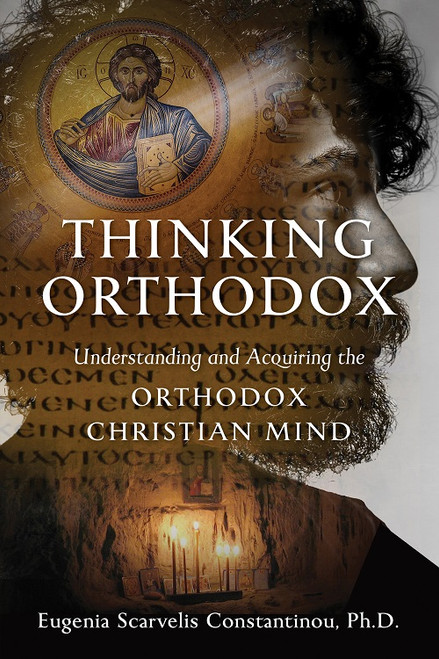
|
Thinking Orthodox: Unders... |
|
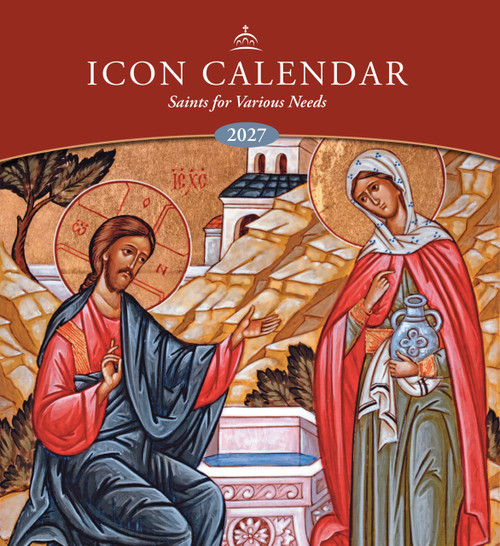
|
2027 Icon Calendar: Saint... |
|
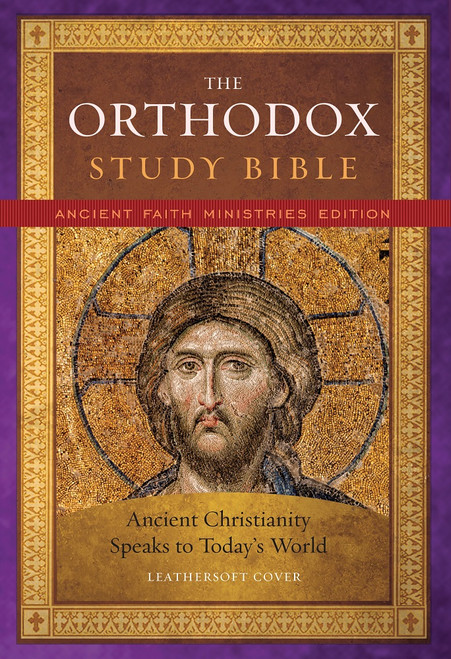
|
The Orthodox Study Bible,... |
|
Facebook
RaveCapture Commitment
RaveCapture transforms how businesses collect and showcase customer experiences. We take authenticity seriously and only allow 100% verified buyer reviews and UGC.
Guarantee
- RaveCapture Companies Are Held Accountable
- All Reviews Are Verified Customers
- Negative Reviews Can Never Be Deleted
With RaveCapture, you’re not just managing a reputation — you’re sharing the voice of your raving fans.
