
4.9
From 1
to 5
Reviews
7083
Recommend
10 / 10
TrustScore
9.9 / 10
Stephanie
A book to which I see myself returning tO
Time and Despondency: Regaining the Present in Faith and Life
The first pages of Kathleen Norris's Acedia and Me were freshly turned when Time and Despondency by Nicole Roccas came to me as an advanced reader's copy. The whole idea of acedia or despondency was new to me. I picked up one book, then the other, astonished to discover pieces of myself that heretofore had seemed to be unrelated and enigmatic emerging as characteristics of acedia/despondency. While Norris approaches the topic wrapped in memoir, Roccas approaches the theme through a series of reflections based on the thesis: 'Despondency ' in all its complexity and cunningness ' arises from a relationship to time that has become broken.' This may sound a bit abstract, but Roccas does a masterful job putting skin on this complex subject with poignant, self-revelatory reflections along the way, and she offers very practical 'stepping stones' as a 'path out of despondency' in part two of her book. Time and Despondency is a book to which I see myself returning time and again. Highly recommended!
 Originally Posted on Amazon
Geoffrey Ready
If you've ever been sad and told to pray abo
Time and Despondency: Regaining the Present in Faith and Life
What more can I say than that this book represents timeless wisdom delivered at an opportune time?
In my pastoral and counselling work with people, especially with young adults--and, truth be told, at the heart of my own life--I am confronted on a daily basis with the frustration and despair of our age. We are imprisoned in lives bereft of purpose, moving from anxious moment to anxious moment, haunted by the past, worried about the future. So many of us end up simply drifting through life, only vaguely aware there could be something more to it all, and consumed by the guilt that we are not actually doing anything about it. When into this toxic mix we mindlessly pour the prescriptions of faith--directives to trust in God, to pray, to turn from vices to virtues--these just end up weighing us down all the more; they become yet more things we never quite get around to doing.
What Dr Nicole Roccas has done in this book is remarkable. She cuts through our modern illusions and shows the perennial character of so many of our contemporary paradoxes and problems. Drawing on the wisdom of early church fathers and Orthodox Christian tradition, she guides us into profoundly practical advice to recover something that is at once awe-inspiring and simple, the "kairos" opportunity of the present moment, our capacity to lean into the "now" and respond fully to God, and thereby becoming fulfilled (and fully-filled) human beings.
If you've ever been sad and been told to pray about it, but didn't know where to begin--if you've ever struggled or suffered and been told to have faith, but didn't think you had the capacity to conjure that up--if you've ever wondered how Christianity can really represent the transformation of sorrow into joy and darkness into light, then this book may well change your life.
I highly recommend this book to all--to pastors, parents and counsellors working with people who are struggling with anxiety and despondency, to small groups looking for a highly readable book for edifying study and spiritual growth, to anyone affected by the malaise of human life not lived to its potential. Thank you, Dr Roccas, for making such a practical and helpful book available to us all.
Originally Posted on Amazon
Fr. Deacon Joel Henderson
Time and Despondency: Regaining the Present in Faith and Life
Dr. Nicole Roccas's book entitled 'Time and Despondency: Regaining the Present in Faith and Life' addresses the issue of despondency (acedia) and its effects in a practical way that provokes readers to reflect on their own lives and to turn to the Risen Christ in the present moment. By making use of personal reflections and those of various writers, theologians and ascetics, she clearly defines the problem of despondency and provides new perspectives on our relationship to time, and a path to healing. This book is a must read for those involved in pastoral care and Christians who desire to grow spiritually by overcoming this illness that is all too common in our day.
Originally Posted on Amazon
Brandon Baca
I thoroughly enjoyed this book
Time and Despondency: Regaining the Present in Faith and Life
Dr. Roccas's book is a thoughtful insight into the reality of despondency in our lives, and gives practical advice on how to conquer it with simple, daily habits and remedies. I thoroughly enjoyed this book.
Originally Posted on Amazon
Diana Carter
Practical & profound as well as a delight to r
Time and Despondency: Regaining the Present in Faith and Life
Nicole has written a book that is both practical and profound as well as a delight to read. It contains real insights into the soul-sickness of despondency and ways to deal with it. I particularly loved her discussion on the nature of time, the part it plays in despondency and God's purpose for it in the lives of His creatures. A wonderful book! Check it out!
Originally Posted on Amazon
Wes Jackson
Wonderful, fresh resource
Time and Despondency: Regaining the Present in Faith and Life
For those already familiar with the works of Christine Valters Paintner, with Fr. Richard Rohr, Richard Foster, and Martin Buber, Dr. Roccas provides a refreshing, Orthodox contribution to the conversation around spiritual disciplines, mindfulness, and the cultivation of I-Thou relationships and communities.
Roccas' book is a wonderful, fresh resource on the topic of spiritual disciplines for Christians'specifically relating to the peculiar 'sin' of despondency. Drawing on the fourth-century writings of Evagrius Ponticus, one of the desert fathers of Egypt, Roccas connects this forgotten quality of slothful apathy or hopeless uncaring with many contemporary anxieties, worries, and our own inability to be present, mindful, and in-the-moment with others. She is careful to distinguish the quality of despondency from clinical depression'a helpful caveat. While Roccas welcomes greater dialogue between spiritual mentors and the mental-health community, her primary focus in the book is identifying'often with personal, relatable examples'the common fears and anxieties we often have related to time: That we do not have enough of it, that time will eventually take away loved ones, will take away the moments we want to savor, that time is often a burden, filling our lives with seemingly meaningless tasks, interactions, and empty transitions while we wait for the next thing.
According to Roccass, the despondent person longs to be anywhere but in the moment. She tackles this question: What is it that makes us so ill at ease with these present moments? What makes us seek minutes (hours?) of distraction (social media, television, doing-anything-except-what-I-need-to-be-doing, etc.) to fill some of void of time? Why is it that we can get caught in these vicious cycles of filling voids with meaningless distractions, followed by anxiety and shame-spirals that we aren't using our time well, followed by over-compensating resolutions to get things done and be more effective, all while effectively sabotaging some of our closest relationships?
Roccas shows that this kind of despondency is far from a modern problem, and she draws on a wealth of Orthodox theologians as well as other liturgically-minded writers to provide helpful perspectives and practices for embracing the present, for embracing time as moments of life and healing rather than meaningless lapses of hours in between past and future expectations.
She provides both theological underpinnings for why we should re-think our assumptions about time'primarily, that we need to re-think our own sense of control over our own time'and practical ways of experiencing God's grace and His eternity in time. Roccas' book is not only an accessible, personable theological reflection on this problem of uncaring apathy, slothfulness, or a kind of anxious hopelessness about how we use our time, she provides helpful steps for getting out of these vicious cycles and 'funks.' The book provides a discussion guide at the end, making it quiet useful for personal devotion and reflection as well as for group participation.
Roccas' writing blends historical and academic knowledge and distills it for practical application in way that's incredibly relational. The book has the sting of truth--like good medicine and good literature. I was often able to relate to the personal examples shared by Roccas'the frustrations with other people and circumstances taking up 'too much' of my important such that it causes me to be unkind, unneighborly and isolating.
The way I understood the book's argument was that time, and how we view it / use it, is one of the most common ways or means that we express what we believe and what we find important. Another way we express what we believe to be important is through money'how we spend it. I personally think the world is divided between two kinds of people: Those who think time is more important, and those who think money is more important. I know plenty of people who will inconvenience themselves to no end in order to save money.
I am not that person'I would gladly pay whatever is left in my dwindling piggy-bank in order to save on time.
If you are that kind of person, this book is for you.
We all desperately need help'especially as Christians'shifting from our natural assumptions of scarcity (that we don't have enough, that we aren't worth enough, important enough, etc.) to a faith-filled reality of abundance and provision (God provides'and He always provides enough). But the expression of our faith'or lack thereof'expresses itself differently. For me, time is one of the key places where my faith is challenged: I don't think I'll have enough of it. I don't have enough time to love my neighbor, my family, and I don't have enough time to pray or to go to church or to be inconvenienced by a stranger. I operate out of 'time scarcity.'
Roccas' book provides a helpful antidote to that kind of scarcity thinking. In essence, her answer and the answer of Evagrius Ponticus, is that the real issue is whether or not we see time as a means of participating in God's gracious, ever-present eternity, and Roccas is honest that we often don't. Isn't eternity just something we're waiting for, far off in the future? Or when we die? Unintentionally (and depending on our theological backgrounds), we can often live our lives waiting for the next thing, treating life as a count-down to death and the hereafter. Unintentionally, we can often live out a theology of despondency'wishing to be anywhere (heaven) but here and now. So what do we do with the here and now while we wait? We spend the time planning (worrying?) and asserting our control over the 'meaningless' present.
Rocass challenges that these theological despondency assumptions with reflections on how Christ's Incarnation relates to time: God actually blessed time and wants us to experience His presence, His healing, and His resurrection life in and through time. Roccas explains how the delays, the inconveniences, the interruptions of life are opportunities to turn-toward God'that God is in the midst of these uncomfortable, present moments. These moments when we feel weak, powerless, frustrated, and caught off-guard'these moments of (perhaps unwanted) vulnerability are actually where God's eternity, healing, provision, and resurrection are most open to us.
Prayer is how'according to Roccas'we can experience God in these inconvenient, vulnerable times. Prayer is both an act and a way of being for Roccas'a living alternative ('repentant' view) to the despondent view of time.
One of the ideas that I was continually reminded of through reading the book was from C.S. Lewis' The Four Loves: That we often fear that if we give all of our love to God, He will jealously forbid all of our other loves for family, for hobbies, for favorite places, friends, and foods, but the reality is that often what happens is that God takes these smaller loves that are given to Him and gives them back to us in renewed way. Loving God with all our heart, soul, mind, and strength'and experiencing God's love for us'actually allows us to love our family, neighbors and friends better. This is paradoxical thinking. It's ' 'abundance' thinking rather than 'scarcity' thinking.
Roccas demonstrates the same truth as it applies to time: She address the fear and the lethargy when it comes to giving our time to God in prayer, in worship, in communion with other believers (Won't He take away my time from other important things?) and shows how when we surrender our time to God (even in small ways), he actually gives back the time such that we actually use and experience our time in better, more life-giving ways.
Roccas has several different practical suggestions for how to pray and be prayerful in small ways'ways of giving thanks, recalling Scripture verses, and using humor as techniques to keep us connected and present to God, who is always available to us. Her techniques are, as she says, counterintuitive ways that keep our dispositions open to God's presence and provision, as well as keep us open and welcoming to our neighbors and circumstances. These techniques (or disciplines) work against the ego-centric tendency to close ourselves off, isolate, or withhold from relationships in order to protect ourselves and our pride. We shouldn't be afraid to start small, to engage in these little practices of prayer (however insignificant or less-than-lofty they may appear) as ways of staying open to God's refreshing mercy. Never lose hope to start again, and again, Roccas encourages.
One of the main points that Roccas draws out is that what our despondent culture so desperately needs is not more information, not more analysis, not (primarily) more planning, but rather to have a belief that the present'the here and now'is worth embracing in all of its mundane, weak, inconvenient, tedious ordinariness, because that is precisely where God chooses to engage, and also to possess the tools for actually engaging is that mindful, being-present, fully-caring way. From that fully-caring practice of presence we will know better how to love God and our neighbors.
This book is an excellent resource that will continue to remind me of how to practice the faith-filled, presence-filled, hope-filled alternative to the temptations of a despondent, distracted view of time. An excellent, wise, and encouraging read!
Originally Posted on Amazon
R. Holet
Help and Hope for those who Struggle
Time and Despondency: Regaining the Present in Faith and Life
Book Review - Time and Despondency
Receiving an advance copy of the Time and Despondency, Regaining the Present in Faith and Life, I've hoped to write something helpful or meaningful for potential readers. But, I've felt a bit uneasy, and in the familiar malaise that my fellow life travelers on the dark ship of despondency would recognize, I've procrastinated. But the process of reading the book has been therapeutic for me ' by just allowing me to acknowledge my depressive thought patterns and behaviors that bubble up when the weight of despondency burdens the soul. So sad it is that, in modern/post-modern life, this despondent way of living, thinking and relating is so common and seemingly normal. Dr. Nicole Roccas, by addressing this psychological and spiritual state through the lens of Eastern Christian spirituality, lays a solid foundation for battling such oppressive inner forces.
Despite the heaviness of the topic, her writing flows elegantly and is deeply engaging ' it is conversational and at times even light hearted and she quickly goes far beyond a summary recitation of traditional spiritual texts. Her openness in using first person accounts of her life experiences gently walks that fine line that allows her personal experience to speak powerfully to the reader, while drawing her or him to better know his or her own parallel experience or thought process. For example, she affirms the value of using humor while recounting her own experience teaching students by using humor, and how so using its buoyancy eases the burden of her work, makes it more effective, and dispels despondency.
To write just on despondency would have been a helpful topic unto itself, but Dr. Roccas's insights tying despondency to time take the conversation in an unusual direction. She shares experiences we can all identify with. The frustrations of time that bracket daily life that she cites are steeped with meaning, helping the reader to connect time and despondency. She says, 'If we cannot live in the moment, we will not have learned how to live in an eternity.' An eternity of self-inflicted despondent boredom would truly be a Hell of our own making!
While Dr. Roccas begins her chapter on practical advice with the words, 'I'm the last person who should be writing a chapter on practical advice'' I have to disagree. Her suggestions, prefaced by more thoughtful explanation about the why of her advice, is a crowning touch to this work. Like the insights of the patristic elders she brings to us, she wants us to know that the theory must be lived in daily moments, and she provides useful ways to do just that ' in simple actions like giving thanks.
At first, when I saw the Discussion Questions at the end of the book, I pictured a church group sitting around and talking about their despondency, and I thought, 'Yeh, right.' But after reading the book, at least in this first pass, it seems that this sort of exercise might be quite therapeutic ' finding healing by taking the wraps off of our hidden self-deceptions, and find a trustworthy space were we might use this book's insights to make real strides in our spiritual race together. In the end, though, it will probably be in our own 'cells' that this demon will be fought, and defeated by the Risen Lord, present with us.
I would highly recommend Time and Despondency as a helpful and engaging companion and resource to spiritual growth. It won't be boring'
Originally Posted on Amazon
Elissa Bjeletich Davis
Highly Recommend this Excellent Book
Time and Despondency: Regaining the Present in Faith and Life
I find thinking about time really fascinating, so I have been a big fan of Dr. Nicole Roccas' podcast, Time Eternal, on Ancient Faith Radio since it began two years ago. When she announced that she'd be writing a book, I was very excited -- but when she said the topic was despondency, I thought, "well that's nice but it's probably not really for me." I have my struggles, but I didn't think they included despondency. I am a fairly optimistic person and have not much grappled with depression (she covers the difference and relationship between depression and despondency in the book.) Reading this book, however, has completely opened my eyes to the fact that my primary spiritual battle is actually despondency; I get these ambivalent feelings and they immobilize my spiritual life -- but I would never have called them despondency myself.
This book is really helpful because it describes despondency in a way that really brings it to life for me. It's such an old concept, and as Dr. Roccas points out, it is all mixed up with ideas about depression, which is a modern medical idea. Once I saw how she delineated and defined the two, I could begin to understand what despondency is -- and I saw with a start that not only have I struggled with it, but my husband has as well, and it's really the root of some problems we had been dealing with in our marriage! Funny enough, when I realized that this book was talking to some of the most important struggles in my life, I was so excited!
The good news is that this book didn't just help me diagnose my problem, but it actually continues to explain how to effectively fight despondency and offers a way to pray that will really work for those periods of despondency. I am so pleasantly surprised! I was reading this book because I love to think about time, and I accidentally stumbled into something I really needed. Of course, we Christians know that there accidents are rare, and that God probably dropped this book onto my path because it's what I needed now. I'm so glad He did.
So whether you know you struggle with despondency or not, you might want to take a look at this book. We are modern people in a modern world, and we don't always have a lot of understanding of the spiritual illnesses that have always plagued human beings. Dr. Nicole Roccas is a natural teacher. She takes a complex subject and articulates it in a clear way that we can all understand, helping us to see both the problem and its solution. I'm so grateful for this book, because I understand myself better and now I have a clear strategy for handling what has become my biggest spiritual challenge.
Originally Posted on Amazon
EWS
Read this hopeful, profound book!
Time and Despondency: Regaining the Present in Faith and Life
Plagued by despondency? In need of a spiritual tune-up? Read this hopeful, profound, beautifully written book! Having read a number of recent articles about acedia (or despondency) as the spiritual ailment that afflicts our distracted and self-focused culture, I was ready for another view of it--and for a spiritual tune-up and attitude adjustment--when I was asked to read Time and Despondency in return for an honest review. I read Time and Despondency: Regaining the Present in Faith and Life in one sitting, not aware of the hours that I passed fully absorbed in Dr. Roccas's insightful, engaging, and poignant reflections and practical counsel.
Pinpointing despondency as the spiritual sickness underlying "apathy, distraction, and despair" (p. 14), Dr. Roccas contends that it "arises from a relationship to time that has become broken" (p. 15). With warmth and honesty, she shares with readers personal experiences with the fruits of despondency and how these lurk in the dark corners of memory, worry, and daily life. In her reflections, Dr. Roccas takes readers on a journey to uncover despondency's roots in a distorted perception of time and to seek a corrective. Drawing on wisdom gleaned from the study of history, literature, and theology, especially Orthodox tradition and practice, Dr. Roccas makes the relationship between time and eternity--and God's love in each--accessible and compelling. "The entirety of God's message to man flows from that beginning--the beginning of time, yes, but that is simply another way of saying the beginning of when love became manifested as action. Out of that action, creation was born" (p. 46). In the second part of the book, Dr. Roccas places prayer in a new and compelling light as a prime remedy for individual flight from present despondency and for healing: "It is in prayer that we learn not only how to reoccupy the present, but more generally how to mark time" (p. 108) as we "nurture" our relationship to God by "turning" to him in prayer (p. 107).
Among the many uncomplicated, yet effective strategies Dr. Roccas offers for improving "our encounter with Christ" in His present (p. 173) through a cultivation of prayer(fulness), a few leaped from the pages as prescriptions I am now trying to follow to combat despondency's blight on my ability to appreciate God's presence in time and give thanks for His innumerable gifts (p. 140-145). I was not familiar with the Akathist Prayer of Thanksgiving, for example, but have already been enriched by reading it, just as I have surely also been enriched--and educated--by Dr. Roccas's profound, hopeful, and beautifully written book.
Originally Posted on Amazon
Fr. Bohdan Hladio
Time and Despondency - a wonderful book
Time and Despondency: Regaining the Present in Faith and Life
Who among us has not suffered from despondency, whether our own, or that of someone close to us? Time and Despondency is a welcome offering in regards to the despondency, depression, anxiety, and other related psychological and spiritual states which are ubiquitous in society today.
Dr. Roccas offers a well-constructed picture of the emotional and personal realities which can lead to despondency, and drawing upon the teachings of Eastern Orthodox and other Christian spiritual traditions, both ancient and contemporary, Dr. Roccas offers a vision of how the true Christian can effectively address these realities.
I found her words on despondency and prayer especially meaningful. After almost thirty years of pastoral ministry, I believe her observations in this regard are especially important, not just for Christians, and not just for those who are desponding, either.
Dr. Roccas' writing style is both serious and invigorating, certainly not dry and tedious. Her characterization of one particular type of prayer as 'sassy. . . quick, punchy, purposefully confrontational' (p. 114) is not something one often comes across in a fine work of spiritual depth! The mix of homespun common sense with deep spiritual insight is perhaps one of the greatest strengths of this book.
She does a fine job of merging both the 'theoretical' and the practical, astutely drawing parallels between the head and the heart with the mouth (what we say) and the hands (what we do). I was especially edified to note that Dr. Roccas addresses the issue of humour and playfulness from a spiritual perspective as well.
Dr. Roccas offers a message of hope to those battling despondency, and also offers excellent, beneficial, and wise counsel to those who are not. Simply put ' this book is for everyone.
Time and Despondency includes a valuable discussion guide with questions for consideration which will be of great help to those wishing to proceed more deeply into the adventure of encountering the Risen Christ in the present moment, whether personally or in a group study session.
Dr. Roccas has written a very important book, which will bring great spiritual benefit to all who read it.
Originally Posted on Amazon
Pamela Irwin
New book on despondency - highly recommended!
Time and Despondency: Regaining the Present in Faith and Life
I loved this book. I found the author's insights timely, relevant and spiritually edifying. I was especially impressed with the last chapter and the practical insights that she listed. So often when person is feeling despondent, it seems like nothing can be done about, that you just have to ride the wave and hope to start feeling better later. Nicole points out many small, practical things that can be done to help the reader. She begins her book with an explanation as to why she is interested in time and despondency. She recalls her sadness over the calendar and the fact that time moves quickly and she was already feeling the strain of time at age seven and a half! I can relate to this author! There are so many quotable quotes in this book that I cannot begin to list! Dr. Roccas states, 'Despondency is alternatively described as slackness of the soul. Like a belt that stretched with time, the soul grows loose with apathy and ceases to hold us up. From this kernel of disregard sprout restlessness, rumination, anxiety, despair, sadness, and distractibility-the common, albeit morose, bedfellows of despondency.' She backs up her points with insights from Evagarius, Alexander Schmenemann and Metropolitan Anthony Bloom, all known for their insights and mature judgement. I believe the reader will find inspiration and hope to keep fighting the battle with the 'noonday demon' (acedia) commonly called despondency. I know that this a book that I will return to again and again for help in waging the battle against despondency.
Originally Posted on Amazon
Joel Williams
Slaying the Despondency Dragon
Time and Despondency: Regaining the Present in Faith and Life
Time and Despondency is a gentle and insightful read that provides insights into the reader's often unknown reasons for living on the margins of life, rather than seeking to thrive heart and soul in the joy of deeper Christian existence. It is not a book that is merely intended for the shelf, but should serve as a constant companion fortifying the reader with practical resources to conquer despondency's subtle and steady degradation of the human person. Dr. Nicole Roccas unmasks the dragon known as despondency by casting it against the grid of time and all of the permutations of contemplating time as it orders human activity. Time and Despondency equips readers to be time-traveling soldiers, journeying onward through the insidious grasp of despondency toward an eternal sanctity.
This book belongs stationed on the nightstand, or to be taken on the road either by purse, briefcase or backpack.
The work lends itself to all the possibilities of group dynamics, large or small, traditional or non-traditional, institutional or private. Be informed though, that the book has a built- in latent 're-read' trigger deeply embedded.
I felt as though the author had been 'reading my mail' and wrote it as a personal favor just for me. I look forward to re-reading it on a regular basis and can highly recommend it.
Originally Posted on Amazon
Sarah Bereza
Wise and practical book
Time and Despondency: Regaining the Present in Faith and Life
I was so excited to get a review copy of Time and Despondency because that meant I didn't have until January to read it :) I thoroughly enjoyed reading it and learned a lot about myself, human nature, and how the present moment is where we can know Christ and his Resurrection.
Despondency might seem like a big, abstract subject, but Nicole makes it concrete and personal through her abundant (often brilliant) metaphors and warm writing style.
She also gives many practical, even lighthearted, suggestions to help us get out of the prison of despondency and live in the present of our everyday lives.
It's a wonderful book, and I highly recommend it!
P.S. Time and Despondency also includes a discussion guide and the questions are illuminating'the kinds of questions that will have your small group or Bible study really engaged with each other, or that will give you a lot to journal about.
Originally Posted on Amazon
Fr. T
Verified Buyer
Time and Despondency: Regaining the Present in Faith and Life
As a parish priest, university professor, podcaster, doctoral student and parent of three, the topic of time is often at the epicentre of my daily experience. For all those who seem to always be departing but never arriving, working but never accomplishing, starting but never finishing, this book is definitely a game changer! Nicole Roccas examines the ancient problem of despondency in a new and fresh way. In a world that is fascinated with the illusions of the past and future, Nicole brings the human experience into focus through her patristic insight, theological clarity, and witty anecdotes. “In eternity, we understand God as being, whereas in time, we understand Him as action.” If anything, this book calls us to such action - to seek that which always seems so elusive. Time and Despondency challenges us to encounter God where time intersects with eternity; to meet Him in the ever-fleeting, but always accessible present.
Fr. Theodore Paraskevopoulos is the Adjunct Professor of Pastoral Theology at the Toronto Orthodox School of Theology at Trinity College, UofT, and Professor of Pastoral Theology at the Patriarchal Toronto Orthodox Theological Academy. He can also be heard on the Ancient Faith Radio Podcasts “iSermon” and “Fr.TEDTalks.”
Fr. Theodore Paraskevopoulos is the Adjunct Professor of Pastoral Theology at the Toronto Orthodox School of Theology at Trinity College, UofT, and Professor of Pastoral Theology at the Patriarchal Toronto Orthodox Theological Academy. He can also be heard on the Ancient Faith Radio Podcasts “iSermon” and “Fr.TEDTalks.”
Fr. R
Verified Buyer
Time and Despondency: Regaining the Present in Faith and Life
Receiving an advance copy of the Time and Despondency, Regaining the Present in Faith and Life, I’ve hoped to write something helpful or meaningful for potential readers. But, I’ve felt a bit uneasy, and in the familiar malaise that my fellow life travelers on the dark ship of despondency would recognize, I’ve procrastinated. But the process of reading the book has been therapeutic for me – by just allowing me to acknowledge my depressive thought patterns and behaviors that bubble up when the weight of despondency burdens the soul. So sad it is that, in modern/post-modern life, this despondent way of living, thinking and relating is so common and seemingly normal. Dr. Nicole Roccas, by addressing this psychological and spiritual state through the lens of Eastern Christian spirituality, lays a solid foundation for battling such oppressive inner forces.
Despite the heaviness of the topic, her writing flows elegantly and is deeply engaging – it is conversational and at times even light hearted and she quickly goes far beyond a summary recitation of traditional spiritual texts. Her openness in using first person accounts of her life experiences gently walks that fine line that allows her personal experience to speak powerfully to the reader, while drawing her or him to better know his or her own parallel experience or thought process. For example, she affirms the value of using humor while recounting her own experience teaching students by using humor, and how so using its buoyancy eases the burden of her work, makes it more effective, and dispels despondency.
To write just on despondency would have been a helpful topic unto itself, but Dr. Roccas’s insights tying despondency to time take the conversation in an unusual direction. She shares experiences we can all identify with. The frustrations of time that bracket daily life that she cites are steeped with meaning, helping the reader to connect time and despondency. She says, “If we cannot live in the moment, we will not have learned how to live in an eternity.” An eternity of self-inflicted despondent boredom would truly be a Hell of our own making!
While Dr. Roccas begins her chapter on practical advice with the words, “I’m the last person who should be writing a chapter on practical advice…” I have to disagree. Her suggestions, prefaced by more thoughtful explanation about the why of her advice, is a crowning touch to this work. Like the insights of the patristic elders she brings to us, she wants us to know that the theory must be lived in daily moments, and she provides useful ways to do just that – in simple actions like giving thanks.
At first, when I saw the Discussion Questions at the end of the book, I pictured a church group sitting around and talking about their despondency, and I thought, “Yeh, right.” But after reading the book, at least in this first pass, it seems that this sort of exercise might be quite therapeutic – finding healing by taking the wraps off of our hidden self-deceptions, and find a trustworthy space were we might use this book’s insights to make real strides in our spiritual race together. In the end, though, it will probably be in our own ‘cells’ that this demon will be fought, and defeated by the Risen Lord, present with us.
I would highly recommend Time and Despondency as a helpful and engaging companion and resource to spiritual growth.
It won’t be boring…
Sarah B
Verified Buyer
Time and Despondency: Regaining the Present in Faith and Life
I was so excited to get a review copy of Time and Despondency because that meant I didn’t have until January to read it :) I thoroughly enjoyed reading it and learned a lot about myself, human nature, and how the present moment is where we can know Christ and his Resurrection.
Despondency might seem like a big, abstract subject, but Nicole makes it concrete and personal through her abundant (often brilliant) metaphors and warm writing style.
She also gives many practical, even lighthearted, suggestions to help us get out of the prison of despondency and live in the present of our everyday lives.
It’s a wonderful book, and I highly recommend it!
P.S. Time and Despondency also includes a discussion guide and the questions are illuminating—the kinds of questions that will have your small group or Bible study really engaged with each other, or that will give you a lot to journal about.
Simple Opinion
Excellent Comparison and History
Orthodoxy and Heterodoxy: Finding the Way to Christ in a Complicated Religious Landscape (2017 edition)
Orthodoxy and Heterodoxy is a great book examining differences between the Orthodox Christianity and other creeds and faiths. The strength of the book is its excellent examination of the theological differences between the major Christian denominations as well as various histolorical heresies. I personally appreciated the detail with which Father Damick went through the historical evolution and detailed theological examination of the various branches of Protestantism. The non-Christian religions piece is solid, particularly looking at some of the Islamic denominations, it brief with much less detail.
The book is written primarily for an Orthodox Christian audience with calls to the Orthodox faithful understanding other denominations. While overall it is accessible to non-Orthodox readers (I come from a Protestant background), it can be tricky at times to grasp without some basic knowledge of Christian belief. Yet this can also work as an interesting vehicle to better understand the Orthodox faith by contrast to other beliefs.
Still, I do recommend this book strongly even for non-Orthodox readers as it is one of the most accessible examinations of the various branches of Christianity I've read.
Originally Posted on Amazon
MattC
Helpful!
When You Pray: A Practical Guide to an Orthodox Life of Prayer
A great and helpful book on prayer! It is short but more than worth it! If in doubt just get it
Originally Posted on Amazon
BookWriter
Practical and Inspiring
Parenting Toward the Kingdom: Orthodox Christian Principles of Child-Rearing
This book has the essence of so many of the good things in other parenting books all put together. It's practical and inspiring.
Originally Posted on Amazon
Fr Laurent Cleenewerck de Kiev
An extraordinary book
Reclaiming the Atonement, Volume 1: The Incarnate Word
An extraordinary book in which Fr Patrick shares his lifetime of research, reading, praying and meditating. Incredibly rewarding, with stunning sentences to highlight every other page; and the impression that is still so much to be amazed at! And this is only Volume 1 or 3...
Originally Posted on Amazon
About Ancient Faith Store
At Ancient Faith Store, we are dedicated to providing a rich collection of resources that celebrate and preserve the Orthodox Christian faith. Our mission is to help individuals and families grow in their spiritual journey through a wide array of products, including books, music, icons, and gifts that reflect the beauty and depth of Orthodox Christianity.
We believe that faith is a journey, and we strive to accompany you every step of the way with materials that inspire, educate, and uplift. Whether you're looking for a profound theological work, a children’s book that teaches the values of our faith, or a beautifully crafted icon to adorn your home, you'll find it here.
Our commitment to quality and authenticity means that every item is carefully selected to ensure it aligns with the teachings of the Church. We are passionate about fostering a vibrant Orthodox community, and we invite you to explore our store to find the tools that will enrich your spiritual life and connect you more deeply to the traditions of our faith. Thank you for being a part of our journey.
Visit Website
We believe that faith is a journey, and we strive to accompany you every step of the way with materials that inspire, educate, and uplift. Whether you're looking for a profound theological work, a children’s book that teaches the values of our faith, or a beautifully crafted icon to adorn your home, you'll find it here.
Our commitment to quality and authenticity means that every item is carefully selected to ensure it aligns with the teachings of the Church. We are passionate about fostering a vibrant Orthodox community, and we invite you to explore our store to find the tools that will enrich your spiritual life and connect you more deeply to the traditions of our faith. Thank you for being a part of our journey.
Ancient Faith Store is a Verified Merchant
Questions? Contact Us
support@ancientfaith.com
800-967-7377
Mon-Fri (9am-5pm CST)
Top Rated Products
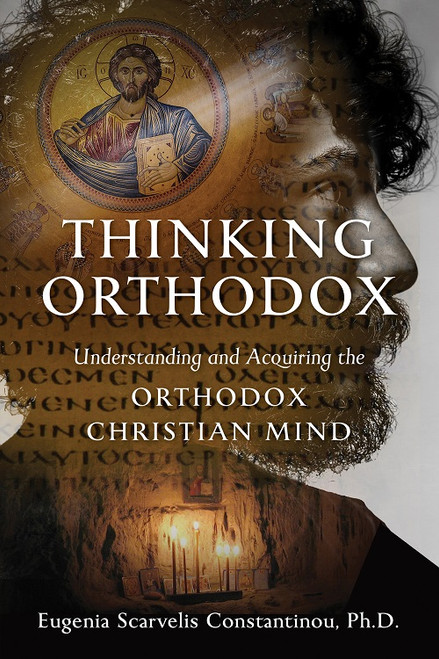
|
Thinking Orthodox: Unders... |
|
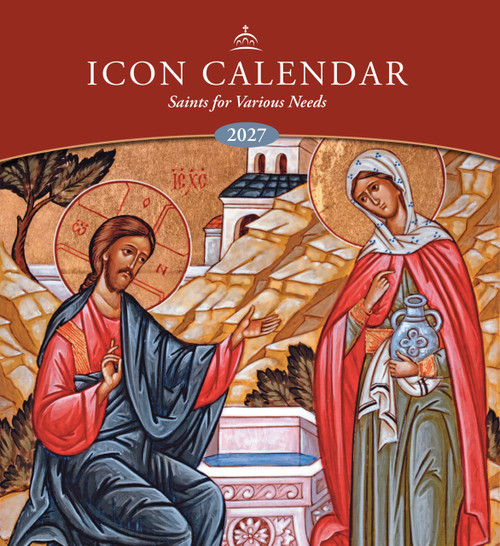
|
2027 Icon Calendar: Saint... |
|
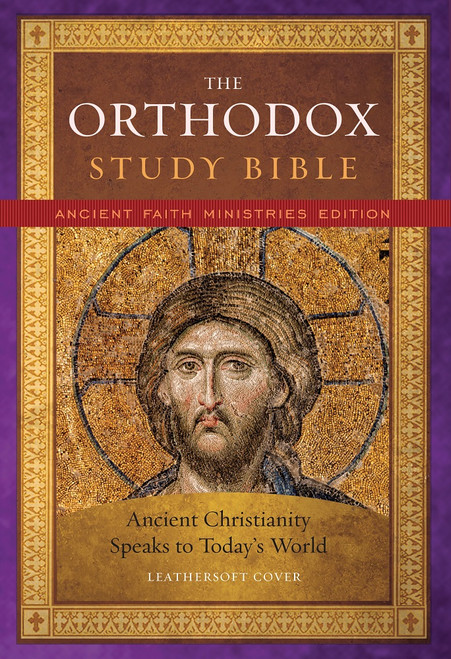
|
The Orthodox Study Bible,... |
|
Facebook
RaveCapture Commitment
RaveCapture transforms how businesses collect and showcase customer experiences. We take authenticity seriously and only allow 100% verified buyer reviews and UGC.
Guarantee
- RaveCapture Companies Are Held Accountable
- All Reviews Are Verified Customers
- Negative Reviews Can Never Be Deleted
With RaveCapture, you’re not just managing a reputation — you’re sharing the voice of your raving fans.
