
4.9
From 1
to 5
Reviews
7083
Recommend
10 / 10
TrustScore
9.9 / 10
WholesomeHenri
Powerful
Orthodoxy and Heterodoxy: Finding the Way to Christ in a Complicated Religious Landscape (2017 edition)
WHAT YOU NEED TO KNOW
The Second Edition of Orthodoxy & Heterodoxy (O&H 2.0) is not the same thing as the first edition. When I started reading it I found that, even though I read the First Edition and listened to both podcasts (O&H 1.0 & 2.0) prior to picking up the Second Edition of the book, it still held my interest and attention. While a lot of topics covered in the book are the same (such as Roman Catholicism, Evangelicalism, non-mainstream Christian confessions, and some non-Christian religions) there is a lot of new material (such as the chapter on Pentecostalism, additional non-mainstream and non-Christian religions, and several appendices). In addition, critiques of the first book (which were given to Fr. Andrew by members of the religions he was speaking about) were taken into consideration, re-researched, and the content was adjusted where necessary. Because of this, the Second Edition presents a balanced, well-informed approach to other Christian confessions. In all, he presents a fair treatment of the religions he covers and, at the same time, contrasts it with Eastern Orthodox dogma and practice. The result: the reader not only walks away knowing more about both major and obscure Christian confessions, but also more about Orthodoxy ' and perhaps how to interact, in an Orthodox way, with these religions.
WHAT YOU NEED TO KNOW
'If you read the First Edition and listened to the Podcast, you will still benefit from owning this book.
'It has an excellent index in that back that enables the reader to quickly reference specific topics, beliefs, or religions (in the first edition, the quick reference index was only 1 page; the second edition boasts a 19 page index).
'If you did not read the First Edition or listen to the Podcast, you should read this book. It's a good run down of Church history'both digestible and interesting.
'Whether you're an Orthodox Christian, Roman Catholic, or Evangelical you will get something out of this book ' perhaps in learning more about the history of the Church, how your particular Christian confession evolved into what it is today, or in how other Christian confessions are similar or different from your own.
'If you are Hindu, Agnostic, or Atheist, you will find something of interest in it'perhaps you want to be more aware of the variety of Christian confessions.
Fr. Andrew Damick's second edition of Orthodoxy & Heterodoxy claims new content (it's almost twice the size of the first edition), better writing style, and more accurate representation of the belief systems it represents. And it does not disappoint.
WHAT I WALKED AWAY FEELING/THINKING
The effect of reading this book from cover to cover is incredible. Fr. Andrew presents a timeline of Christianity starting with the early Church (its very beginning) and ending with the many different versions we find in our world today. The reader walks away with a clear understanding of how we got to where we are now (in Christendom) because Fr. Andrew demonstrates how one twist in dogma or practiced imagaugarated change after change'which eventually resulted in the tens of thousands of denominations we have today. But there is only one Christian Church that preserved the faith unchanged: to find out which Church that is, you will have to read the book. After you do, you will find it hard to see it any other way.
Reasons to buy the book:
'as a reference book
'to familiarize yourself with important Christian truths amidst the relativism of the world
'to discover the riches of Christian history
'to learn about the origin of your Christian confession
'for your friends and family
'for strangers
'because it's a great read
 Originally Posted on Amazon
Amazon Customer
Good
Becoming a Healing Presence
Well-written, easily understood by a variety of audiences. I would read it again, or at least go back to it for references.
Originally Posted on Amazon
Roxanne Isaac
Factual, informative, and enjoyable to read
Orthodoxy and Heterodoxy: Finding the Way to Christ in a Complicated Religious Landscape (2017 edition)
Factual, informative, and enjoyable to read. A great book for people of all ages from teen onward. Orthodoxy and Heterodoxy: Finding the Way to Christ in a Complicated Religious Landscape (Revised and Expanded) comes at a time filled with controversy and bloodshed in the Christian, and particularly the Orthodox Christian world. Notable in this regard are the Great and Holy Council which shed light on Eastern Orthodoxy to the greater world, the conversion and subsequent hanging out to dry of Hank Hanegraaff by most of his Evangelical / Protestant following which shed light on Orthodoxy again in the Christian world at large, and the slaughter of Christians all over the Middle East and North Africa regions, where Eastern Orthodox and Oriental Christians make up a significant portion of the Christians; the media tends to ignore most of these stories, or display them momentarily at best in stark contrast with the plights of other religious minorities or factions.
It is times like these when people need and want to know where they stand theologically, morally, and the like, and this book makes a great starting point to that end.
Overall, the book was easy to read and to understand. It is great for people beginning to look at the many distinctions in the complicated religious landscape, to borrow the phrase. It is great for average readers, and is broken up often enough with chapters and subtitles in order to make for great stopping points along the way. It is thorough enough to get a hold on the many different concepts, but not so over the top that it becomes scholastic and quite in depth in nature. I thought the book was somewhat "American-centric" in the demographics of the religious groups presented; being from Canada, I know we have a bit of a different religious demographic here. The book, therefore, was shy on information about a few groups that would be more relevant to Canadian audiences.
The written distinction between the first and second versions was a great thing to do, since most people would base their assumptions from what they already know from the first version, and it was a helpful tool before getting started on reading the book. What I find especially wonderful was how the second version was a little more like taking a step back and trying to show things in a more discretionary way. That is, not every subject is simply the facts given in black and white, but rather, in addition, historical and contextual setting is given, and people and situations are given the benefit of the doubt in their motives and mindsets in a very merciful and gracious way. I was happy to see that much credit was given due to the unseen actors and informers which Fr. Andrew worked with in this addition, most notably when it came to corrections, expansion of already known subjects, as well as new subjects (new in terms of being its own subject rather than a subtitle heading under a larger branch) as was the case for the Pentecostalism chapter. A good choice of direction and well stated.
The opening is powerful. Laying out the meaning of truth and why it matters makes for a great foundation and premise to build upon. It speaks volumes, as I'm sure it was intended to do. Defining the terms furthers this goal and avoids confusion.
Three groups that I thought were relevant that should have more information included (2 of which do not even have their own subtitle headings within the book) were:
a) Mennonites. Coming from a Mennonite, among other things, background, I personally was a little disappointed in the lack of information under this subtitle heading. There are more groups than the ones listed because even the term "Mennonite" in Canada can be broken into subsections such as "Mennonite Brethren", "Old Colony Mennonites", and "Bergthalers", etc. A mention of Mennonites using Platte Deutche, or a Mennonite version of "Low German" is worth the mention, as well as a number of other features and historical relevancies of these groups. In Canada, most notably in the West, Mennonites have helped shape the culture, way of life, and morality of the country because of their huge influx in the 1800's when they were given homesteads to work; their population numbers are one of only a few groups to have such large numbers. One will see towns, counties, roads, and the like named with Dutch and German names because of this.
b) Oriental Orthodox and other non-canonical Orthodox groups (like modern schisms such as in Ukraine or in North America, etc). I think it is quite relevant and important to give these groups their own section in the book. They play a major role in early Christian history, and also in our modern political-social-religious dynamic and are worth more than just a mention because of it. It seems like Egyptian Coptic Christians are being murdered often these days, and a more specific mention of the groups and sub groups and their theology and role would add a great deal to the book. In Canada, many Eritreans, Ethiopians, and others will come to Chalcedonian aka. Eastern Orthodox churches to be inter-married, to have their kids baptized, and the like, especially when they have no church of their own persuasion.
c) Eastern Catholics. Most notably Greek Catholics, Ukrainian Catholics, who in both Ukraine, Canada, make up a large part of the population and therefore have great relevance. They have a lot of influence here in Canada, especially in the Western prairies socially, religiously, and politically; "Slava Ukraine!" (Glory to Ukraine!) is a common term around here. On a lesser note, Melkites, Maronites, who also have a presence in Canada and USA and many of whom, like their Ukrainian counterparts, will attend an Orthodox Church rather than a Roman Catholic one if there is no Eastern Catholic church nearby. Since Greek/Ukrainian and Melkite Catholics were actual break-offs of the Orthodox Church who joined Rome, they are very notable and are worth more of a specific mention.
It should be noted that Eastern Catholic, or at least Greek/Ukrainian Catholic practice has changed, and heavily influenced by and adapted to Roman Catholic practice. Icons are very Western and done in a different style. Most baptisms are done by pouring rather than immersion. Communion is regularly denied to infants until the age of reason and the catechism and "first communion" class has been completed. Many chrismations are delayed until "first communion" like in the Roman practice. It is not uncommon to have a rosary said before liturgy instead of the 3rd and 6th hours as is the OCA (Orthodox Church in America), ROC (Russian Orthodox Church), UOCC (Ukrainian Orthodox Church of Canada), and other Slavic Churches' tradition. Weddings and other services have cut parts out or changed them completely. It should be noted that most of these changes are post Vatican II and are more common in North America than in the "Mother Countries". Though, there is a movement here in Canada to move back to the "Orthodox" way, as they used to practice liturgically. The Ukrainian Catholic seminary in Ottawa, which has since moved (to Toronto if I'm not mistaken), employed Orthodox professors (some of whom were clergy), and many of the clergymen, especially the younger generation are trying hard to reincorporate the older, more orthodox, more traditional ways of practice, both in the liturgical life and the home life. Having numerous friends of this persuasion, it is exciting to see. This is why I think it is so important to include things like this in a more expanded, separate section in the book.
A couple of corrections in the notes mentioned about Eastern Catholics in O & H to note. 1. Not all Ukrainian Catholics in Canada keep baptism and chrismation together. 2. Not all Ukrainian Catholic churches commune infants. More common is the "first communion" after the Roman Catholic manner.
The book had a good clarification on judging strictly doctrine rather than individual salvation or damnation. Sets the right tone for open mindedness of the outsider who it is intended for.
In conclusion, there is good reason why the author and this particular book is well known already. It is a great piece of literature that achieves its purpose in a well thought out and stated manner, even if I personally think it could use expansion in a few key areas. Factual, informative and enjoyable to read. Like others of his works, Fr. Andrew's book is a great addition to anyone's collection.
Bias context: I am a Canadian Orthodox Christian convert from a background of an array of different Protestant / Evangelical denominations. I was sent a free copy of the book to review from Ancient Faith Publishing, but I have not let that affect my views of it.
Originally Posted on Amazon
Theodore Papadopoulos
Must read
Orthodoxy and Heterodoxy: Finding the Way to Christ in a Complicated Religious Landscape (2017 edition)
If you have read the first Orthodoxy and Heterodoxy, this is all the more necessary to read. The expansions, revisions, and depth added to O&H are much more comprehensive. I look forward to reading more from Fr. Andrew in the future!
Originally Posted on Amazon
Evan L
Verified Buyer
The Ancient Faith Psalter, deluxe edition
I'd been waiting years to have a Psalter for my private prayers. All other ones just weren't right. Some weren't from the Septuagint, others used 'ye ol english' which was never comfortable for me.
The cover is beautiful, soft, flexible and is of great quality. No worries of it getting damaged with use.
The content inside ofcourse is what truly matters and I'm truly happy with it. I pray the psalms comfortably every day now and i can truly appreciate them.
The cover is beautiful, soft, flexible and is of great quality. No worries of it getting damaged with use.
The content inside ofcourse is what truly matters and I'm truly happy with it. I pray the psalms comfortably every day now and i can truly appreciate them.
Dana Elizabeth Lewis
Well-written & Easy to read
Becoming Orthodox: A Journey to the Ancient Christian Faith
An interesting and well- written account of a unique mass conversion to the Orthodox Church. The author was honest, thoughtful, and inspiring.
Originally Posted on Amazon
Brent Butler
A Great Read
Orthodoxy and Heterodoxy: Finding the Way to Christ in a Complicated Religious Landscape (2017 edition)
Amazing book! The information presented in this book is both informative, and easy to understand. I especially appreciated both the expansions on the LDS faith, and the Chrismatic/Pentecostal traditions as those are the traditions I have been formed by pre learning about Orthodoxy.
Originally Posted on Amazon
Amazon Customer
This is an excellent book
Orthodoxy and Heterodoxy: Finding the Way to Christ in a Complicated Religious Landscape (2017 edition)
This is an excellent book. Well written and I felt the author was very fair in his assessment of the subject matter.
Originally Posted on Amazon
Lisa
Verified Buyer
We Pray, paperback version
I received a copy of this book in exchange for an honest review: When I opened it, the first thing that struck me was how simply written and concise it is. It captures so many aspects of this complex part of our faith and presents it in a straight-forward way for children and adults too. It seems every word was so carefully chosen, not one is wasted. The illustrations are whimsical and compliment each verse with so much to discover in each picture. How wonderful for children to see so many things recognizable from their faith illustrated just for them. Overall a wonderful book, and an excellent addition to a child's collection.
Susan Cushman
An IMPORTANT BOOK!
Truly Human: Recovering Your Humanity in a Broken World
Retracing the Steps of Humanity... an IMPORTANT BOOK! Kevin Scherer has written an important book. In Truly Human Kevin 'retraces the steps of humanity' from the Garden of Eden (first three chapters of Genesis) through the actions and emotions of the humans at 'the pit' at Ground Zero in New York City, saying:
'Someone who is truly human will manifest the activities, or energies, of God in their life.'
But most of the time we don't manifest those energies. Why not?
He lays out in clear theological and psychological terms what man's condition is, why we are the way we are, and how we can own our brokenness and find healing. Along the way he deals with some tough topics, including a straight-forward answer to a universal question:
'Why is there evil?' And, if a good God exists, 'Why does He allow it?' If we are made in the image of an intelligent God, these are fair and reasonable questions, and the same scripture that informs these questions also gives us the answers'. We know from the first three chapters of Genesis that God created only what was good. It's the human distortion of this good that we call evil. God allows this distortion, because to prevent it would require Him to restrict our free will, and without free will love and relationships are impossible.'
I've always struggled with why God allows suffering, but Kevin puts it in a clear light for me, helping me accept its place in my life. He describes the cycle of suffering that we are caught in because of the fall: victimization, survival, and perpetration'especially as parents:
'Despite our parents' deep love for us, they were trying to survive their own pains and suffering. As a result, sometimes we were the emotional victims of their coping mechanisms. They, like us, didn't set out to harm anyone else, but the reality is that they did, and we do too. When we can face up to the reality that we often victimize others in an attempt to manage our own pain, we reach a spiritual turning point.'
I have already worked through a lifelong process of forgiving my mother for her verbal and emotional abuse of me, but this insight also helps me forgive myself for the ways I failed my own children. And in recent years, I've begun to embrace suffering on a very small scale. Kevin's words help me continue the process:
'Ultimately, the goal is not to remove suffering from our lives, but to transform it into a redemptive experience. Like Christ on the cross, we can abandon ourselves to the will of God and offer up our suffering in anticipation of His mercy. In these moments, we become truly human.'
In Chapter 3, 'The Logic of Suffering,' Kevin takes this experience further:
'The personal experience of suffering begins when we perceive that our reality is unbearable and out of control. Our perceptions give way to feelings. Generally, when we feel out of control it triggers a self-protective and aggressive emotional response'fear, frustration, anger, bitterness, resentment, etc. These feelings can be directed outward or inward, but they are always characterized by a deep dissatisfaction with the way things are.'
That dissatisfaction often leads, as Kevin explains, to our lives being controlled by vices, rather than by living as truly humans:
'The experience and living out of these vices is the story of humanity. By understanding the psycho-logics and interconnectedness of these vices, we will begin to see the areas of our own life in need of healing and develop a deeper empathy and compassion for others who struggle with them.'
Here's an excellent description of how the vices work together against us:
'Gluttony, lust, and greed are vicious thinking patterns targeted at how we relate to food, people, and possessions. These vices comfort the pain of our broken emptiness and give us the illusion of an identity. These vices are fueled by, and in turn produce, vanity and pride. And when the first three vices inevitably fail to satisfy the God-given longing in our hearts, they produce the vices of anger and self-pity which, if left unchecked, leads to the vice of despair. This cycle perpetually feeds itself and leads its victims into a deeper and deeper experience of hell on earth.'
So how do we 'wake up' from this cycle and move towards becoming the human beings we are meant to be? Kevin says it starts with building a personal inventory (sounds a bit like a twelve steps program, but it's so much more):
'There are five basic questions we can begin using immediately to build a personal inventory. I call them Identity Paths. These questions act like paths that lead us back to what we really believe about ourselves'the truth and the lies. When used in conjunction with the psycho-logic model, explained in chapter three, they can help us embrace the distortions of our lives and who we've become.'
Scherer outlines these questions in the book, and suggests we ask them in a specific way in the presence of a friend, pastor, therapist, family member, etc. In the Orthodox Church'of which he and I are both members'this is available in the sacrament of confession, in which I continue to find healing on a regular basis. But it's also available through professional counselors, trusted friends, and family members. Kevin describes the healing provided by the church in Chapter 6, 'Checking Yourself In,' where he talks about the importance of the church being a spiritual hospital.
And then in Chapter 7 he moves us from the church to the outside world in 'Giving Your Life Away,' with the importance of reaching out to those in need, to the poor and suffering in the world. His personal stories of working as a volunteer at Ground Zero in New York City after 9/11, and also on the campus of Virginia Tech after the shootings there, as well as leading young people on pilgrimages to help others in various places around the world are real-life testimonies to the way these interactions can change our lives:
'I've discovered that the Christian life can only be fulfilled in sacrificial acts of love. Everything else is just talk. Love is our human vocation, and it is most perfectly revealed on the cross.'
He has helped the young people he has worked with see everyone'especially the poor and homeless'as 'real people' and not just random faces:
'We must be willing to take the time and emotional energy to see people for who they really are and the situations in which they really live. We must seek to love real people, not caricatures''for he who does not love his brother whom he has seen, how can he love God whom he has not seen?' (1 John 4:20).'
Kevin takes us a step further by helping us learn to control our minds, to stay in the present, where the real work of becoming human happens:
'Our broken humanity has lost its natural intuition and no longer knows what to do with the present moment. The mind is designed by God to be active. It is the organ He gave us to be co-creators with Him. With our minds we learn, solve, and plan. In the case of the past or the future, our minds race endlessly to solve the problems of our anxieties and fears.
With the present moment, however, our minds are confused as to what should be done. Unless there is a clear and imposing objective, our minds naturally speed past the present moment toward the areas of greatest pleasure or pain. In the case of pleasure, the mind races to clear the path or duplicate the experience; and in the case of pain, it seeks to alleviate the stress and discomfort of psychological/emotional equilibrium'they are both distorted survival mechanisms.
In order to fully recover our humanity, we must regain control over our minds. The first step in this realignment operation is to help our minds stay in the present moment.'
This book isn't just for Orthodox Christians, or any 'brand' of Christians. It's for everyone who is open to understanding why we are the way we are, and how we can change and become the humans God intended us to be. I can't recommend it highly enough. BUY IT NOW. READ IT. SHARE IT.
Originally Posted on Amazon
GM
Elegant, Brilliant, and Clear
Orthodoxy and Heterodoxy: Finding the Way to Christ in a Complicated Religious Landscape (2017 edition)
I recently read this revised and expanded edition of "Orthodoxy and Heterodoxy" by Fr. Andrew Stephen Damick'who also wrote "An Introduction to God." The style is elegant, brilliant, and clear, full of grace and persuasiveness. It was a pleasure to read. The podcasts of the same name are also worthy of attention. A reader seeking a detailed or pointed description of all Orthodox dogmas will perhaps be disappointed, but the faithful student of Church history, interested in how the Orthodox faith interacts with, relates to, and differs with all other forms of Christian and even sub- or quasi-Christian faiths will come away both impressed and fulfilled. A perfect read for anyone interested in how Orthodoxy stands alongside or against their own, particular denomination or church, and especially for anyone looking for introductions to the more obscure reaches of American religion of the past two centuries. Highly recommended, even if you're familiar with the first edition or podcasts of the same name.
Originally Posted on Amazon
Cameron Curry
Worth your time for eternal significance
Truly Human: Recovering Your Humanity in a Broken World
It goes without saying that life is hard and circumstances come that push us to question life, faith, and personal worth in a broken world. Too many people spend their life searching, wondering, and seeking their purpose and miss the greater reason for why they are here. Truly Human takes us through a personal journey of a man whose experience, intelligence, education, and challenges helped guide his personal steps into life, love, and faith. This book is a love letter of a father to his daughters and a man seeking to share and understand his place in this world. To be Truly Human requires an honest self reflection and this book shares a personal story that we all can embrace and grow from as a result.
Originally Posted on Amazon
Joanna
Verified Buyer
Goodnight Jesus (board book)
I bought this board book for my infant son when he was very little, but we have read it to him through his infancy. It is his naptime go-to book and he loves it. In fact, when he was only a few months old, the first time we read it to him, he grabbed the book and pressed his mouth to Jesus' picture and kissed it like he would try to kiss his parents. So moving. This was the only image of Jesus he's ever done that with as a baby.
G. Jenkins
Beyond Wiki
Orthodoxy and Heterodoxy: Finding the Way to Christ in a Complicated Religious Landscape (2017 edition)
This much enlarged and revised ' and in some places thoroughly revised ' second edition of O&H gives to any inquirer the basics that distinguish Orthodoxy from both other (hetero) Christians and non-Christians. A scholar doing serious research on any of the various heterodoxies that Fr. Andrew examines won't find the text helpful, as it is written at a popular, albeit educated audience. Nor is it a detailed catalogue of each group's history, practices, creeds, and morals. And lastly it is not what I consider his best work (cf. his An Introduction to God), nor even one that is for everybody (though there is a strange sense of all-inclusiveness to it). Instead this book stands as an introduction for those non-Orthodox who want to find out what distinguishes Orthodoxy from themselves, one written by someone from within Orthodoxy, someone who speaks from the Tradition. It is also for those Orthodox who want to know what separates them from Buddhists, Sikhs, Catholics, inter alia, from someone who has been tasked to watch out for their souls. For both groups, despite how some may read the title, Fr. Andrew is not engaging in some polemical cage match, valorously raising the banner in the breach to hold back the flood of unbelief, contending with all comers, but instead is seeking to give more than a Wikipedia presentation of those other creeds that contend that they speak the truth about the divine, and how they stack up against Orthodoxy. If the more dyspeptic reader, possessed of an irritable bowel for an intellect thinks otherwise, such fragile egos should wean themselves off the milky fare of internet polemics (which field of horrors Fr. Andrew addresses at the end of the book), and begin imbibing more intellectually potent potables. Taken for what it is, it comes fairly close to fulfilling the telos of its existence.
Though revised and expanded, fine tuning, elaboration, and clarification dominate most of the chapters, and thus substantially much remains the same. Where this edition goes beyond the first, and as such is a real strength, is in the new chapter on Pentecostalism. Here one will find information on the world of televangelists, word faith, and also the prosperity gospel, a vast world inhabited by such as Joel Osteen, Benny Hinn, and Kenneth Hagin. If nothing else, this chapter will give all who read it a leg up in understanding Flannery O'Connor's short stories. The chapter is given a good bit of teeth (as Fr. Andrew acknowledges wherever this applies) by former Pentecostals who have broken with their past, but who at the same time aren't out to 'kill their father.'
In those chapters that Fr. Andrew revised, he has often sounded a less strident tone (though one still clearly exacting as regards the claims of Orthodoxy). For example, in the chapter on Roman Catholicism where he treats the filioque, while still holding forth on the basic problems as seen by Orthodoxy, he also notes that there has been some movement on the question of rapprochement with Rome over the issue, that some in Rome now want to contend that the Spirit's procession from the Son has to do with the economic mission (something all Orthodox affirm). Yet Fr. Andrew still keeps the entirety of his older text, especially in recommending and employing St. Photius the Great's Mystagogy of the Holy Spirit, seeing it as an excellent refutation of Latin triadology (something I am happy no end he left in).
Another thing I liked in particular was the treatment of non-Christian religions. The notable changes come in the treatment of the Middle Eastern groups that we hear about on the news, but about which little exists in English Christian literature, namely the Druze, Alawites (Syrian president Bashar al-Assad is an Alawite), and Yizidis. He as well includes the strange world of Cargo Cults, which is more an anthropological aside about some strange manners in the south Pacific.
I find the text something anyone interested in comparative religion would find helpful, even if just on an introductory level. Were I teaching a course on World religions I would use the text to supplement other readings. To let the reader know, I was present at the original lectures that later became the book, I read the original edition in draft, and have informed Fr. Andrew on particular points in this text. Fr. Andrew is also my parish priest.
Originally Posted on Amazon
Tony
A great primer
Orthodoxy and Heterodoxy: Finding the Way to Christ in a Complicated Religious Landscape (2017 edition)
A great primer for those who wish to understand the differences ...Very much enjoying this book. A great primer for those who wish to understand the differences between the various Christian faiths and how the various actors and dogmatic heresies have resulted in a fractured Christendom.
Originally Posted on Amazon
Mary E. Wright
Great resource to find the truth
Orthodoxy and Heterodoxy: Finding the Way to Christ in a Complicated Religious Landscape (2017 edition)
So clear and easy to understand. I like how the book is presented in a charitable attitude but clearly showing the differences in faiths.
Originally Posted on Amazon
Amazon Customer
I found this feature of the book useful
Orthodoxy and Heterodoxy: Finding the Way to Christ in a Complicated Religious Landscape (2017 edition)
I found this feature of the book particularly useful, as it made it more fun of a ...The new edition of Orthodoxy and Heterodoxy is most certainly a step up from the previous edition, both in scope and in tone. The book is laid out historically-- it begins with the discussion of the Ecumenical councils, basic Orthodox vernacular and Theology, and then transitions to discussion of other religions. Each religion is treated in its own respect, one can flip to any chapter and give it a quick read for a basic dossier of their beliefs. I found this feature of the book particularly useful, as it made it more fun of a read.
The entire book is written in a very clear and straightforward tone, making it nothing short of a pleasure to read. Fr. Andrew makes extensive use of quotation from primary literature when discussing various traditions, making it easy to see the historical context of various religious events and bifurcations. Also, this extensive use of direct quotation helps to truly clarify the nature of various belief systems, making them easier to understand for an outsider. In particular, I found the sections on Catholicism and non-Christian religions particularly good in this area, as I left each section with a much deeper understanding, and I feel confident recommending this book to others outside of Orthodoxy.
As a college student, books such as Orthodoxy and Heterodoxy are particularly important and needful. The book is accessible, full of information, and most importantly, practical. After reading this book, I feel informed and prepared to engage in conversation with my non-Orthodox brethren, and to explain our teaching in light of theirs.
Originally Posted on Amazon
Book Collector
Turning the Heart to God: by St. Theophan the Recluse
Well written from one of the great spiritual masters. Helpful guidance.
Originally Posted on Amazon
Andrea
Reardon introduces the great concept
Reclaiming the Atonement, Volume 1: The Incarnate Word
Reardon introduces the great concept that the atonement is not about extrinsic transactions . Suberb introduction to incarnation and atonement in Eastern thought. Reardon introduces the great concept that the atonement is not about extrinsic transactions between God and man, but about God changing the world through his entering into it through the inarnation. The incarnation itself is salvific. Also, REardon, if you know anything abouthim, is an excellent exegete. One may not think that Eastern Orthodox priests can be exegetes, but that is simply not the case with Reardon!
Originally Posted on Amazon
M. Malouf
The Ancient Faith Psalter
For those who think the Psalter ends with number 119/118, that's because the psalms are arranged differently when read in their weekly liturgical cycle. Psalms 109-118 and 120-134 are read earlier in the week, and thus are placed "out of order" in this edition. Hope you have already figured that out.
Originally Posted on Amazon
About Ancient Faith Store
At Ancient Faith Store, we are dedicated to providing a rich collection of resources that celebrate and preserve the Orthodox Christian faith. Our mission is to help individuals and families grow in their spiritual journey through a wide array of products, including books, music, icons, and gifts that reflect the beauty and depth of Orthodox Christianity.
We believe that faith is a journey, and we strive to accompany you every step of the way with materials that inspire, educate, and uplift. Whether you're looking for a profound theological work, a children’s book that teaches the values of our faith, or a beautifully crafted icon to adorn your home, you'll find it here.
Our commitment to quality and authenticity means that every item is carefully selected to ensure it aligns with the teachings of the Church. We are passionate about fostering a vibrant Orthodox community, and we invite you to explore our store to find the tools that will enrich your spiritual life and connect you more deeply to the traditions of our faith. Thank you for being a part of our journey.
Visit Website
We believe that faith is a journey, and we strive to accompany you every step of the way with materials that inspire, educate, and uplift. Whether you're looking for a profound theological work, a children’s book that teaches the values of our faith, or a beautifully crafted icon to adorn your home, you'll find it here.
Our commitment to quality and authenticity means that every item is carefully selected to ensure it aligns with the teachings of the Church. We are passionate about fostering a vibrant Orthodox community, and we invite you to explore our store to find the tools that will enrich your spiritual life and connect you more deeply to the traditions of our faith. Thank you for being a part of our journey.
Ancient Faith Store is a Verified Merchant
Questions? Contact Us
support@ancientfaith.com
800-967-7377
Mon-Fri (9am-5pm CST)
Top Rated Products
|
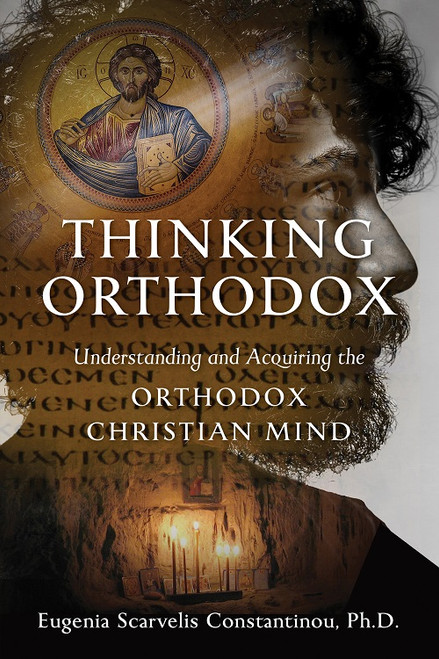
Thinking Orthodox: Unders... |
|
|
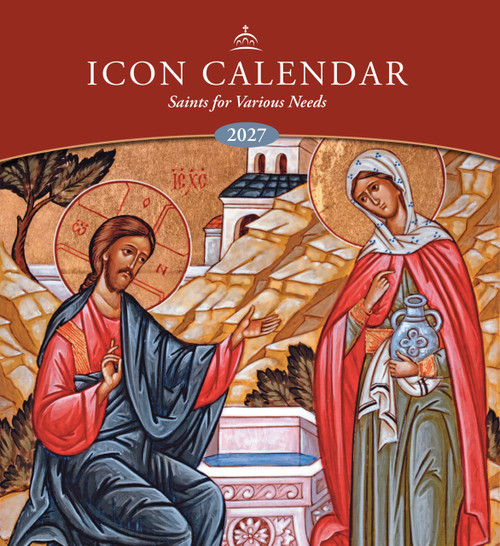
2027 Icon Calendar: Saint... |
|
|
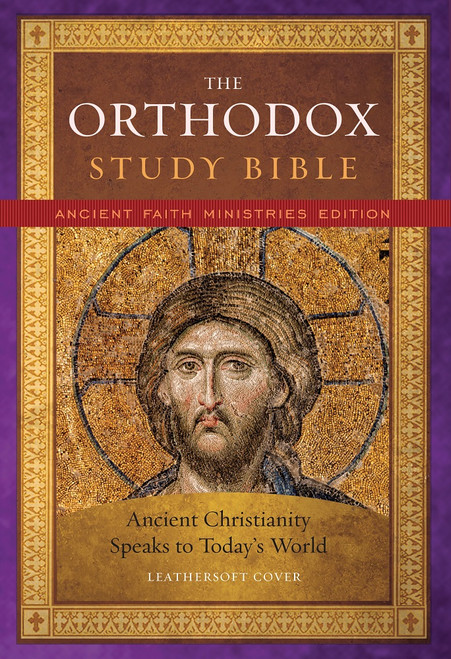
The Orthodox Study Bible,... |
|
Facebook
RaveCapture Commitment
RaveCapture transforms how businesses collect and showcase customer experiences. We take authenticity seriously and only allow 100% verified buyer reviews and UGC.
Guarantee
- RaveCapture Companies Are Held Accountable
- All Reviews Are Verified Customers
- Negative Reviews Can Never Be Deleted
With RaveCapture, you’re not just managing a reputation — you’re sharing the voice of your raving fans.
