
4.9
From 1
to 5
Reviews
7083
Recommend
10 / 10
TrustScore
9.9 / 10
Nadine A. Eidman
We Came, We Saw, We Converted: The Lighter Side of Orthodoxy in America
A must read for the cradle/convert or anyone who has been to a Christian Orthodox church. Fr. Joseph Huneycutt is extraordinarily gifted and imaginative as he combines personal and fictional stories to humorously challenge us to reach deeper and gain a better understanding of the Orthodox Church. "We Came, We Saw, We Converted", is a very easy and light read, but tackles serious subjects such as fasting, love, and heaven. You will laugh and identify with many of his characters, and enjoy the lessons. This book is perfect for all readers. I highly recommend that you share it with your families.
 Originally Posted on Amazon
Lora
We Came, We Saw, We Converted: The Lighter Side of Orthodoxy in America
I have also read all three of Fr. Joseph's books, and flew through the highly enjoyable We Came, We Saw, We Converted. The subtitle, "The Lighter Side of Orthodoxy in America," is very appropriate. Fr. Joseph has such a gift for mixing humor and theology. Aren't we lucky? Through the telling of humorous fictional and non-fictional stories, Fr. Joseph is able to encourage us in the faith. Many of you will find this refreshing, especially the cradle-born Orthodox, who were probably raised to take everything in the Church very seriously. Converts will probably also find this refreshing, if you became Orthodox because of its "seriousness" compared to other Christian denominations. While Fr. Joseph has a very good sense of humor, he is at the same time uncompromising about what our lives as Orthodox Christians should be. For instance, in his section about the Lenten Fast, he writes that we can't say to each other "Do the best you can..." Rather, we must continue the struggle for "perfection in Christ," not set ourselves up for potential failure by "doing the best we can." That is something we should all be meditating on, as we quickly approach The Fast.
Fr. Joseph's writing is mostly focused on his conversion experience and life as a Southern Orthodox Priest, an unusual circumstance, for sure. Really though, as a Northerner and a cradle-born Orthodox, I have come to feel that his experiences are shared by many of us. If you are Orthodox, haven't you been looked at like you were crazy all those times you had to explain why we celebrate Easter on a different day, believe that the Eucharist is really the body and blood of Jesus Christ, etc? If so, you will have a good laugh reading about Fr. Joseph's adventures as an Orthodox Priest in the South. One theme that Fr. Joseph touches on a number of times in this book is our need for Orthodox unity in this country. He does a very good job of making light of the differences that get in the way of us being a unified faith. I'm sure when the day finally comes that we are a unified church, Fr. Joseph will still find many other topics to write about. I highly recommend this book, as well as Fr. Joseph's previous books, blog-site, and weekly pod-casts on Ancient Faith Radio. He always has something humorous to share.
Fr. Joseph's writing is mostly focused on his conversion experience and life as a Southern Orthodox Priest, an unusual circumstance, for sure. Really though, as a Northerner and a cradle-born Orthodox, I have come to feel that his experiences are shared by many of us. If you are Orthodox, haven't you been looked at like you were crazy all those times you had to explain why we celebrate Easter on a different day, believe that the Eucharist is really the body and blood of Jesus Christ, etc? If so, you will have a good laugh reading about Fr. Joseph's adventures as an Orthodox Priest in the South. One theme that Fr. Joseph touches on a number of times in this book is our need for Orthodox unity in this country. He does a very good job of making light of the differences that get in the way of us being a unified faith. I'm sure when the day finally comes that we are a unified church, Fr. Joseph will still find many other topics to write about. I highly recommend this book, as well as Fr. Joseph's previous books, blog-site, and weekly pod-casts on Ancient Faith Radio. He always has something humorous to share.
Originally Posted on Amazon
DKH
Creation and the Patriarchal Histories: Orthodox Christian Reflections on the Book of Genesis
Patrick Henry Reardon addresses each chapter of Genesis with deep reflection. Since Orthodox tradition sees everything in scripture reflecting something of Jesus and Christology (that is what I understood from his introduction, anyway), deep, soul-changing thoughts engage us as we read this book. He doesn't embroil himself, for example, in the debate between a literal vs. evolutionary understanding of creation. Instead, he looks at what nuances are told which reveal something more about Christ or man or the relationship between God and man. I'm not Orthodox, yet I am so enriched by reading this perspective. I'd recommend this and probably others by Reardon for those wishing to stretch themselves in new ways. Biblically sound, yet offering fresh insights -- as old as Wisdom itself.
Originally Posted on Amazon
C. D. McGinnis
Close to Home: One Orthodox Mother’s Quest for Patience, Peace, and Perseverance
I couldn't put this book down! This isn't a book of practical parenting advise or home management techniques. This is a candid look at what many women experience but no one talks about. Close to Home expresses in a funny, intelligent, and Christian manner the doubts, fears, and pressures of being a wife and mother. Mrs. Sabourin does not set herself up as an authority or perfect mom. She ruthlessly exposes her flaws,misguided thinking, and failures. She takes you through her struggle and inspires you to struggle harder too. This book is written in such a manner that it would make a wonderful gift for new brides and new moms. Terms and practices that are particular to the Orthodox Christian faith are explained simply without giving the feel that she's trying to convert the reader. Her quotes from Scripture or the lives of saints are relevant and do not give a "preachy" feel. I would feel comfortable giving this to pious Catholic and Protestant friends.
-Orthodox Homeschooling Mother of Four
-Orthodox Homeschooling Mother of Four
Originally Posted on Amazon
Kimberly Angel
At the Corner of East and Now: A Modern Life in Ancient Christian Orthodoxy
I just love the way Frederica thinks and expresses herself. Everything she offers, from her podcasts to her books is enjoyable. I recommend anything authored by Frederica Mathewes-Green as solid and enlightening!
Originally Posted on Amazon
Danny Edwin Nicholas
Thirsting For God in a Land of Shallow Wells
After the first couple chapters of Bread & Water, Wine & Oil by Archimandrite Meletios Webber--Fr. Mel to those he pastors--you are not quite sure if you are in an Esalen yoga retreat class or a Marin County spirituality workshop in the 70s. Yes, this is definitely a "get out of your head and into your heart" kind of book. At the same time it makes for classical eastern Orthodox scholarship. Though a down to earth book, those I feel will be attracted to this work are the rather heady, bookish sort. If so, this volume will serve as good medicine for the right folk.
Webber starts out letting us know that the West got lost pretty much at the trailhead in matters of the head and heart. He translates nous as heart and not mind. He points us to a Philokalia directive of St. Markarios that the nous is indeed the "eye of the heart"; and of St. Diadochos (5th Cent.) that it is this nous business which is a key anchor point of our lives if our spirituality is to work--"innermost aspect of the heart". Here we plug into and stay connected to our true selves and into each other, how we best commune and communicate with self, our fellows and with God. Webber addresses well the disintegration, fragmentation and estrangement that plagues us and our often limping religiosity.
His call for us to return to the heart and to experience and to mystery is accompanied by a parallel warning. Danger ahead is the bodiless mind embracing and theologically fatal path of dualism (body bad; spirit good) endemic in the West. The tone of Webber's book is refreshing, like the way he suggests that perhaps calling our bishop "your eminence" might be a bit dated.
If you are an academic, you might be offended at his style as Webber works to keep things simple. He tells fun stories yet he is far from an Erma Bombeck prot'g'. Those under the author's tutelage will tell you he's a man of letters. He retired (in a ceremony hosted by Kallistos Ware, his mentor) in recent years as a parish priest to write. Yet God yanked him back into the pastorate to serve as head of a dozen or so monks at St. John's Monastery near Redding where he leads a group of rather bookish monks previously lead by the new Metropolitan of the OCA. Hopefully Achmandrite Webber's contemplative digs of late will yield many more such helpful books. Fr. Melitos has a Greek background yet as a Celtic redhead convert to the Eastern church he has a British humor and an Oxford head on his shoulders which brings a good mix that comes together well in his writing.
I liked this book better than the one on sobriety and the 12 steps. In both Webber is at the same time simple and complex. This book on the Sacraments soulfully explores the mystical theology of the Eastern church. Not surprising as I'm told the predecessor and founder of the monastery Fr. Meletios now shepherds came to the East through Lossky 's book by that same title. This is good. I look for many other helpful titles from this Orthodox author.
Originally Posted on Amazon
Danny Edwin Nicholas
Thirsting For God in a Land of Shallow Wells
After the first couple chapters of Bread & Water, Wine & Oil by Archimandrite Meletios Webber--Fr. Mel to those he pastors--you are not quite sure if you are in an Esalen yoga retreat class or a Marin County spirituality workshop in the 70s. Yes, this is definitely a "get out of your head and into your heart" kind of book. At the same time it makes for classical eastern Orthodox scholarship. Though a down to earth book, those I feel will be attracted to this work are the rather heady, bookish sort. If so, this volume will serve as good medicine for the right folk.
Webber starts out letting us know that the West got lost pretty much at the trailhead in matters of the head and heart. He translates nous as heart and not mind. He points us to a Philokalia directive of St. Markarios that the nous is indeed the "eye of the heart"; and of St. Diadochos (5th Cent.) that it is this nous business which is a key anchor point of our lives if our spirituality is to work--"innermost aspect of the heart". Here we plug into and stay connected to our true selves and into each other, how we best commune and communicate with self, our fellows and with God. Webber addresses well the disintegration, fragmentation and estrangement that plagues us and our often limping religiosity.
His call for us to return to the heart and to experience and to mystery is accompanied by a parallel warning. Danger ahead is the bodiless mind embracing and theologically fatal path of dualism (body bad; spirit good) endemic in the West. The tone of Webber's book is refreshing, like the way he suggests that perhaps calling our bishop "your eminence" might be a bit dated.
If you are an academic, you might be offended at his style as Webber works to keep things simple. He tells fun stories yet he is far from an Erma Bombeck protg. Those under the author's tutelage will tell you he's a man of letters. He retired (in a ceremony hosted by Kallistos Ware, his mentor) in recent years as a parish priest to write. Yet God yanked him back into the pastorate to serve as head of a dozen or so monks at St. John's Monastery near Redding where he leads a group of rather bookish monks previously lead by the new Metropolitan of the OCA. Hopefully Achmandrite Webber's contemplative digs of late will yield many more such helpful books. Fr. Melitos has a Greek background yet as a Celtic redhead convert to the Eastern church he has a British humor and an Oxford head on his shoulders which brings a good mix that comes together well in his writing.
I liked this book better than the one on sobriety and the 12 steps. In both Webber is at the same time simple and complex. This book on the Sacraments soulfully explores the mystical theology of the Eastern church. Not surprising as I'm told the predecessor and founder of the monastery Fr. Meletios now shepherds came to the East through Lossky 's book by that same title. This is good. I look for many other helpful titles from this Orthodox author.
Originally Posted on Amazon
the Wengers
Close to Home: One Orthodox Mother’s Quest for Patience, Peace, and Perseverance
Down-to-earth writer Molly Sabourin lends a helping hand to Orthodox Christian moms in this book, Close to Home. Drawing from her own experiences with life, love, and children, she offers observations of how God is at work. Sabourin allows the reader a glimpse into her own family and the things that she is learning as she grows alongside her four children. Close to Home is a realistic look at life as a Christian mom, offering up the challenges and frustrations alongside the hope that only God can give, to moms who want to walk in His ways, amidst the opportunities afforded them...
True to Sabourin's blogs and podcast, the book is easy to read and understand, yet filled with deep truths. Christian moms will find comfort, encouragement, and a touch of humor as they read. And, after sharing the book with friends, readers will likely want to read it again...
True to Sabourin's blogs and podcast, the book is easy to read and understand, yet filled with deep truths. Christian moms will find comfort, encouragement, and a touch of humor as they read. And, after sharing the book with friends, readers will likely want to read it again...
Originally Posted on Amazon
John Mark Hicks
Steps of Transformation: An Orthodox Priest Explores the Twelve Steps
Father Webber Meletios (trained in psychology and an Orthodox priest) wonderfully refreshing. Here is a book that combines the insights of 12 step programs with biblical text shaped by the spirituality of Orthodox theology. This is a rich combination filled with theological reflection on spiritual disciplines, spirituality and recovery.
Originally Posted on Amazon
X. Libris
Thirsting For God in a Land of Shallow Wells
Bread & Water, Wine &, Oil: An Orthodox Christian Experience of God, by Archimandrite Meletios Webber
This is a significant book, one that could only be written by someone who has not only studied, but lived the Orthodox Christian faith for more than 35 years. I purchased my copy of "Bread & Water, Wine & Oil" in 2008 at the monastery in northern California where, less than a year later, Archimandrite Meletios would be installed as abbot. This says something about the respect that the Orthodox Church has for the ministry of this monk, priest, psychologist and author, who replaced the founding abbot after his elevation as Metropolitan of the Orthodox Church in America.
I first encountered the work of Archimandrite Meletios when I read his excellent examination of the Twelve Steps (Alcoholics Anonymous, etc.) entitled "Steps of Transformation." Shortly after reading that book several years ago, I had the opportunity to hear him speak at a local retreat.
What makes this book significant is that the author shows how God can use very ordinary, but essential, elements such as bread, water, wine and oil, not to mention fallible human beings, in order to draw us into his presence in a profound way. This book is all about getting out of the head and into the heart, which is what the great mystical writers have been pointing to throughout Christian history.
It is not surprising that this volume was published by Conciliar Press, well known for producing materials by, about and for converts to the Orthodox Christian faith. Many of us converts studied our way into the faith, examining things like Church history, theology and the Scriptures to find our way "home." What sets this volume apart is that the author moves us from the head knowledge into the heart.
The book is divided into two parts. The first, "Life is a Mystery," discusses the mind, heart, mystery, our relationship with God, distraction and prayer, making a sanctified effort, the sanctification of time, sacred places, and icons and the incarnation. The second part, "The Mysteries of the Church," discusses the Mysteries (often called "the sacraments") including birth and baptism, chrismation, Holy Communion, confession and forgiveness, anointing of the sick, marriage and ordination.
The first section alone is worth the purchase price of the book, and shows clearly how an Orthodox Christian mindset (or rather "heart") is different in many ways from what we may have learned in Western Christianity. At first I had trouble seeing how the second part of the book connected to the first, but in the end it works together beautifully.
I highly recommend this book to my fellow converts to the Orthodox Christian faith, as well as to inquirers, catechumens and others who would be interested in looking past the outward trappings of Orthodoxy to see how a relationship with God in this context can transform the heart.
I'll close with a quote from the last paragraph of the book, which more or less summarizes what it's all about:
"It is worth remembering that it is the act of seeking the place of the heart which is our goal, our highest aspiration, not the actual finding of it. It is the journey, not the destination, which is of utmost importance."
Originally Posted on Amazon
Pepper Moon
Thirsting For God in a Land of Shallow Wells
This is the best, the gentlest book I have ever read as an introduction to Orthodoxy. I want to read it until I remember every word. Orthodox Christianity can be difficult for a Western Christian to understand but this volume is the remedy for such confusion. Simply a wonderful, wonderful book.
Originally Posted on Amazon
Terri Powers
Thirsting For God in a Land of Shallow Wells
This guy speaks directly to me. I was a Catholic for 19 years, nothing for 10 years and a Protestant for 6 years before finding Orthodoxy. Even as a Protestant, I often questioned how there could be so many different groups who all believed something slightly different, yet referred to themselves as Christian. It didn't add up. And when I would hear people quoting half of a scripture to try to prove something completely different from what it said, I would try to set them straight, but they would always change the subject instead of facing the facts. This author/priest points out how the Protestants personalize everything. I've noticed for a long time that they often take things that were told to the Apostles, and assume they are to do these things also. Keep in mind that it doesn't say "we" are to do these things. It says the Apostles were to do these things. Also, they would often quote the second half of the scripture that says "call those things that are not as though they are", and claim that we could make things happen by saying them. If they'd read that from the beginning, it clearly states that it's God who does that - not us! I only stayed with the Protestants for that long because I didn't know where else to go, and they would often guilt-trip us about "church-hopping". It was only after being attacked by a member of the "ministry team" at a retreat that I realized I absolutely had to get out of there. Timing was perfect; someone had been working on me for a year to check out the Orthodox church. She happened to call me right after I got home from that retreat, and I was ready. Yet, even though I've been Orthodox for 14 years, I've still had a hard time getting across to others that there's no difference between people changing the Truth and Lucifer trying to exalt himself above God. Both are rebellion and arrogance. Rebellion is classed in 1 Samuel as "witchcraft". The word Protestant literally means "Protest + -ant", a.k.a. a rebel. Therefore the phrase, "Protestant Christian" is an oxymoron.
This book has explained everything I've tried to get across to people on these issues. I plan to get extras and pass them on to others. Good to see that someone else, especially someone who has become an Orthodox priest after being Protestant for years, can explain this in writing for others to check out.
This book has explained everything I've tried to get across to people on these issues. I plan to get extras and pass them on to others. Good to see that someone else, especially someone who has become an Orthodox priest after being Protestant for years, can explain this in writing for others to check out.
Originally Posted on Amazon
D. Mason
Thirsting For God in a Land of Shallow Wells
This book is a simple and straightforward introduction to Eastern Orthodoxy from a Protestant perspective. Its a refreshing read for anything looking for something more for their Christian experience, or for those hoping to explain their conversion to Protestant family and friends.
Originally Posted on Amazon
PtrIoannis
Steps of Transformation: An Orthodox Priest Explores the Twelve Steps
I write this book review bearing in mind the "...many thousands of men and women [who] have recovered from alcoholism" (title page of the fourth edition, 'Alcoholics Anonymous').
Father +Meletios [now abbot of a robust monastery of the OCA in northern California, formerly pastor of St. Elias Church in Santa Cruz, CA.] traces an Orthodox journey through the steps of recovery, which have sustained the lives of many whom we know and love. Of course, as critics hasten to add, the 12 steps are not for everyone. Father Mel is not of this opinion.
The author's sympathetic view of Alcoholics Anonymous establishes the varied illnesses that might be grouped under a wide umbrella of addiction. He identifies these illnesses by "dimensions," such as money, food, addictive drugs, sex, time, and personal power. Misuse or abuse of any singular dimension might characterize the life events for many more persons outside of 12-step groups than of millions to have practiced the steps in a recovery program.
The second chapter of the book deals with the illness of alcohol abuse through a lens, which the author calls the "icon of broken humanity." The icon of brokenness shared among all humankind reflects the author's view that alcohol abuse is not the cause of the disease. Instead, alcohol abuse is but a symptom of disease that is at once and the same time unique among fellow addicts and universal, as potential, across the human spectrum.
He accepts the perspective of the "Big Book" that the physical or biochemical component of the disease is hereditary or otherwise determined. Moreover, at least early treatment of the disease necessitates abstinence according to the author, for the "drinking alcoholic" is the icon of brokenness. Without abstinence, the drinking alcoholic's desire to be known, a desire that is common to the human "self," cannot be cured. But with abstinence or "non-problem drinking," there is hope of recovery.
Abstinence and "non-problem drinking"--ideas in this text-- would appear mutually contradictory especially for a self-diagnosed alcoholic. There is no wiggle room, some might add with merit, between zero tolerance (abstinence) and minimal tolerance ("rational" drinking) when it comes to alcohol consumption by an alcoholic. However, in fairness to this excellent text, the debate ought to be framed in an expanded view of the disease trajectory that is contained in Steps to Transformation. In short, any hesitance over the definition of abstinence exists only outside of AA literature. Nevertheless, the expanded view of the disease trajectory appears in every edition of the Big Book.
Framed by what I call an expanded view both in AA literature and his own book, Father Mel would be ready to tackle the problem among Orthodox of consuming sacramental wine. However, the solution does not come in this book, but might well inspire the author to delve into later. Consuming one species, such as the Body of Christ in the host, or substituting un-fermented juice for wine--neither are alternatives for Orthodox Christians.
For Orthodox Christians there is a practical parallel between the 12-steps and askesis, which is exemplified in the annual Lenten journey toward Pascha. An exchange of powerlessness--as confessed when neither closing the door on the past nor wishing to shut the door on it--for genuine sorrow that prevents never repeating a misdeed once confessed, appear in steps four, five, six, eight and nine in the Big Book. The author suggests that these steps might be taken at any time of the year, and do not require Lent to undertake.
The role of the presbyter (priest) or monastic in guiding aspirants to sober living requires greater emphasis in this text. However, what mention the author makes of sponsorship and confession, or sponsorship and spiritual direction, will resonate with Orthodox readers. I believe that the author has accomplished a feat of no small means to speak of recovery by anecdotes that disclose the prevalence of alcohol abuse inside and outside the Church.
Such stories make this book necessary reading by all adult Christian education programs across jurisdictions of Holy Orthodoxy. Priests and deacons in formation should read this text as part of mandatory Clinical Pastoral Education modules in seminary. Bishops need to address treatment by forming prevention programs that envelop principles of compatibility between the Church and Alcoholics Anonymous, which Father Mel entertains in this groundbreaking monograph.
Originally Posted on Amazon
Jenny N. Schroedel
Royal Monastic: Princess Ileana of Romania
Royal Monastic doesn't just tell a story, it creates the world in which Princess Ileana lived and it invites the readers to enter in and engage it fully, with all its harsh realities a hidden graces. You learn what it meant to be royalty in Romania during this war-torn century, and how the queen and the princess held up their people with tender acts of service even as their people embraced them.
Royal Monastic is also smartly-formatted for ease on the eyes, with sections of each chapter devoted to Princess Ileana telling the story in her own words, as well as "imagine this" sections that allow the reader intimate and sometimes humorous glimpses into Princess Ileana's life.
At first I didn't know if I would be able to relate to Princess Ileana, as I have never been to Romania and I don't have any experience as a princess or a monastic. But Bev. Cooke's careful, colorful, richly-textured storytelling of a fascinating woman who responded to war, illness, betrayal and death with courage and resourcefulness gripped me at page one and didn't let me go until I finally, sadly, sighed and closed the book.
Originally Posted on Amazon
W. Christ
Thirsting For God in a Land of Shallow Wells
I just had the pleasure of having Fr. Webber speaking at our clergy retreat this week. He's had the wonderful opportunity of having been nurtured at Oxford along with Archbishop Anthony Bloom (of blessed memory), Metropolitan Kallistos Ware, Nicholas Zernov, Archimandrite Sophrony, and others. It's too bad that most of you do not have the opportunity to experience him in person. His humble demeanor and British wit is very endearing. This book is the next best thing. I did want to update the bio for him; he is currently serving as the abbot for the St. John of San Francisco monastery in northern California.
Originally Posted on Amazon
About Ancient Faith Store
At Ancient Faith Store, we are dedicated to providing a rich collection of resources that celebrate and preserve the Orthodox Christian faith. Our mission is to help individuals and families grow in their spiritual journey through a wide array of products, including books, music, icons, and gifts that reflect the beauty and depth of Orthodox Christianity.
We believe that faith is a journey, and we strive to accompany you every step of the way with materials that inspire, educate, and uplift. Whether you're looking for a profound theological work, a children’s book that teaches the values of our faith, or a beautifully crafted icon to adorn your home, you'll find it here.
Our commitment to quality and authenticity means that every item is carefully selected to ensure it aligns with the teachings of the Church. We are passionate about fostering a vibrant Orthodox community, and we invite you to explore our store to find the tools that will enrich your spiritual life and connect you more deeply to the traditions of our faith. Thank you for being a part of our journey.
Visit Website
We believe that faith is a journey, and we strive to accompany you every step of the way with materials that inspire, educate, and uplift. Whether you're looking for a profound theological work, a children’s book that teaches the values of our faith, or a beautifully crafted icon to adorn your home, you'll find it here.
Our commitment to quality and authenticity means that every item is carefully selected to ensure it aligns with the teachings of the Church. We are passionate about fostering a vibrant Orthodox community, and we invite you to explore our store to find the tools that will enrich your spiritual life and connect you more deeply to the traditions of our faith. Thank you for being a part of our journey.
Ancient Faith Store is a Verified Merchant
Questions? Contact Us
support@ancientfaith.com
800-967-7377
Mon-Fri (9am-5pm CST)
Top Rated Products
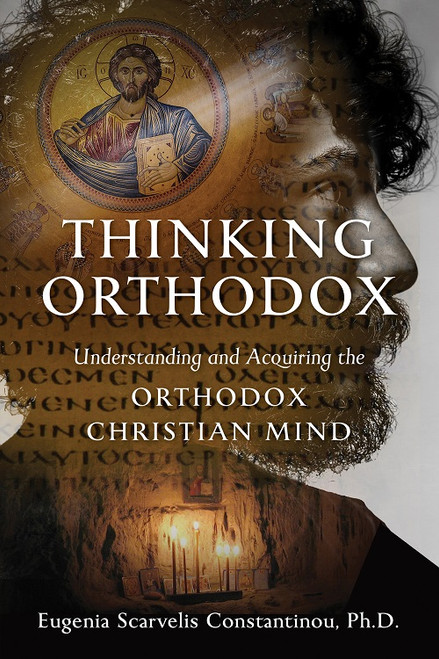
|
Thinking Orthodox: Unders... |
|
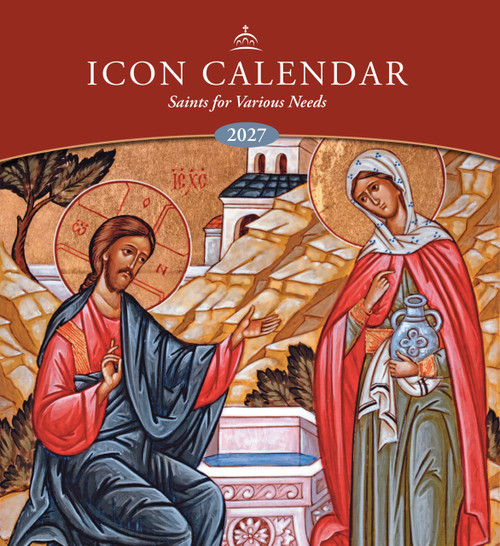
|
2027 Icon Calendar: Saint... |
|
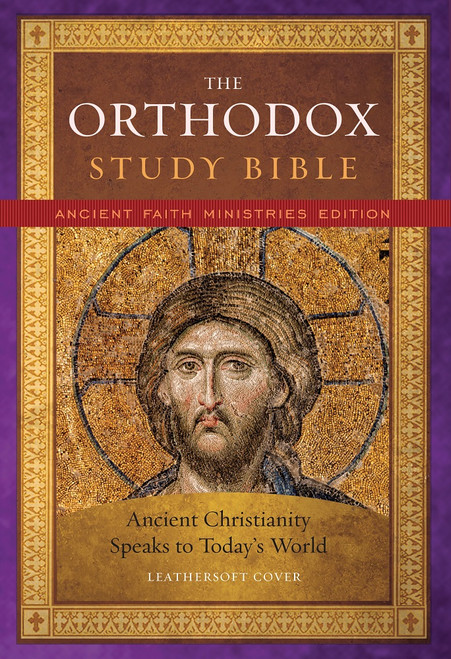
|
The Orthodox Study Bible,... |
|
Facebook
RaveCapture Commitment
RaveCapture transforms how businesses collect and showcase customer experiences. We take authenticity seriously and only allow 100% verified buyer reviews and UGC.
Guarantee
- RaveCapture Companies Are Held Accountable
- All Reviews Are Verified Customers
- Negative Reviews Can Never Be Deleted
With RaveCapture, you’re not just managing a reputation — you’re sharing the voice of your raving fans.
