4.9
From 1
to 5
Reviews
7083
Recommend
10 / 10
TrustScore
9.9 / 10
marci b
The Gospel of John: Beholding the Glory
Although this book wasn't exactly what I had expected; it is still a very huge help in one's understanding of the Gospel of JOhn. I found the historical background and the sort of conversational tone of the book, very "user friendly"!!! Not only that, but it made the Gospel of John really come alive!!! Another book, I'm sure I'll re-read many times.
 Originally Posted on Amazon
Anastasia
Our Hearts’ True Home: Fourteen Warm, Inspiring Stories
I really liked this book. I was initially drawn to it because it was suggested for those considering entering into the Orthodox Faith. As a Protestant who lived with a Greek Orthodox family and went on a pilgramige to an Orthodox monastery, now years later these experiences were comming back to me to warm my heart, whilst in a church which initially satisfied, but has failed to do so in the long run.
This is a book of stories from women from different faiths who have found their home in Eastern Orthodoxy... their different backgrounds, their experiences in previous faiths, how they came to be interested in Orthodoxy, what eventually called to them to have them convert. But I found something I could relate to in each and every story, and they all helped to point me towards this Faith.
This book gave me a feeling of being able to relate to so many other women from different experiences, who ended up in the Orthodox Church, as I did. I found something I could relate to in each and every story. So it was very affirming during a time when I was making a very big decision. As a woman entering into Orthodoxy, it is a really good book. (It has been said, as a put down, that Orthodoxy is a man's faith, but I don't agree.) It gives a lot of perspective on why people leave other faiths, and what it is like from an experiental perspective, rather than a theological basis for the change.
I recommend this book to any woman who has an interested in the Ancient Faith of Orthodoxy.
This is a book of stories from women from different faiths who have found their home in Eastern Orthodoxy... their different backgrounds, their experiences in previous faiths, how they came to be interested in Orthodoxy, what eventually called to them to have them convert. But I found something I could relate to in each and every story, and they all helped to point me towards this Faith.
This book gave me a feeling of being able to relate to so many other women from different experiences, who ended up in the Orthodox Church, as I did. I found something I could relate to in each and every story. So it was very affirming during a time when I was making a very big decision. As a woman entering into Orthodoxy, it is a really good book. (It has been said, as a put down, that Orthodoxy is a man's faith, but I don't agree.) It gives a lot of perspective on why people leave other faiths, and what it is like from an experiental perspective, rather than a theological basis for the change.
I recommend this book to any woman who has an interested in the Ancient Faith of Orthodoxy.
Originally Posted on Amazon
Diane Johnston
Let Us Attend! A Journey Through the Orthodox Divine Liturgy
After being Rroman Catholic for 60 years I realized I never completely understood how the Liturgury can bring you into the presense of the Trinity in this life. This takes you step by step through the Mass. It explains each detail and you will experience Creation, the Passion of Christ, the Resurrection, the Blessed Mother and her role in Salvation, the forgiveness of sins but most of all the eternal love of Christ. He is truly in our midst and and shall always be.
Originally Posted on Amazon
Brandy Shorten
Steps of Transformation: An Orthodox Priest Explores the Twelve Steps
I found this book in our church bookstore last Sunday. I am an Orthodox Christian, and an alcoholic. It has been difficult, to say the least, to find ANY literature about alcoholism written from an Orthodox perspective.
thing is, you don't have to be Orthodox to appreciate this book. Father Meletios rites in such a way that anyone can understand and appreciate his work. His insistence, too, that an alcoholic NEEDS Alcoholics Anonymous is heartening to one who has heard far too many times "Well, all you need is to go to church. You just don't believe enough." Etc, etc, ad infinitum. In fact, at the bottom of page 13 & top of page 14 in Steps of Transformation, he emphatically states "If anyone reading this book thinks he may be an alcoholic, or even fears that he might be, his best hope for recovery would be to put down this book and get in contact with a local group of AA as quickly as possible. An alcoholic needs the Twelve Steps, but he needs them within the context of the Fellowship of AA."
This is a powerful, moving, and well thought out glimpse into what it's like to be "one of us." The alcoholic is a lonely, fearful, spiritually and morally bankrupt individual. If there is someone in your life suffering from addiction in any form, please read this. The second part of the book does an excellent job of paralleling the journey of the alcoholic, and the journey of the Christian. They are not contradictory, and the Twelve Steps violate no Theolgy.
I highly reccommend this book to any Christian, anyone on a spiritual journey.
thing is, you don't have to be Orthodox to appreciate this book. Father Meletios rites in such a way that anyone can understand and appreciate his work. His insistence, too, that an alcoholic NEEDS Alcoholics Anonymous is heartening to one who has heard far too many times "Well, all you need is to go to church. You just don't believe enough." Etc, etc, ad infinitum. In fact, at the bottom of page 13 & top of page 14 in Steps of Transformation, he emphatically states "If anyone reading this book thinks he may be an alcoholic, or even fears that he might be, his best hope for recovery would be to put down this book and get in contact with a local group of AA as quickly as possible. An alcoholic needs the Twelve Steps, but he needs them within the context of the Fellowship of AA."
This is a powerful, moving, and well thought out glimpse into what it's like to be "one of us." The alcoholic is a lonely, fearful, spiritually and morally bankrupt individual. If there is someone in your life suffering from addiction in any form, please read this. The second part of the book does an excellent job of paralleling the journey of the alcoholic, and the journey of the Christian. They are not contradictory, and the Twelve Steps violate no Theolgy.
I highly reccommend this book to any Christian, anyone on a spiritual journey.
Originally Posted on Amazon
Martin R. Davis
First and Second Corinthians: Straight From the Heart
Lawrence Farley's bible study companions are an excellent resource. Not only do they provide an easy to use format - but with self-contained note pages and the actual bible verses printed in the book it can be used in confined spaces - i.e. while travelling etc.
This study guide has a definite bias - that of the Apostolic Church Father's interpretation of scripture. This is a GOOD THING. It opens the study passages up in a way that is closer to the originally intended understanding. If you're reading someone else's mail - i.e. a letter written to a first century Corinthian community - it's valuable to get insight into the cultural environment that existed during that time. Knowing the traditions that were handed down through the Fathers of the Church - helps in that understanding.
The background information is extremely thorough and often reveals a perspective on an obscure passage that we would not have access to, based on our viewpoints in today's society.
A very useful and valuable resource that makes a great addition to any bible study tools collection.
This study guide has a definite bias - that of the Apostolic Church Father's interpretation of scripture. This is a GOOD THING. It opens the study passages up in a way that is closer to the originally intended understanding. If you're reading someone else's mail - i.e. a letter written to a first century Corinthian community - it's valuable to get insight into the cultural environment that existed during that time. Knowing the traditions that were handed down through the Fathers of the Church - helps in that understanding.
The background information is extremely thorough and often reveals a perspective on an obscure passage that we would not have access to, based on our viewpoints in today's society.
A very useful and valuable resource that makes a great addition to any bible study tools collection.
Originally Posted on Amazon
Theodora
Offers fresh perspectives on this sensit...
Christian Faith and Same Sex Attraction (2015 edition)
Below is a review of Fr. Hopko's book that was unfortunately received by the publisher after the book had already gone to press, and was therefore not included with the final publication. Dr. Elizabeth Stuart is a Professor of Christian Theology at the University of Winchester. She is also a lesbian and a leading UK theologian specializing in Queer Theology. I believe the review speaks eloquently to the value of this book for those on both sides of this emotionally-charged issue. Her review is as follows:"Although I profoundly disagree with the stance taken towards homosexuality in this book I found it a delight to read. It is a careful, compassionate and comprehensive discussion of contemporary same-sex attraction from the perspective of the Orthodox tradition. It is informed by gay and lesbian theology and other alternative perspectives. I would recommend it to all who study or who are personally involved in the issues around same-sex relationships in the Christian tradition, perhaps particularly to those not part of the Orthodox tradition, for the rich theology of that tradition frames the debate in very different terms to those of other denominations. This book holds out the possibility of a debate which need not fracture the Church nor create alarming levels of animosity between Christians. For this reason alone, it is worth reading and engaging with."
Originally Posted on Amazon
MVS
Christ in the Psalms
Christ in the Psalms is one of the rare books that one can consider a true "blessing" to have read. It gives the reader a lot of spiritual 'meat' to chew on, and yet it is entirely readable and accessable. Erudite without being academic. Spiritual without being maudlin. Entirely orthodox and filled with dry wit and wry observations. Sometimes a passage was like a hand on the shoulder whispering kindly advice in my ear; other passages sharp but much needed criticism. Simply outstanding. At a time when I had a very poor spiritual director and so much unhappiness in the seminary, Fr. Reardon provided sorely needed mercy and respite through his book.
I have read this book twice, and in two ways. First, cover to cover, but in two or three chapter bits as an aid to meditation in chapel. The other way was skipping from psalm to psalm as I progressed through the (Roman Catholic) Liturgy of the Hours...praying the Psalms of the hour and then reading Fr. Reardon's commentary on the Psalms just prayed.
As I write this review, I cannot help but to think of the words of the Disciples on the road to Emmaeus: "Did not our hearts burn within us he opened the Scriptures to us?"
Perhaps the best thing I can say about the book is that it showed me the love and friendship of Christ in ways I had not known before. Therefore, I am compelled to recommend it to you and hope that you will get as much out of it as I did.
I have read this book twice, and in two ways. First, cover to cover, but in two or three chapter bits as an aid to meditation in chapel. The other way was skipping from psalm to psalm as I progressed through the (Roman Catholic) Liturgy of the Hours...praying the Psalms of the hour and then reading Fr. Reardon's commentary on the Psalms just prayed.
As I write this review, I cannot help but to think of the words of the Disciples on the road to Emmaeus: "Did not our hearts burn within us he opened the Scriptures to us?"
Perhaps the best thing I can say about the book is that it showed me the love and friendship of Christ in ways I had not known before. Therefore, I am compelled to recommend it to you and hope that you will get as much out of it as I did.
Originally Posted on Amazon
Maxfield Sparrow
Victory in the Unseen Warfare
Father Jack Sparks has created a trilogy of books bringing the 1589 Italian work, Spiritual Combat by Lorenzo Scupoli -- as edited by Saints Theophan the Recluse and Nicodemus of Mount Athos -- into a form that the average, non-scholarly layperson can benefit from. The other two books in this series are titled Prayer in the Unseen Warfare and Vitue in the Unseen Warfare. This volume is filled with teachings of victory over temptations and unseen demons that plague the life of the devout Christian. It is an Orthodox belief that the more an individual strives for holy union with God the harder that individual is attacked by the forces of darkness and ignorance. In this volume, Father Sparks gives the believer spiritual tools with which to combat those forces.
The book is broken into short chapters that are easy to read but filled with such great depth of meaning that it takes more than one run-through to really begin to assimilate. Each chapter ends with thought questions, testing the reader's understanding of the text and challenging them to go further into these ideas and into applying them to one's own life.
While talk of fighting demons might seem anachronistic or the stuff of fantasy fiction, Father Sparks' book is very serious and any reader who understands that concepts such as "depression," "anger," "greed," "impatience," and so forth are the manifestations of spiritual warfare will understand the everyday applicability of these spiritual teachings for modern life.
The book is broken into short chapters that are easy to read but filled with such great depth of meaning that it takes more than one run-through to really begin to assimilate. Each chapter ends with thought questions, testing the reader's understanding of the text and challenging them to go further into these ideas and into applying them to one's own life.
While talk of fighting demons might seem anachronistic or the stuff of fantasy fiction, Father Sparks' book is very serious and any reader who understands that concepts such as "depression," "anger," "greed," "impatience," and so forth are the manifestations of spiritual warfare will understand the everyday applicability of these spiritual teachings for modern life.
Originally Posted on Amazon
Mark S.
Christ in the Psalms
Though the writer is a Bible Scholar his writing style is both contemplative and devotional. He shows how each Psalm is a prophetic picture of Jesus Chirst. This is a great companion volume to read side by side with the Book of Psalms. I am a pastor of a non-denomination Christian church and have found this to be a great resource.
Originally Posted on Amazon
MVS
Very different approach. Very good.
Chronicles of History and Worship: Orthodox Christian Reflections on the Books of Chronicles
Fr. Reardon has once again proven that he is no ordinary theologian. I have been interested in liturgy for years, and never dreamed to consider liturgy in the light of Chronicles.
It is an impressive undertaking, and he completes the work in a relatively short book. The book is not exhaustive and it does not seem like he meant it to be. Instead it seems more like a meditation on liturgy and scripture that is meant to be the starting point for further consideration by the faithful reader.
I took away from it the idea that we do not form liturgy, but the liturgy must [in]form us. This is one of the major bones of contention in contemporary Church life. Do we take it upon ourselves to change the liturgy and try to make it more "relevant" or do we realize that liturgy is already entirely "relevant" and allow ourselves to be transformed by it? Any orthodox (and Orthodox) Christian would have to choose the latter.
It is an impressive undertaking, and he completes the work in a relatively short book. The book is not exhaustive and it does not seem like he meant it to be. Instead it seems more like a meditation on liturgy and scripture that is meant to be the starting point for further consideration by the faithful reader.
I took away from it the idea that we do not form liturgy, but the liturgy must [in]form us. This is one of the major bones of contention in contemporary Church life. Do we take it upon ourselves to change the liturgy and try to make it more "relevant" or do we realize that liturgy is already entirely "relevant" and allow ourselves to be transformed by it? Any orthodox (and Orthodox) Christian would have to choose the latter.
Originally Posted on Amazon
Gabriel Emanuel Borlean
A manifesto
Becoming Orthodox: A Journey to the Ancient Christian Faith
A manifesto for "introducing North America to the riches of this [Eastern Orthodox] historic faith". The quotes are the last words in the book. This 'manifesto' (imho) is not another 'conversion' story but rather the true story of a spiritual journey; a journey embarked by a group of fervent evangelical Protestants (Campus Crusade for Christ leaders) and which lasted over a decade. Peter E. Gillquist (the author) is a brilliant marketeer and presenter of his group's spiritual journey, of their search for the ancient faith and original New Testament Church.
The book is devided into three sections:
Part I describes the group's pilgrimage through the history of Christendom. This was done by assigning each members an area of research, such as church history pre-reformation and post-reformation, Biblical doctrine, and Christian worship. As Gillquist sumarizes this new journey in the last chapter, "the change came for us when we stopped trying to judge and reevaulate Church history, and for once invited Church history to judge and evaluate us."
Part II entitled "Orthodoxy and the Bible" is the meat of the book (imho). Here Gillquist does an excellent job of explaining (and not overpowering or over-analyzing) the most mis-understood and puzzling components of the Orthodox faith and praxis. These topics include:
a) explaining the use of all 5 senses in Orthodox worship,
b) the reasons for having a Christian historical tradition ("Traditon is there not just to preserve the Bible, but also to interpret it."),
c) using the title "Father" (Fr.),
d) why should we honor Mary (aka Theotokos - God-bearer),
e) and why does a Christian cross oneself?
Part III is a narative highlighting the lows and highs of a decade of pilgrimage before the Evangelical Orthodox Church (EOC - the name of over 2000 Protestants, 17 dioces who were becoming Orthodox) had been accepted and included into the Antiochian Orthodox Church.
As my title suggestions, this books is a great marketing tool for anyone interested in the Orthodox Church and Faith. One should not expect doctoral answers to difficult questions from this 191 page book (although a lot of Biblical verses are quoted and used for explanation). Personally I found the writing style very easy to read (the larger font and spacing definitely helped), coherent and logical, and even entertainining in some spots. I wish Gillquist would have written more about the ones who dropped out early on from the church history research, or the priests/bishops in EOC who did not join the Antiochian Orthodox Church. As a liturgical Protestant I certainly do not agree with the statement that "to forsake the Church, you must also forsake the faith" (pg.143) and I wish Gillquist would have spent more time talking about ecclesiology and its view and development throughout the history of Christendom.
Nevertheless, I found the tone, style, and content of this book to be non-polemical, Christian, and informative. I would recommend it for any Christian (Protestant, Catholic, Orthodox) interested in why a large group (over 2000) of hard-core evangelical Campus-Crusade-for-Christ Christian activists became and joined the Eastern Orthodox Church. This book is also beneficial to any non-Christian intersted in the One, Holy, Catholic, and Apostolic Church.
The book is devided into three sections:
Part I describes the group's pilgrimage through the history of Christendom. This was done by assigning each members an area of research, such as church history pre-reformation and post-reformation, Biblical doctrine, and Christian worship. As Gillquist sumarizes this new journey in the last chapter, "the change came for us when we stopped trying to judge and reevaulate Church history, and for once invited Church history to judge and evaluate us."
Part II entitled "Orthodoxy and the Bible" is the meat of the book (imho). Here Gillquist does an excellent job of explaining (and not overpowering or over-analyzing) the most mis-understood and puzzling components of the Orthodox faith and praxis. These topics include:
a) explaining the use of all 5 senses in Orthodox worship,
b) the reasons for having a Christian historical tradition ("Traditon is there not just to preserve the Bible, but also to interpret it."),
c) using the title "Father" (Fr.),
d) why should we honor Mary (aka Theotokos - God-bearer),
e) and why does a Christian cross oneself?
Part III is a narative highlighting the lows and highs of a decade of pilgrimage before the Evangelical Orthodox Church (EOC - the name of over 2000 Protestants, 17 dioces who were becoming Orthodox) had been accepted and included into the Antiochian Orthodox Church.
As my title suggestions, this books is a great marketing tool for anyone interested in the Orthodox Church and Faith. One should not expect doctoral answers to difficult questions from this 191 page book (although a lot of Biblical verses are quoted and used for explanation). Personally I found the writing style very easy to read (the larger font and spacing definitely helped), coherent and logical, and even entertainining in some spots. I wish Gillquist would have written more about the ones who dropped out early on from the church history research, or the priests/bishops in EOC who did not join the Antiochian Orthodox Church. As a liturgical Protestant I certainly do not agree with the statement that "to forsake the Church, you must also forsake the faith" (pg.143) and I wish Gillquist would have spent more time talking about ecclesiology and its view and development throughout the history of Christendom.
Nevertheless, I found the tone, style, and content of this book to be non-polemical, Christian, and informative. I would recommend it for any Christian (Protestant, Catholic, Orthodox) interested in why a large group (over 2000) of hard-core evangelical Campus-Crusade-for-Christ Christian activists became and joined the Eastern Orthodox Church. This book is also beneficial to any non-Christian intersted in the One, Holy, Catholic, and Apostolic Church.
Originally Posted on Amazon
chamus
Christ in the Psalms
It's hard to believe that Reardon can pack so much depth into such brief and elegant essays on all 150 Psalms. If all you have is ten minutes you can read a Psalm and his essay and you will have both a heart-glow and a mind-challenge for the rest of the day. Filled with appropriate quotes from the church fathers and information about the formation of the liturgical life of the church---how a particular psalm is used in the church's liturgy.
Originally Posted on Amazon
Mr. Robert C. Bonds
Transformation from Protestantism to Orthodoxy
Becoming Orthodox: A Journey to the Ancient Christian Faith
Do you think that you are the only one who is dis-satisfied with Western Christianity? Is the constant blaring of praise music from a band and Power Point presentations on the church wall losing its appeal? Have you moved from church to church looking for something that is not quite there, not filling that spiritual hole that eats at your soul. Is all of your Bible study not answering the questions that keeps eating at you? Then reading the story of Peter Gillquist and his friends' search for a true relationship with God may be the first step on setting your mind at ease.
Fr. Gillquist was part of the Christian movement on college campuses during the 1960s and 70s. He and his friends were trying to offer to those of that generation a Christian alternative to free love, drugs, and sex. In their outreach to the youth they met on college campuses came very tough questions that despite all of their religious zeal were not being answered by Evangelical Protestanism.
As Fr. Gillquist and his friends searched for the truth, they found the truth lay not in the Western Church, the Church of Rome, Calvin, Luther, or Crammer. Their search for truth took them back to the Early Church, when there was no difference from East & West. As Fr. Gillquist and company found answers to very tough questions that tore at their souls, they realized that their core beliefs were those of Eastern Orthodoxy, the Church that has remained unchanged for a thousand years.
The story of Fr. Gillquist goes from the discovery of true Christian faith to the founding of a church based on Orthodoxy to final acceptance in the Eastern Church.
If you are searching for something that is lacking in your current Christian life and have wondered what Orthodoxy is all about, then read the journey of Fr. Gillquist, it may well start you on your own journey where you re-connect with God.
While it may be a well worn saying, this is a must read for those who wish to have an understanding of Orthodoxy
Fr. Gillquist was part of the Christian movement on college campuses during the 1960s and 70s. He and his friends were trying to offer to those of that generation a Christian alternative to free love, drugs, and sex. In their outreach to the youth they met on college campuses came very tough questions that despite all of their religious zeal were not being answered by Evangelical Protestanism.
As Fr. Gillquist and his friends searched for the truth, they found the truth lay not in the Western Church, the Church of Rome, Calvin, Luther, or Crammer. Their search for truth took them back to the Early Church, when there was no difference from East & West. As Fr. Gillquist and company found answers to very tough questions that tore at their souls, they realized that their core beliefs were those of Eastern Orthodoxy, the Church that has remained unchanged for a thousand years.
The story of Fr. Gillquist goes from the discovery of true Christian faith to the founding of a church based on Orthodoxy to final acceptance in the Eastern Church.
If you are searching for something that is lacking in your current Christian life and have wondered what Orthodoxy is all about, then read the journey of Fr. Gillquist, it may well start you on your own journey where you re-connect with God.
While it may be a well worn saying, this is a must read for those who wish to have an understanding of Orthodoxy
Originally Posted on Amazon
Mr. Robert C. Bonds
Thirsting For God in a Land of Shallow Wells
To those raised as Protestants and especially those who are Evangelical Protestants, this book will open your eyes to why one would convert to Orthodox Christianity. The author talks about his spiritual journey through the Protestant religious movement and how he step along the way he never could find that true spiritual connection with God.
Gallatin in a very easy to read yet well written style tackles why there are so many Protestants who are disenchanted with their religious lives. No amount of praise music, no megachurch, nothing in what has become an endless journey could satisfy that longing and true thrist in his soul to be a peace with God.
When reading his journey, I could see those in my own family and myself looking but never connecting with God the Father, God the Son, and God the Holy Spirit.
This book greatly helped me in my search and decision to convert to Orthodox Christianity. I cannot recommend this book enough to those who are disenchanced with their Christian religious life. Today, much of Western Christianity both in Europe and the United States is floundering, trying to rewrite what cannot be rewritten. Gallatin's work helps one to clearly see that we must return to the true faith which has stood the test of time.
Gallatin in a very easy to read yet well written style tackles why there are so many Protestants who are disenchanted with their religious lives. No amount of praise music, no megachurch, nothing in what has become an endless journey could satisfy that longing and true thrist in his soul to be a peace with God.
When reading his journey, I could see those in my own family and myself looking but never connecting with God the Father, God the Son, and God the Holy Spirit.
This book greatly helped me in my search and decision to convert to Orthodox Christianity. I cannot recommend this book enough to those who are disenchanced with their Christian religious life. Today, much of Western Christianity both in Europe and the United States is floundering, trying to rewrite what cannot be rewritten. Gallatin's work helps one to clearly see that we must return to the true faith which has stood the test of time.
Originally Posted on Amazon
Fr. Tervo
The Trial of Job: Orthodox Christian Reflections on the Book of Job
The Book of Job is fruitful to read without a guide, but if you want to "dine on it," you must have a trusted guide. I have read Fr. Reardon's other books as well as his reflections in Touchstone Magazine and I know him to be a trusted guide. As an Orthodox Christian I chose this book to read during Great Lent. As an Orthodox Christian priest, I recommend others to do so as well. This book is very good in providing a key to understanding Job's defenses, arguments and rebuttals, as well as those of his three so-called "Comforters." I particularly found the chapters where "the wrath of Elihu" puts Job on the right track. Fr. Reardon's reflections on these chapters I found particularly edifying. To paraphrase Fr. Reardons reading of on of Elihus's counsels, "no one, not even Job, is beyond improvement." Like Job, we need to and can learn from our suffering and the suffering of others to "love God for God's sake." "Behold God is mighty, but despises no one; He is mighty in strength of understanding."
Like true Orthodox Christian catechetical writings, this book is written by a real person to real people. This book is best specifically because it is NOT a scholarly work. It is a good book for people who care about the salvation of their souls.
Like true Orthodox Christian catechetical writings, this book is written by a real person to real people. This book is best specifically because it is NOT a scholarly work. It is a good book for people who care about the salvation of their souls.
Originally Posted on Amazon
Stratiotes Doxha Theon
Thirsting For God in a Land of Shallow Wells
The question in Agrippa's (Acts 26:28) lips seems fitting now for mine. As a long-time and committed Reformed Protestant, I must say I have never been so challenged by such a work as this. I am amazed by how quickly Mr. Gallatin went through all my objections one by one and led me to seek out more about the Orthodox church. It is a well done and well written apologetic that left me hungry for more like it.
Originally Posted on Amazon
B. Ann Grafe
Thirsting For God in a Land of Shallow Wells
The author shares with the reader the questions he asked himself as he journeyed from several church denomination-types to finally finding his fulfillment in Orthodoxy. These are the same questions which we need to meditate on and ask ourselves, whether or not we reach the same conclusion he did.
Originally Posted on Amazon
Fr.Matthew Harrington
Thirsting For God in a Land of Shallow Wells
I remember the first time I read this book. I felt deeply convicted and encouraged at the same time. The author divides very difficult matters for protestant to understand in a very easy and digestible manner. In fact this is the book I give to my family when they have questions about the Orthodox faith and how it relates to their beliefs. I have not talked to anyone whom I have given the book to read whoes view of Orthodoxy were not changed. They may not have agreed with the Church but they understood it so much better that it allowed a much better dialog to discuss the Orthodox faith. I whole heartedly recommend this book.
Originally Posted on Amazon
X. Libris
Steps of Transformation: An Orthodox Priest Explores the Twelve Steps
In the following quote from the Introduction to "Steps of Transformation: An Orthodox Priest Explores the Twelve Steps," author Fr. Meletios Webber does an excellent job of summarizing his own work:
"This book has two main purposes: The first is to explore the Twelve Steps of the Fellowship of Alcoholics Anonymous, to explain them to those who may be unfamiliar with them, and to show why the Steps are important in helping people recover from alcoholism (and from other addictive conditions).
"The second purpose of this book is to present the Twelve Steps in such a way that members of the Orthodox Church might find them a valuable resource for their own personal spiritual development, should they choose to use them. Furthermore, even though most of the issues discussed will be illustrated using examples from the life of the Orthodox Church, it is hoped that members of other Christian traditions may also find this material helpful as they continue on their spiritual journey."
This book succeeds in achieving both purposes admirably.
When I began reading this volume, over a year ago, I had a nodding acquaintance with Alcoholics Anonymous and Twelve Step programs. Over the course of the past year, thanks largely to the reading of this book, I have become more personally acquainted with Twelve Step programs, and have learned about their effectiveness in changing the lives of countless individuals.
Not only that, but as I've talked with participants in various Twelve Step programs, I've encountered individuals whose spiritual journey resembles the disciplines I've been trying to incorporate in my own life for many years.
It's amazing to discover how this remarkable program is based on the tried and true disciplines of ancient Christian spirituality, such as acknowledging one's powerlessness over addictive behaviors (sin); that a Power greater than ourselves could restore us (dependence on God); make a decision to turn our will and lives over to God; made a searching and fearless moral inventory; admitted to God, to ourselves, and to another human being the exact nature of our wrongs (confession); were ready to remove defects of character (repentance), etc.
This is a remarkable book (dare I say "life-changing?"). It is easy to read, it explains AA and Twelve Steps as well as anything else I've read on the subject to date. It's a great introduction for the curious, especially for those who identify themselves as Christians. There's no need to be Orthodox to derive benefits from this excellent volume, and for those who may be interested in learning more about Orthodoxy, it will give some very practical insight into the spirituality of the Orthodox Christian faith.
Highly recommended. Then the reader may be interested in reading "Alcoholics Anonymous" (commonly called "The Big Book") next.
"This book has two main purposes: The first is to explore the Twelve Steps of the Fellowship of Alcoholics Anonymous, to explain them to those who may be unfamiliar with them, and to show why the Steps are important in helping people recover from alcoholism (and from other addictive conditions).
"The second purpose of this book is to present the Twelve Steps in such a way that members of the Orthodox Church might find them a valuable resource for their own personal spiritual development, should they choose to use them. Furthermore, even though most of the issues discussed will be illustrated using examples from the life of the Orthodox Church, it is hoped that members of other Christian traditions may also find this material helpful as they continue on their spiritual journey."
This book succeeds in achieving both purposes admirably.
When I began reading this volume, over a year ago, I had a nodding acquaintance with Alcoholics Anonymous and Twelve Step programs. Over the course of the past year, thanks largely to the reading of this book, I have become more personally acquainted with Twelve Step programs, and have learned about their effectiveness in changing the lives of countless individuals.
Not only that, but as I've talked with participants in various Twelve Step programs, I've encountered individuals whose spiritual journey resembles the disciplines I've been trying to incorporate in my own life for many years.
It's amazing to discover how this remarkable program is based on the tried and true disciplines of ancient Christian spirituality, such as acknowledging one's powerlessness over addictive behaviors (sin); that a Power greater than ourselves could restore us (dependence on God); make a decision to turn our will and lives over to God; made a searching and fearless moral inventory; admitted to God, to ourselves, and to another human being the exact nature of our wrongs (confession); were ready to remove defects of character (repentance), etc.
This is a remarkable book (dare I say "life-changing?"). It is easy to read, it explains AA and Twelve Steps as well as anything else I've read on the subject to date. It's a great introduction for the curious, especially for those who identify themselves as Christians. There's no need to be Orthodox to derive benefits from this excellent volume, and for those who may be interested in learning more about Orthodoxy, it will give some very practical insight into the spirituality of the Orthodox Christian faith.
Highly recommended. Then the reader may be interested in reading "Alcoholics Anonymous" (commonly called "The Big Book") next.
Originally Posted on Amazon
T. Doan
Leavemealone gives false info
Becoming Orthodox: A Journey to the Ancient Christian Faith
Hi
the nagative review by leavemealone is totally off Base.....apparently this person has never read the Didache written by first Century christians describing Christian worship.....as far as mass miracles go he's obviously never belonged to a church that had a weeping icon of the Theotokos or smelled Myrrh coming from the icon itself happening as soon as a beloved priest died...well i have......also Jesus did not set up his church to be a spiritual buffett...pick and choose your beliefs........as far as the Roman Catholic question he needs to start reading christian history.........He also obviously has no idea what Holy Communion is all about..........
Orthodoxy is not head knowledge , it's a living, breathing extension of God....
the nagative review by leavemealone is totally off Base.....apparently this person has never read the Didache written by first Century christians describing Christian worship.....as far as mass miracles go he's obviously never belonged to a church that had a weeping icon of the Theotokos or smelled Myrrh coming from the icon itself happening as soon as a beloved priest died...well i have......also Jesus did not set up his church to be a spiritual buffett...pick and choose your beliefs........as far as the Roman Catholic question he needs to start reading christian history.........He also obviously has no idea what Holy Communion is all about..........
Orthodoxy is not head knowledge , it's a living, breathing extension of God....
Originally Posted on Amazon
About Ancient Faith Store
At Ancient Faith Store, we are dedicated to providing a rich collection of resources that celebrate and preserve the Orthodox Christian faith. Our mission is to help individuals and families grow in their spiritual journey through a wide array of products, including books, music, icons, and gifts that reflect the beauty and depth of Orthodox Christianity.
We believe that faith is a journey, and we strive to accompany you every step of the way with materials that inspire, educate, and uplift. Whether you're looking for a profound theological work, a children’s book that teaches the values of our faith, or a beautifully crafted icon to adorn your home, you'll find it here.
Our commitment to quality and authenticity means that every item is carefully selected to ensure it aligns with the teachings of the Church. We are passionate about fostering a vibrant Orthodox community, and we invite you to explore our store to find the tools that will enrich your spiritual life and connect you more deeply to the traditions of our faith. Thank you for being a part of our journey.
Visit Website
We believe that faith is a journey, and we strive to accompany you every step of the way with materials that inspire, educate, and uplift. Whether you're looking for a profound theological work, a children’s book that teaches the values of our faith, or a beautifully crafted icon to adorn your home, you'll find it here.
Our commitment to quality and authenticity means that every item is carefully selected to ensure it aligns with the teachings of the Church. We are passionate about fostering a vibrant Orthodox community, and we invite you to explore our store to find the tools that will enrich your spiritual life and connect you more deeply to the traditions of our faith. Thank you for being a part of our journey.
Ancient Faith Store is a Verified Merchant
Questions? Contact Us
support@ancientfaith.com
800-967-7377
Mon-Fri (9am-5pm CST)
Top Rated Products
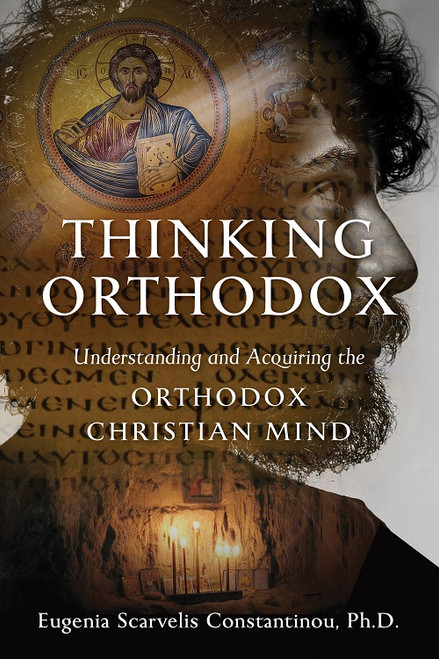
|
Thinking Orthodox: Unders... |
|
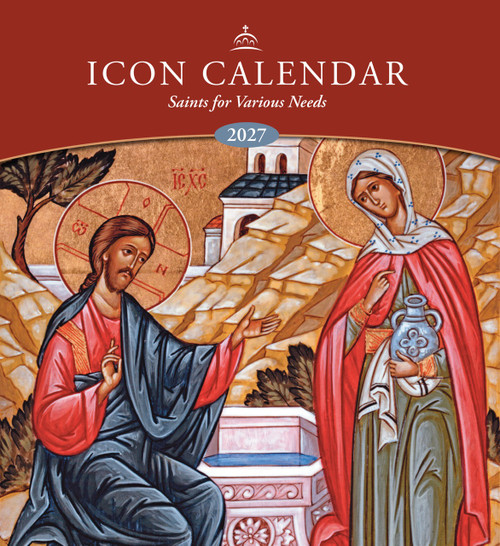
|
2027 Icon Calendar: Saint... |
|
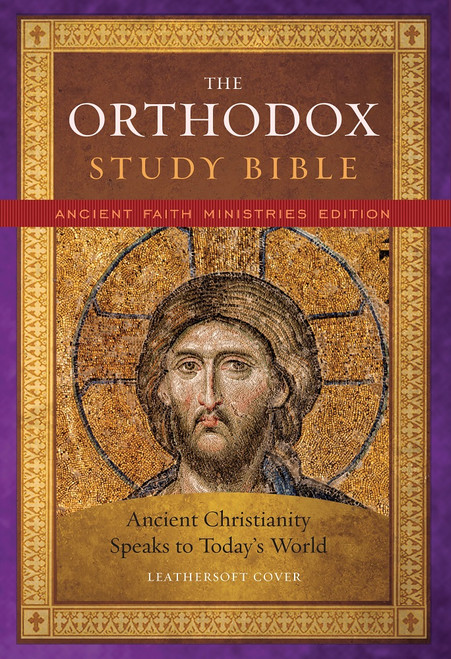
|
The Orthodox Study Bible,... |
|
Facebook
RaveCapture Commitment
RaveCapture transforms how businesses collect and showcase customer experiences. We take authenticity seriously and only allow 100% verified buyer reviews and UGC.
Guarantee
- RaveCapture Companies Are Held Accountable
- All Reviews Are Verified Customers
- Negative Reviews Can Never Be Deleted
With RaveCapture, you’re not just managing a reputation — you’re sharing the voice of your raving fans.