
4.9
From 1
to 5
Reviews
7083
Recommend
10 / 10
TrustScore
9.9 / 10
Mark M
Verified Buyer
2027 Icon Calendar: Saints for Various Needs (Gregorian version, new calendar)
I bought two of them, to share one with my g/f!
Juliana
Verified Email
Painting Angels (Sam and Saucer, Book 3)
This third book in the series about Sam and Saucer yet again inspires and encourages all members of the family. For this review, I also tasked by 9 and 11.5-year-old boys to read and report on their thoughts.
My 9-year-old stated, “I liked the whole thing because you never knew whether or not they (Macrina and Sam) were actually going to work together, and they kept fighting and fighting and fighting until they worked together.” He related this to his life with siblings and friends, as well as with peers that he doesn’t always understand or relate to. He also related to same because, “I love Sam and the doggie – I like that Sam likes doggies like me.”
He also said, “I like the series so much I want the fourth book to come,” and he also said, “I just re-listened to the first two, when can I listen to it on Audible?” Needless to say my 9-year-old gives this book all the stars he can and recommends it to everyone. His review is pertinent because he has been a reluctant reader, and these books have really encouraged him to continue chapter after chapter. His reasoning was, “The chapters have really good cliffhangers that make you want to keep reading till the end.” His only criticism was wanting the book to be longer so that he’d know more about the characters and the monastery and also so that he wouldn’t be in so much suspense for the next book.
According to my 11.5-year-old, he liked the book because of the true to life relationships. He very much appreciated how Sam was able to help Macrina by getting an adult when she got really upset instead of getting back at her. He stated, “I recommend this book because I like how the adults saw how they were fighting with one another and figured out something to get them to work together.” For me it was a reminder that I may need to be more deliberate and purposeful in helping my children to get along. My 11.5-year-old pointed out that this book is strong in teaching us that getting along doesn’t always happen through force, but through cooperation.
These books have given both of my boys some insight into what life at a monastery, or at least visiting one, could be. There isn’t one near us, but they would both like to go. It also helps to normalize some of their own church and peer experiences.
I have found these books to be great for the whole family, with only the 2-year-old not quite understanding what is happening because she is 2. We love having these stories in Audible format as well (and look forward to Painting Angels being on Audible) because they are enjoyable over and over again, engaging, and great for car rides or bedtime when the kids need to settle down. I’m grateful to the author for the spirit that is evident in each book, with characters who seem real throughout in both struggles and successes. I, along with my children, hope to see many more books in this series.
Emily
Verified Email
Painting Angels (Sam and Saucer, Book 3)
To begin, I had my 10 year old daughter read Painting Angels and give me her thoughts:
I liked the book because it was very exciting and interesting.
It was a good book because it talks about being nice to people you might not think you would be friends with.
I was able to make connections with my own visit to a monastery. Some of the nuns reminded me of the nuns that I interacted with when I visited.
It made me really want to find out what was going to happen next.
While I was reading the book I understood what Macrina was feeling and I was wondering why Sam was doing what he was doing.
I can really relate to Macrina.
While I was reading the book it felt like a short story but it still feels like it had a lot of detail. I really felt like I could have been there in the story. I could see the story unfolding in my head.
My thoughts on Painting Angels:
I was immediately drawn to the ease of reading this book. The words are big and the phrases are small. The story moved at a quick pace and I did not want to put the book down. I actually finished it in one day! I know that the character Sam has been introduced in other books in this series. While this book stands alone, I do feel like I missed some history that could have helped me understand his character better. That being said, I really want to read the other Sam and Saucer books! I fell in love with Macrina and her frustrations. I ended up day dreaming of what it would be like getting to spend my summers working at a monastery. The style of the story reminded me of The Magic Treehouse books. I am thankful to have some easier chapter books for my 7-10 year olds to read. The message was easy to understand and written in an interesting format for a young (and even older) reader. I really hope that there are more books written about Sam and Macrina, I fell in love with the characters!
Keith P
Verified Buyer
Prayer Rope, blue 50 knot with icon, cross, and tassel
When not 'actively' engaged in prayer, merely holding the Prayer Rope is meditative & recolective. There is a growing internal quiet through this simple, unassuming practice...
Nehemiah T
Verified Buyer
The Orthodox Study Bible, Ancient Faith Edition, Hardcover: Ancient Christianity Speaks to Today’s World
Thank you for making it easier for me to understand and study with the common practice of the English version.
Craig S
Verified Buyer
Prayer Rope, blue 50 knot with icon, cross, and tassel
Beautiful....great price...excellent gift
John M
Verified Buyer
Orthodox Christian Prayers
Love it!
David T
Verified Buyer
The Blessed Surgeon: The Life of Saint Luke, Archbishop of Simferopol
The Blessed Surgeon is one of the greatest books that I have ever read - It discusses the life and ministry of a truly God-fearing man whom the Church now recognizes among the Saints.
A wonderful book!
A wonderful book!
Nicholas D
Verified Buyer
Prayer Rope, blue 50 knot with icon, cross, and tassel
This prayer rope is absolutely beautiful. It assists me in prayer as I finger these beautiful knots. It is an inspiration to use it.
Evelyn
Verified Buyer
Censer, 6.5" tall, smooth brass-tone finish
It’s beautiful, replaces one I’d had for years that broke . I would recommend it to anyone looking for a Censer .
Maria R
Verified Buyer
2020 Orthodox Children’s Calendar: Journey through the Great Feasts
It is okay. I will be using some of recipes with my nanny children (my own kids are young adults &
I work FT as a nanny with children under 5)
Artwork is only so-so. By contrast, I love the
Icon calendar that I bought at same time.
Hope this “review “ is helpful.
Maria Roberts☦️
I work FT as a nanny with children under 5)
Artwork is only so-so. By contrast, I love the
Icon calendar that I bought at same time.
Hope this “review “ is helpful.
Maria Roberts☦️
Zeb J
Verified Buyer
Orthodox Christian Prayers
Very nice prayerbook with sections for specific reasons and occasions.
ROBERT S
Verified Buyer
Heaven Meets Earth: Celebrating Pascha and the Twelve Feasts
A guy on Youtube raved about this book. It is superb, captures one's attention, and informs one about the meaning of these feasts in the life of the Church. And the Feasts of Feasts!
Benjamin H
Verified Buyer
The Orthodox Study Bible, Ancient Faith Edition, Hardcover: Ancient Christianity Speaks to Today’s World
Great, I love it
Tracey L
Verified Email
Painting Angels (Sam and Saucer, Book 3)
Painting Angels is the third installment of Melinda Johnson’s series. The first two, Sheparding Sam and The Barn and the Book, I had the pleasure of sharing with my two children, as I did with this one.
Painting Angels continues the story of the beloved monastery full of caring, insightful nuns. This story, though, is a bit different, but just as engaging as the previous two. Sam and Macrina, two Orthodox children, who attend the monastery church services on a regular basis, are the only two children who will be spending their summer working at the monastery, doing chores with and for the nuns. Sam and Macrina do not like each other and the nuns know this. The nuns, like most parents, considered the path of least resistance, give the children jobs and chores where they would not have to interact with each other. They quickly realized this would not be best.
As a parent, I have a continuous, evolving conversation, with my own children on how to handle difficult relationships with those they do not seem to have anything in common with. We are consistently talking about patience, kindness, sometimes silence, and love. And just like real life, Sam and Macrina’s lives are complicated and a bit messy. They both face truths about themselves and each other. They both learn two valuable lessons: The truth will set you free and Love is the only rule. So very simple, yet difficult at the same time. Even as adults, we struggle to be heard in certain situations. But the relationship between love and truth is a celebration of what truly matters and are useful tools in guiding both children and adults.
This story transported me to the monastery. I clearly saw the imprint of the dog in the dirt that Sam drew from his front porch, I saw Macrina with her braided hair, twisted tightly in a bun, wearing her red rubber boots and denim shorts as she stood on the ladder and scrubbed. I watched as Sam and Macrina worked together to transport Lazarus and carry him safely into the monastery. I was there through descriptions, artfully expressed through words. I heard my children chuckle as I read Macrina’s thoughts about Sam and vice versa. I saw my 11 year old son, nod out of the corner of my eye, when Sam was exasperated with Macrina. This story resonates with adults, but, more importantly, children. I highly recommend this book and series for children ages 8-12.
Erica
Verified Email
Painting Angels (Sam and Saucer, Book 3)
Painting Angels is the third installment in a series about a monastery nestled in a small village when, according to the back cover, there are hardly any monasteries and small villages. I had never read Melinda Johnson’s previous installments: Shepherding Sam or The Barn and the Book, so I didn’t know what to expect when I cracked open this red, brightly covered novella with two tweens looking at each other, with a bit of chagrin and annoyance in their faces, a happy corgi pup at their feet.
Furthermore, I have a confession: I’m a bit of a snob when it comes to children’s literature. I was an English teacher for six years before coming home to raise my growing brood of children. We are homeschooling currently, and I am a happy subscriber to the Read Aloud Revival whose mission is to encourage parents/caregivers to enrich the lives of children through beautifully crafted and illustrated books for ages 2-18.
Over the past few years, our tastes have developed in ways I would not have expected. Love for Beatrix Potter and Frances Hodgson Burnett. A love for Ezra Keats, Patricia Polacco, Eric Carle, Mo Willems, Jeff Kinney, Tomie DePaolo, Noel Streatfeild, Robert Munsch, and many many others.
So, anytime I go to open up a children’s religious literature, I have a healthy bit of skepticism. I won’t endure artifice. I want a rich, captivating story, full of nuances and character development. Full of courage and hope and love.
Painting Angels delivers that, and so much more.
Macrina and Sam, our two central characters are real, or as real as a fictional story can make them, with real dilemmas, confusions, and quirks. They have defense mechanisms to protect themselves and their little world views. Sam is brutally honest–mostly to protect the happy little world he’s created with Saucer, the monastery’s dog, and the farm animals. Macrina uses rule following to protect her image as a “good girl”.
Behind both of these defense mechanisms is fear. Sam’s afraid his beautiful world will be destroyed by outsiders that just “don’t get it”. And Macrina also lives in fear: Will God love me and bless me if I mess up?
Furthermore, these two characters have never gotten along. Oil and water. Black and white. Forks and power outlets. There’s all sorts of cliches you can use to describe how these two characters are far from friends or even cordial. It’s fair to say, they are each other’s nemesis in the beginning of the tale.
Yet, they’re both placed at a village Orthodox Monastery for the summer. Well, let’s just say, conflict was inevitable. They pick. They shout. They run. They get the nuns and parents worried and praying, hard. I love the dilemma’s the nuns face in the beginning of the story: “Should we let Sam and Macrina work together this summer on some projects around the farm? Even though we know there will be conflict? It would be ‘easier’ to give them separate jobs….?”
As a mother of three small humans, I run into this dilemma often: “It would be easier and prettier if I made the bed, baked the cookies by myself, cleaned the car, picked up the dirty clothes/plates/toys…etc” But, guess where people learn? In the thick of it. In the struggle. In the nitty gritty parts of life.
Philip Malamakis writes in Parenting Towards the Kingdom: “Children internalize our reactions to them at these difficult times more than when we behave. It is specifically in the midst of these daily struggles that we teach most effectively and shape our children’s minds, hearts, and souls” (p. 31).
And just like myself, that has to make these kinds of moral decisions daily, so did Sister Anna and Sister Katherine at the monastery. And guess what they chose to do? Let the conflict unfold. That, in a culture where convenience is often THE factor behind so many decisions, is pretty revolutionary. It’s also what makes this story so good. And also so powerful. Our world needs more people and characters, that are willing to love people through their struggles and past their own sense of entitlement and laziness.
Sam’s mom and dad get that too. They don’t coddle or condemn Sam. Neither do the nuns towards Sam or Macrina. They take a step back. They let the “fur fly” (metaphorically speaking, there was no physical violence in the book), and wait patiently and prayerfully in the wings to come in and listen, love, and guide these characters towards love and truth.
This is so powerful and important because it’s all too easy to sap children of their personhood in religious communities. We, as a culture, are more concerned with children “behaving” through a prayer service (i.e. being still and quiet) that we fail to care about their internal struggles. We want our perceptions of our children to be good. We want our egos to be raised by how well behaved our little angels are….no matter how hurt and confused they are under the surface. We love children, in theory, when it’s easy, but not in practice. I’m preaching to myself here, because, I need reminded of this too.
That’s why I loved this story. It’s messy. It’s confrontational. And both characters had to learn, the hard way, that:
1.) Love is the only rule
2.) The truth will set you free
Not just Sam and Macrina, but won’t we all wrestle with these principles our entire lives?
As for the books structure and style, I’m so thankful for the minimal exposition. I imagine, in part, that this is because it’s the third installment in a series, so exposition need not be heavy. Yet, I love books when the author is artful enough to capture a scene and drop you in it without dozens of paragraphs “painting the scene”. As a lover of Hemingway, I like that style.
I like the way Macrina stops, mid stride, when she hears Sam’s going to be at the monastery in the opening scene. She, quite literally, can’t conceive of moving after hearing someone so agitating will be spending time with her this summer.
I like the way Sam slips out the back door with Saucer, the corgi dog, after communion. Sam’s his own person–not interested in socializing after Liturgy.
I like how Macrina runs after him and, desperate to be the “good girl”, offers him a bandaid because she noticed his slipped off during church. Sam rejects her offer. She takes offense. Quickly, we realize, Macrina is more interested in Sam’s opinion of her than in actually helping him. Sam, oblivious to this or quite calculatingly, takes advantage of her insecurity and does his best to make her realize she’s “not welcome” in his world. He uses the hard truth: “I don’t want a bandaid. I’m on a hemophiliac” to, yes, not take the bandaid, but also to give Macrina the hint: I don’t like you; get away.
And here’s the magic of this story. Throughout it, we see these two characters, individually and in conjunction, fight with theses inner thoughts and feelings.
Yes, love is the only rule. And yes, the truth will set you free. But it is in the marriage of those two that true goodness and peace resides.
Now, what I really found so important about this story is that 2020 America needs lots and lots of stories that deal with the marriage of love and truth. We need to see how a community can heal the divisions that we have created through our arrogance, pride, laziness, entitlement, gossip…etc. We need to see that conflict isn’t the end of the story. That picking “sides” isn’t the story either. We must be willing to move past our own insecurities, foibles, assumptions, arrogance, and lethargy to find solutions that are both sincere and feasible.
Whether it’s wearing a mask in public places, choosing a school, or fighting for racial equality, we need zeal and wisdom. We need love and truth. We must fight the urge to coddle our perceptions/egos/assumptions, and we must fight the urge to condemn others as “shallow,” “weak minded,” or “useless”.
Love is deeply inconvenient. We must face our own temptations and weaknesses. We must be willing to guide people through their false narratives. Be it a three year old or a thirty-five year old. People must be willing to patiently and prayerfully, love one another, like he sisters at the monastery love. Like the parents of Sam and Macrina love.
We must love people through the unpleasantness of life. And right now, America’s got a lot of unpleasantness (ain’t that the euphemism of the century).
You know, the title, Painting Angels is rather a miracle. Not because there is anything spectacular about two tweens painting together. It’s because these two tweens painted together. That’s the real miracle. Goodness knows we need more people who are willing to set aside their egos and become friends.
Painting Angels reminds me, in a small way, of real life story. The story of Daryl Davis ; the black jazz artist who would play for the KKK and befriend the members. He converted some of the worlds most pernicious hate group advocates into people that were friends with a black man. Wow. The courage. The prayerfulness. The patience. That’s the kind of story I want to hold on to. And, right now, the kind of story our world really needs.
By the way, Melinda Johnson is now on my “favorite authors list”. Her other installments will be secured and devoured. We’ll await the next. Bravo, Melinda Johnson, bravo.
Liam (
Verified Email
Painting Angels (Sam and Saucer, Book 3)
I don't know how to explain it. It is SO good! I hope there is another. I love the way Macrena and Sam interact. Saucer is my FAVORITE dog! I love the illustrations as well. They really add to the story. -Liam (9 years old)
Presbytera S
Verified Buyer
Creation of Heavenly Bodies, large icon
What a beautiful icon! I honestly did not expect to like it as much as I do, though of course I expected to like it. The depth of color, and the richness of the background's visual texture, all make it feel more like a hand-painted icon than just a copy. It really is beautiful. Thank you.
Mary H
Verified Buyer
Laurel and the Wind
At once both peaceful and adventuresome, the tale of Laurel and The Wind transports its readers on zephyrs of imagination, tradition, and vision. The winsome young Laurel, whose dreams are informed by her faith, is transported to antiquity, eternity, and home again. Her elegantly told journey is brought to life by jewel-like illustrations of her home on the sea and the vivid splendor of her dream. This satisfying story affords tranquil pleasure at bedtime or quiet time, a delight for adults to read aloud, or a child in silent contentment.
Kristina W
Verified Email
The Wilderness Journal: 365 Days with the Philokalia
Angela Doll Carlson’s book “The Wilderness Journal: 365 Days with the Philokalia” is a year’s worth of daily meditations on volume 1 of the Philokalia. That volume features writings from St. Isaiah the Solitary, Evagrios the Solitary, St. John Cassian, St. Mark the Ascetic, St. Hesychios the Priest, St. Neilos the Ascetic, St. Diadochos of Photiki, and St. John of Karpathos. “The Wilderness Journal” is divided into sections which feature each of those holy writers. Angela has invited a fellow author to introduce each writer. Thus, there are a few “guest author” days sprinkled throughout the book, one at the beginning of each section, immediately preceding the entries related to that writer’s quotes. Each subsequent day features one thought-provoking quote from the holy writer, and a short meditation related to that quote which Angela wrote as she pondered its message. She invites the reader to amble along slowly with her in this way through the first volume of the Philokalia, so that they, too, may learn “the love of the beautiful”.
These meditations grant the reader a glimpse of the author's take on the quote, as well as the opportunity to stretch their own heart and mind in a way that is both good and helpful. Carlson does not want the reader to consider her words as writing “about the Philokalia,” preferring rather that readers instead read her words as “a book about [her] reading the Philokalia.”(p. 7) She recognizes that each reader may respond to the quotes in a different way, so she encourages each person to keep their own wilderness journal as they read.
These meditations grant the reader a glimpse of the author's take on the quote, as well as the opportunity to stretch their own heart and mind in a way that is both good and helpful. Carlson does not want the reader to consider her words as writing “about the Philokalia,” preferring rather that readers instead read her words as “a book about [her] reading the Philokalia.”(p. 7) She recognizes that each reader may respond to the quotes in a different way, so she encourages each person to keep their own wilderness journal as they read.
About Ancient Faith Store
At Ancient Faith Store, we are dedicated to providing a rich collection of resources that celebrate and preserve the Orthodox Christian faith. Our mission is to help individuals and families grow in their spiritual journey through a wide array of products, including books, music, icons, and gifts that reflect the beauty and depth of Orthodox Christianity.
We believe that faith is a journey, and we strive to accompany you every step of the way with materials that inspire, educate, and uplift. Whether you're looking for a profound theological work, a children’s book that teaches the values of our faith, or a beautifully crafted icon to adorn your home, you'll find it here.
Our commitment to quality and authenticity means that every item is carefully selected to ensure it aligns with the teachings of the Church. We are passionate about fostering a vibrant Orthodox community, and we invite you to explore our store to find the tools that will enrich your spiritual life and connect you more deeply to the traditions of our faith. Thank you for being a part of our journey.
Visit Website
We believe that faith is a journey, and we strive to accompany you every step of the way with materials that inspire, educate, and uplift. Whether you're looking for a profound theological work, a children’s book that teaches the values of our faith, or a beautifully crafted icon to adorn your home, you'll find it here.
Our commitment to quality and authenticity means that every item is carefully selected to ensure it aligns with the teachings of the Church. We are passionate about fostering a vibrant Orthodox community, and we invite you to explore our store to find the tools that will enrich your spiritual life and connect you more deeply to the traditions of our faith. Thank you for being a part of our journey.
Ancient Faith Store is a Verified Merchant
Questions? Contact Us
support@ancientfaith.com
800-967-7377
Mon-Fri (9am-5pm CST)
Top Rated Products
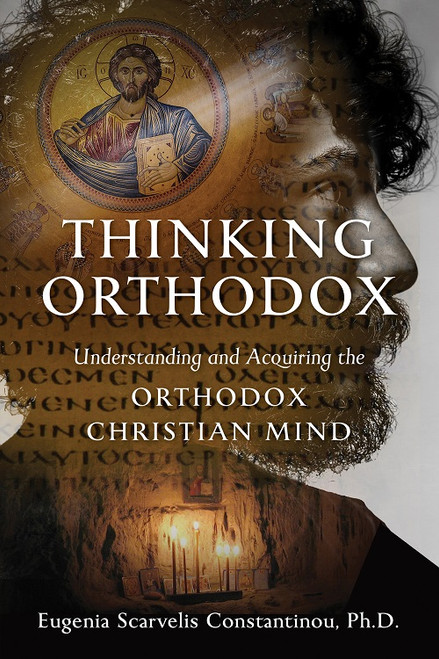
|
Thinking Orthodox: Unders... |
|
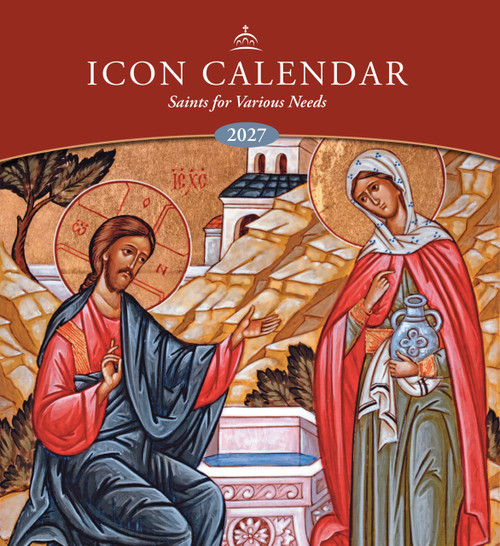
|
2027 Icon Calendar: Saint... |
|
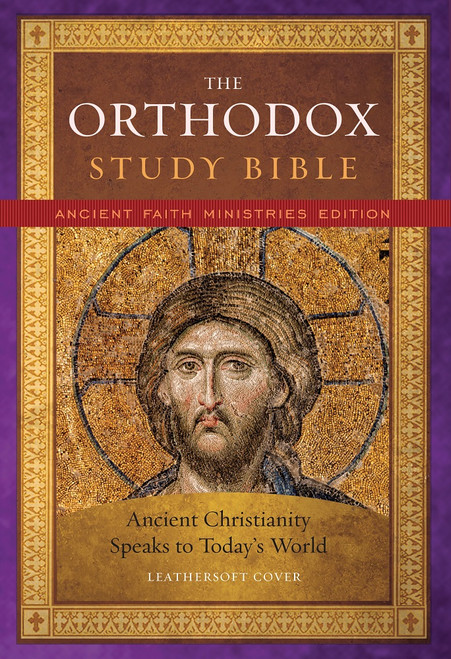
|
The Orthodox Study Bible,... |
|
Facebook
RaveCapture Commitment
RaveCapture transforms how businesses collect and showcase customer experiences. We take authenticity seriously and only allow 100% verified buyer reviews and UGC.
Guarantee
- RaveCapture Companies Are Held Accountable
- All Reviews Are Verified Customers
- Negative Reviews Can Never Be Deleted
With RaveCapture, you’re not just managing a reputation — you’re sharing the voice of your raving fans.
