
4.9
From 1
to 5
Reviews
7083
Recommend
10 / 10
TrustScore
9.9 / 10
Marty B
Father Lawrence knows his Greek
A Patristic Treasury: Early Church Wisdom for Today
Having devoured three other study guides that Father Lawrence Farley has written (Romans, Luke and John) I decided to go digital on this book and bought this for Kindle. I don't want this to be a review of the Kindle format - I still love books with real pages in many ways - and a study guide that you may flip back and forth in for re-reference is not extremely well suited for ebook readers.
What Father Lawrence does in interpreting and explaining scripture is unique to me. Instead of relying on common bible translations, he uses something closer to a straight translation of Greek, and sometimes the original Aramaic words and tells the reader what the more common English translations lose. He provides a line-by-line description of the scripture and adds background and context in an Orthodox manner.
So, is this book just for Orthodox Christians? Does it portray Christ only in that flavor? No way! I'm in a evangelistic Presbyterian church and slight differences in our belief structure vs. the Orthodox tradition are easily discerned and understood. I use these Farley texts in my bible study group and the group members love the insights that Father Lawrence brings to our study.
 Originally Posted on Amazon
Jenifer
Verified Email
The Age of Paradise: Christendom from Pentecost to the First Millennium
The Age of Paradise offers a unique and compelling history that seeks to understand how we came to this current post-Christian moment. There’s a lot here that would benefit readers of any denominational background who take an interest in the current state of western culture and would like to deepen their understanding of history. I found it both accessible and intellectually engaging.
In reading this book I was awed at the ways Christendom managed to spiritually transform the world in the first millenium, and the ways in which that transformation is still visible despite massive cultural changes. The early Christian reorientation of time toward heavenly reality is one example of this enduring change. All of this was accomplished, as Strickland describes in his book, in a world where the Church fathers elaborated the theological view of deification, or man’s ability to participate in the divine life. The belief that human beings can have real union with God compelled early Christians to create the cultural conditions where this could take place. Today it is easy to see this anthropological view of man as a private call on the individual, yet The Age of Paradise makes it apparent that traditional Christianity had a much larger goal in mind. The results were beautiful, and Strickland notes that it was the optimism and joy of early Christian culture that led the pagan world to want to be a part of it.
I look forward to reading the books that will follow this volume. In full disclosure, I was gifted a copy of this book for a fair review.
Juliana
Verified Email
We Came, We Saw, We Converted: The Lighter Side of Orthodoxy in America
The author got the title of this book just right, especially the byline. It definitely presents the “lighter” side of Orthodoxy here in America. When I offered to read and review this book in exchange for a copy from the publisher, I was expecting some very humorous anecdotes, and images of the everyday life of converts - that’s what I get for having never listened to Father Joseph Huneycutt’s blog before this book. Had I listened, I might have better known what to expect.
At first, I read with all seriousness. Then I realized that it sometimes (often) went over the hyperbolic top. Many of the characters could never be real. Nor could some of the situations. Yet there was always a ring of truth to each of the stand-alone chapters; while presented in a light manner, these truths often resonated longer and more deeply than some of the more overtly deep books that I will occasionally trudge through.
This book offered truth through story, allegory, and reflection. I am grateful to own it, and can see myself reading it more than once - it’s likely to rest in a location where I may read a quick chapter every once in a while. It is a book that anyone could read (whether Orthodox or not) and enjoy. The persistent theme that I took away from it was that the surface is not as important as what is underneath. For instance, the chapter titled, “An Empty Church is a Peaceful Church” reminds us that we are meant to worship together, and that the goal is Christ, not always a quiet and peaceful church. Fr. Huneycutt writes on page 164, “The Good News is: God never changes. Christ is the same yesterday, today, and forever. And when seeking peace in our churches, it must be His peace, the peace that passes all understanding, which we seek.” He reminds us all that at the core of our faith, it is ultimately not about us, but about God.
I was often caught off guard, even once I sort of knew what to expect. Fr. Huneycutt does a great job catching readers off guard, taking us on adventures, allowing us to listen in on conversations that may or may not be real, and then confronting us with Truth. And it’s a beautiful process. I’ve also listened a few times to the “Orthodixie” podcast on Ancient Faith Radio, and found that it, too, helps listeners to learn and to grow in their faith in a fun and down to earth manner. Reading, and now listening, I must agree with him and what he said on page 93: “I realized, even more so, the work I had yet to do on my own heart."
Tess H
Verified Email
Out of Step with God: Orthodox Christian Reflections on the Book of Numbers
I have read through the book of Numbers a couple of times over the years as part of my attempts to read the bible in a year. I confess though that my eyes would glaze over, I would skim through verses not really understanding anything.
One of the things I failed to grasp when reading Numbers on my own is that the people God is speaking to are the ones wandering in the desert and they will not enter the promised land. I knew this but I didn’t stop and think about that fact.
I didn’t notice the significance of the type of census taken of the tribes or that the tribe of Levi was numbered differently. I didn’t pay attention to the significance of the placement of the tribes around the tabernacle when camped or that different branches of the Levitical tribe were assigned different duties. It is there but because my eyes would glaze over and I just skimmed I never put it together.
Patrice Henry Reardon points these things out. He points out that in Numbers 15 the rules for sacrifices are for those who will enter the Holy Land and that these adults wandering in the desert are not going to be the ones who need these instructions.
If you are looking to start a read-through-the-Bible-in-year program and you want to start with the liturgical new year or you are looking ahead to start in January, you’ll want to include Out of Step with God: Orthodox Christian Reflections on the Book of Numbers by Fr Patrick Henry Reardon.
This softcover book is not a long read at 166 pages, but it is eye-opening for those of us, like me whose eyes glaze over and end up skimming while reading Numbers.
Trudy E
Verified Email
The Age of Paradise: Christendom from Pentecost to the First Millennium
“Before there was a west, there was Christendom.”
“Today we Westerners live in an advanced state of cultural oblivion.”
“The world marches progressively forward, yet we are progressively paralyzed its rootless passions.” “...we are increasingly a people without memory of it.”
These quotes are all on the first page of the Introduction of The Age of Paradise, Father John Strickland’s new book. Written with care and accessibility to the everyday reader, I found the content very interesting and a good read. The author doesn’t fall into academic nitty-gritty detail of his topic but gives a good view of the people of the early Church’s understanding and reality of heaven on earth, or as he puts it the “culture of paradise.” I appreciated the reinforcement that Christians lived in a community “as individuals but not individualists” a significant difference (p41). They believed “forcefully in the reality of the Eucharist” unlike many today (p49).And that the “early church membership was predominantly female (p73), which speaks to the great value and raising up of women Jesus Christ and the early Christians demonstrated.
Father Strickland is honest with the historical picture he presents to the reader. Revealed is the good, the bad, the ugly, and most certainly, the beautiful. For the first millennium the East and the West were unified in “doctrinal integrity, divine participation, heavenly immanence and spiritual transformation.” (p280)
We do well to pause and dwell a moment in this place. Like Moses in his encounter with God on Mount Sinai, am I, (are you, are we as a people) able to apprehend the paradise the early Church lived, not simply in Divine Liturgy, but daily, so that those around us see the shining Light coming from our face as Aaron and the Israelites saw on Moses’s face?
I highly recommend “The Age of Paradise” and look forward to the projected three volumes to accompany it.
ERNEST R
Verified Buyer
The Orthodox Study Bible, Ancient Faith Edition, Hardcover: Ancient Christianity Speaks to Today’s World
It came quickly and in perfect condition. I bought it to explore Orthodoxy and have been enjoying reading it.
Cindy B
Verified Buyer
Mother of the Light: Prayers to the Theotokos
This prayer book is a lovely companion in both word and size.
Mary P
Verified Buyer
Spyridon's Shoes
Wonderful
Vera T
Verified Buyer
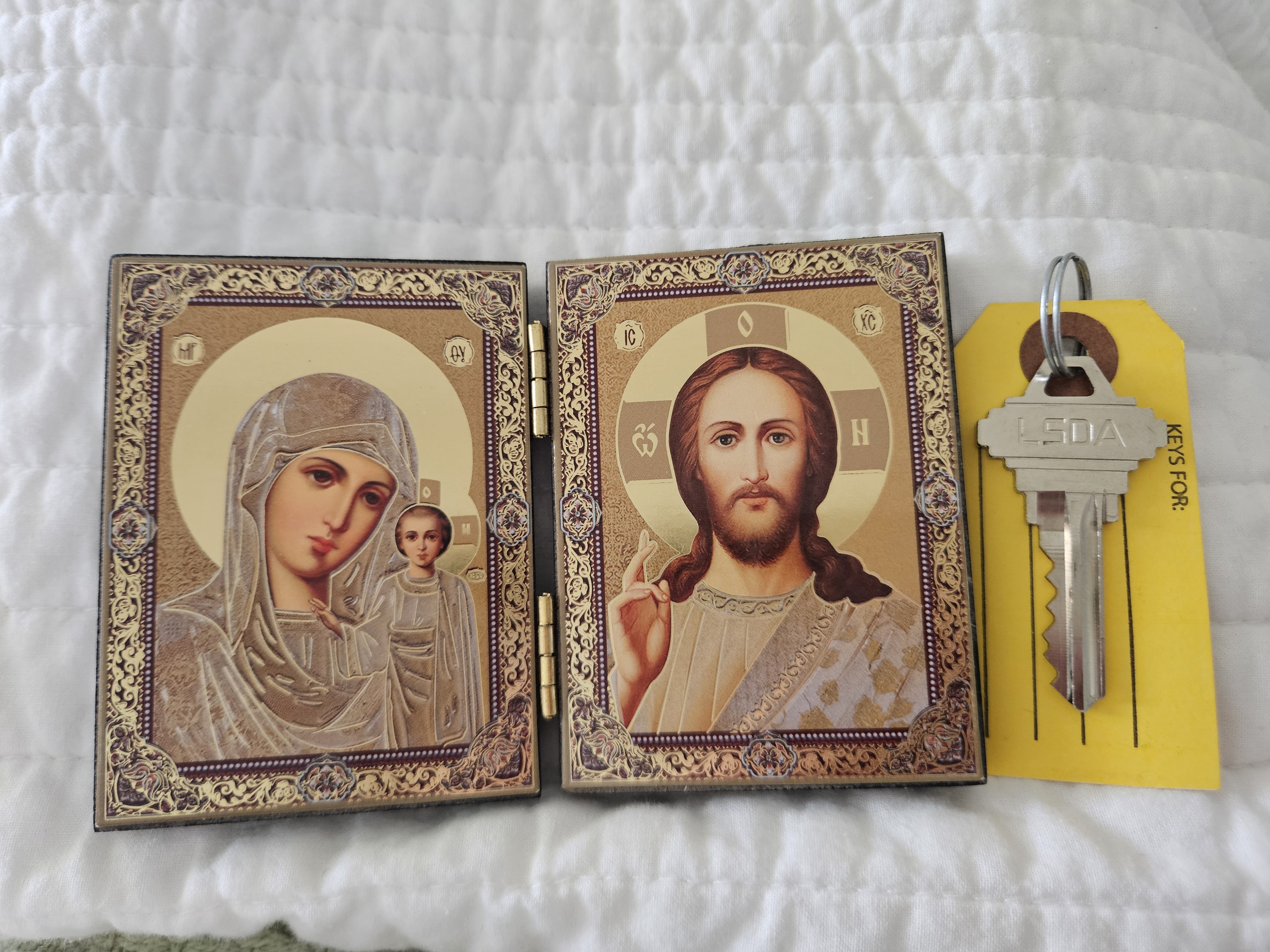
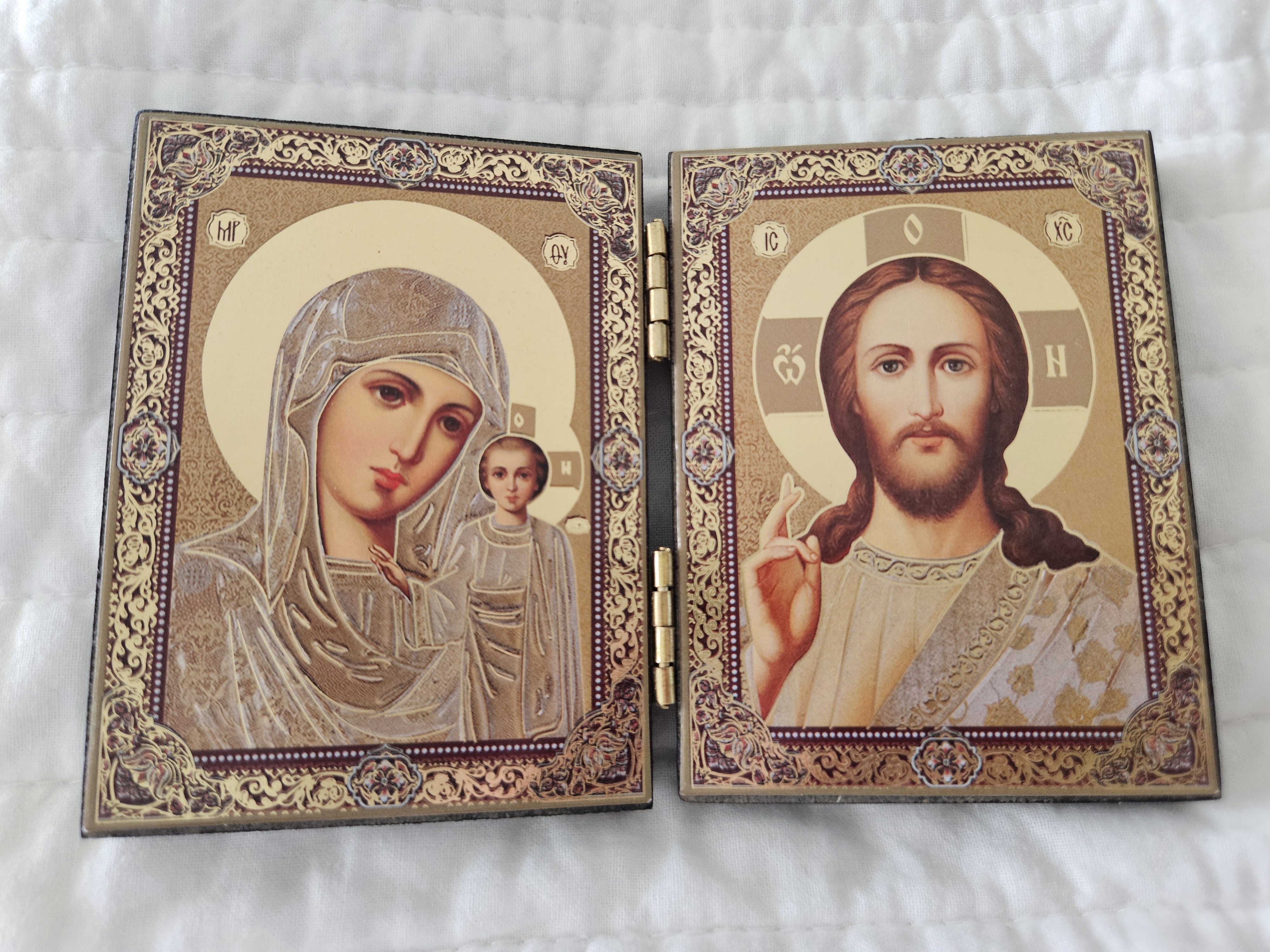
Diptych: Virgin of Kazan and Christ The Teacher, dome-shaped, medium icons
I am very disappointed in the Russian language used on the reverse side of the Icons. Nobody in our family can read it. The Icons themselves are beautiful. I would not have ordered them had I known about the language used.
Elenie G
Verified Buyer
Spyridon's Shoes
Terrific book! A quick read for our 3rd grader, but the whole family was engaged to read it out loud. Our boys enjoyed the octopus hunting! The author uses a clever method to inspire faith in God, while subtly revealing the power of the intercession of the Saints. Keep writing more!
Jerome S
Verified Buyer
The Orthodox Study Bible, Ancient Faith Edition, Hardcover: Ancient Christianity Speaks to Today’s World
Essential for studying the Holy Scriptures as an Orthodox Christian.
J. P
Verified Email
The Age of Paradise: Christendom from Pentecost to the First Millennium
It should be readily apparent to most that Christianity no longer has the popular cultural sway it had even a generation ago. Moreover, the faith is not even united within itself, with dozens of larger denominations and thousands of independent churches, a variety of creeds, and even entirely different and incompatible understandings of faith, salvation, sin, and repentance. Saint Vincent of Lérins, writing in the early 5th century, in qualifying both what the core of Christianity is, and what it is not, gave his maxim as “Moreover, in the Catholic Church itself, all possible care must be taken, that we hold that faith which has been believed everywhere, always, by all.” What then was it that Christians of that time believed? What did Christianity look like in its first millenium, and might an understanding of that early ethos inform increasingly embattled Christians today? John Strickland, in The Age of Paradise: Christendom from Pentecost to the First Millenium, presents both a history of the first millenium of Christianity and what those first Christians believed, and an argument that the loss of that early vision says much about the culture wars of today. The first significant divergences in Christian belief and practice (which would culminate in the Great Schism of 1054) need to be understood both in the context of the preceding centuries, and in their implications for the further fracturings that would ripple from the Reformation through the cultural crisis of the collapse of Christian faith and cultural influence of today in the West.
What was fundamentally “believed everywhere, always, by all” for the first millenium of Christianity, argues Strickland, was that the Kingdom of God preached by Jesus and his disciples, and proclaimed loudly with Jesus’s resurrection, was neither distant in time, nor distant in space from our own world, nor remote and set apart, but immanent - that is to say near at hand and present already about us. The early Christians believed that we already lived within reach of Paradise itself, that we could experience it (even if imperfectly) in humility and repentance. As Strickland argues, those believers of the first millenium lived with a confidence and hope, truly making that an age of paradisical belief. United as they were in their beliefs, despite wars and political intrigue over what was once the Roman world, one could still at that time speak of Christendom as a single common society.
Thus Strickland begins his narrative, taking the reader from the Book of Acts, through the Ecumenical Councils (and the various crises of faith that necessitated them), the Christianization of the Roman world, the collapse of the western empire, the new order wrought in the West by the Franks in the 8th and 9th centuries, and how the unity of the faith, began to crack under political and theological pressures. At the book’s end, the reader is right on the precipice of the Great Schism, and the parting of ways between Easter and Western Christianity that would follow in its aftermath.
For the Orthodox reader, this book is both an excellent single-volume church history for the lay historian, but an excellent and non-polemical (or political) exploration of what led to the Great Schism. If we want to have any understanding of how and why Rome and the East splintered apart, much less any understanding of whether any restoration of communion is possible, we must first understand what happened and why. Strickland is very careful, for instance, to demonstrate that some of the earliest roots of the break up lay with the Iconoclasm crisis in the East, and how that crisis led an already somewhat isolated Papacy to seek military and political protection with the Franks.
Nota Bene: Ancient Faith Publishing provided me with a review copy of this book.
Genevieve
Verified Email
We Pray, paperback version
I was gifted a copy of this book in exchange for an honest review.
This book is full of colourful, engaging illustrations that draw in young children. The words are simple and at times more complex and poetic. The author seems to have carefully selected each word to convey complex truths about prayer and faith for young listeners. My own kids enjoy this book being read aloud and they often include it in their book basket near their bed. I am happy to give this book five stars!
This book is full of colourful, engaging illustrations that draw in young children. The words are simple and at times more complex and poetic. The author seems to have carefully selected each word to convey complex truths about prayer and faith for young listeners. My own kids enjoy this book being read aloud and they often include it in their book basket near their bed. I am happy to give this book five stars!
Maci Barbour
The Ancient Faith Prayer Book
My wife and I are becoming converts to Orthodoxy and were looking for a simple book to help us navigate daily prayer. Coming from an Anglican background, we were accustomed to the Book of Common Prayer, and wanted something similar. This prayer book met all our needs and more. We particularly appreciate the mealtime prayers. Integrating our daily rhythms with the prayer of the Church has been deeply rewarding!
Originally Posted on Amazon
Maci Barbour
Great Introduction to Orthodox Prayer for Converts
The Ancient Faith Prayer Book, burgundy cover
My wife and I are becoming converts to Orthodoxy and were looking for a simple book to help us navigate daily prayer. Coming from an Anglican background, we were accustomed to the Book of Common Prayer, and wanted something similar. This prayer book met all our needs and more. We particularly appreciate the mealtime prayers. Integrating our daily rhythms with the prayer of the Church has been deeply rewarding!
Originally Posted on Amazon
Dr.D. L.Whitman
Throughly done
Reclaiming the Atonement, Volume 1: The Incarnate Word
Father Reardon's work is Biblically based and Patristic. It is one of the most balanced studies of the atonement that I have read in my years of theological readings. A great work. I look for more volumes to read.
Originally Posted on Amazon
Stephanie
Verified Email
Out of Step with God: Orthodox Christian Reflections on the Book of Numbers
The Book of Numbers isn’t new territory for me. I enjoy reading and studying the Bible. I’ve taught Bible surveys with women’s groups and developed a 7th grade Christian school curriculum on the Pentateuch. The Book of Numbers isn’t new territory for me, but in working through the Pentateuch my time in its company has been relatively brief, in comparison to the other books, with only Leviticus receiving shorter shrift. I’ve always felt a bit guilty walking so quickly through its pages, and it was with anticipation that I slowed my pace to reflect on Numbers in the company of Father Patrick Henry Reardon.
Parts of Numbers are, frankly, tedious and repetitive, but even in the Numbers’ passages I found most arid Fr. Reardon’s reflections engaged me with needed context, unexpected insights, and related biblical trails to explore. Interspersed amongst the thirty-six reflections (corresponding to each chapter of Numbers) are eight short excursuses; I particularly appreciated the excursus “Understanding Anger” and his discussion of connections between Moses and Job which was new territory for me.
At just 166 pages, Out of Step with God: Orthodox Christian Reflections on the Book of Numbers is a very readable companion piece that will make a journey through the book of Numbers less daunting and more accessible for the average layperson than a more technical commentary.
Janet E
Verified Buyer
A Song in the Furnace: The Message of the Book of Daniel
While I"ve not quite finished the book, I'm about half-way through and am really appreciating the Orthodox viewpoints concerning Daniel. I'm teaching a Bible Study on Daniel and wanted a variety of resources and study notes. This has actually been my "go-to" for the class because of its fair dealings with the idiosyncrasies. Really an excellent resource
Andrey Evdokimov
A healing book
Becoming a Healing Presence
Insightful and simple. This book peels back the layers of passions and son to reveal a healing potential. High appraise.
Originally Posted on Amazon
Justin W
Verified Email
Out of Step with God: Orthodox Christian Reflections on the Book of Numbers
Several times I have successfully read through the Scriptures from cover to cover. Each time it begins well, but after finishing Genesis and Exodus the reading becomes quite difficult. One of the more difficult books of the Old Testament to read is the book of Numbers. The seemingly unending lists of names, tribes, and goods make reading slow and painful.
In his new book, Out of Step With God: Orthodox Christian Reflections on the Book of Numbers, Father Patrick Henry Reardon helps to avoid missing the forest for the trees. Father Patrick sets out to give us a lens through which we can approach this difficult-to-read, yet highly fruitful, book of the Scriptures. As he guides the reader through the book of Numbers chapter by chapter, Father Patrick focuses on the details that help to paint the bigger picture that is being painted. His commentary helps the reader to connect the dots, rather than become bogged down in the details, as the book of Numbers reveals several aspects of who God is and how His people are to know and worship Him.
I highly recommend this latest work by Father Patrick Reardon. For those struggling in the path of salvation this book will help avoid getting out of step with God.
(I was provided a complimentary copy for an honest review)
About Ancient Faith Store
At Ancient Faith Store, we are dedicated to providing a rich collection of resources that celebrate and preserve the Orthodox Christian faith. Our mission is to help individuals and families grow in their spiritual journey through a wide array of products, including books, music, icons, and gifts that reflect the beauty and depth of Orthodox Christianity.
We believe that faith is a journey, and we strive to accompany you every step of the way with materials that inspire, educate, and uplift. Whether you're looking for a profound theological work, a children’s book that teaches the values of our faith, or a beautifully crafted icon to adorn your home, you'll find it here.
Our commitment to quality and authenticity means that every item is carefully selected to ensure it aligns with the teachings of the Church. We are passionate about fostering a vibrant Orthodox community, and we invite you to explore our store to find the tools that will enrich your spiritual life and connect you more deeply to the traditions of our faith. Thank you for being a part of our journey.
Visit Website
We believe that faith is a journey, and we strive to accompany you every step of the way with materials that inspire, educate, and uplift. Whether you're looking for a profound theological work, a children’s book that teaches the values of our faith, or a beautifully crafted icon to adorn your home, you'll find it here.
Our commitment to quality and authenticity means that every item is carefully selected to ensure it aligns with the teachings of the Church. We are passionate about fostering a vibrant Orthodox community, and we invite you to explore our store to find the tools that will enrich your spiritual life and connect you more deeply to the traditions of our faith. Thank you for being a part of our journey.
Ancient Faith Store is a Verified Merchant
Questions? Contact Us
support@ancientfaith.com
800-967-7377
Mon-Fri (9am-5pm CST)
Top Rated Products
|
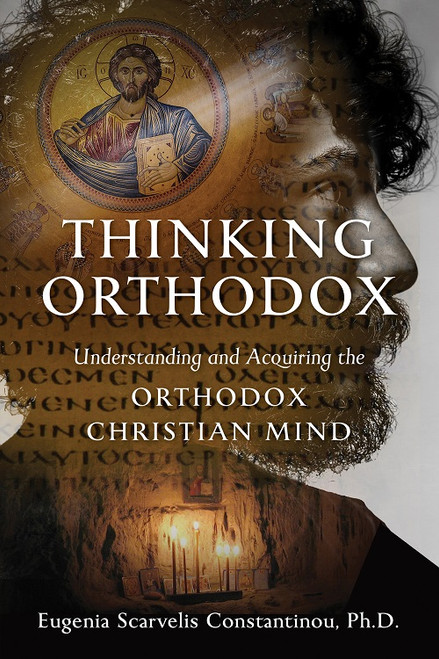
Thinking Orthodox: Unders... |
|
|
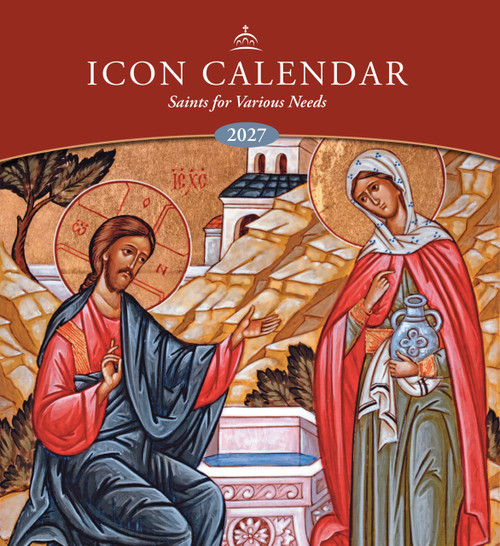
2027 Icon Calendar: Saint... |
|
|
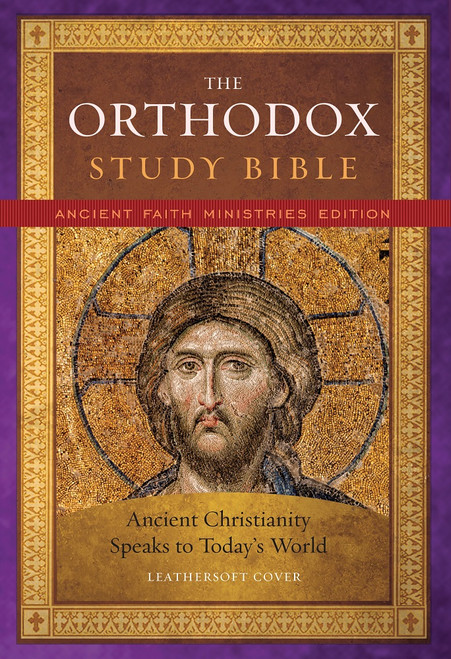
The Orthodox Study Bible,... |
|
Facebook
RaveCapture Commitment
RaveCapture transforms how businesses collect and showcase customer experiences. We take authenticity seriously and only allow 100% verified buyer reviews and UGC.
Guarantee
- RaveCapture Companies Are Held Accountable
- All Reviews Are Verified Customers
- Negative Reviews Can Never Be Deleted
With RaveCapture, you’re not just managing a reputation — you’re sharing the voice of your raving fans.
