
4.9
From 1
to 5
Reviews
7083
Recommend
10 / 10
TrustScore
9.9 / 10
Stuart Dunn
Beautiful book
The Names of Jesus: Discovering the Person of Jesus Christ through Scripture
Years ago, I used to transcribe podcasts for Ancient Faith Radio. It was an fun side-job, because I was able to trade my services for the books they published. However, in addition to that perk, I also learned a lot because, I had to listen more intently and pay closer attention. To this day, the podcasts I remember most are those of Fr. Thomas Hopko. His speaking style was brisk and brilliant. He made a subject accessible, but also was known for occasionally dropping Greek, Hebrew, and/or Aramaic words and phrases all in the same breath. One of his best known podcasts series was called The Names of Jesus. In 2010, Ancient Faith Publishing published a book by the same name. The book is divided into 53 chapters with each chapter focusing on different names and titles for Jesus in the Bible.
Some of the titles included in this book are Son of God, I AM, Last Adam, Way, Truth, and Life. The chapter that I really liked was Bread of Life. I really wanted to focus on this one when reading through the book, because the Holy Eucharist is the Mystery on which Eastern Orthodoxy and Catholicism stands This title comes from John 6:35. It is here that the people ask Jesus for bread, and He reveals to them that He is the Bread of Life. We recently read this passage to my son from his children's Bible, and he has stuck with him better than any other story. What stood out to me the most in this chapter was how he explained the differences between the two different feedings of the multitudes. It was truly beautiful to read his explanation on it.
There is a great deal of wisdom in this book, but in a highly approachable manner. Yes, there is a great deal of Scripture and explanations of Greek and Hebrew translations of certain passages, but this doesn't make it difficult but instead illustrates the points more clearly. With each chapter between 3 and 8 pages long, it makes for a manageable reflection length. I personally recommend reading a chapter at the beginning of each week. Then, you can go back and re-visit the chapter or reflect on it all week long. This may mean you have to read the book over the course of the year, but what a year it will be!
This book was provided to me for free by Ancient Faith Publishing in exchange for an honest review.
 Originally Posted on Amazon
Robert Badger
A laudatory review from a Catholic reader
Orthodoxy and Heterodoxy: Finding the Way to Christ in a Complicated Religious Landscape (2017 edition)
For the record, I am a Roman Catholic priest. What I am stating here is my own opinion and should not be in any way construed as representing that of my diocese or of the Catholic Church as a whole. Obviously, I do not agree with Father Damick regarding Catholicism. However, I think that many of my brother priests and fellow Catholics should read the section on Catholicism and the rest of the book as well. I think he very fairly describes how the Orthodox Church views itself in relationship to Catholicism. I think, and again this is my own opinion, that many of my brethren in the Catholic Church are very naive when it comes to the Orthodox Churches.
Many think that if just the issues of the papacy can be dealt with, reunion will be an easy thing. It just is not the papacy. There are some other highly significant issues and Father Damick brings these out very well. His criticisms of the liturgical reform which occurred after Vatican II are well taken. Many Catholics fail to understand just how negatively the Orthodox view the way in which the liturgical reform was done and what was done. Many Catholics would share his criticisms of the current liturgical malaise in the Catholic Church.
I enjoyed his section on the Protestant ecclesial communities and found myself learning some new things. He has done his homework.
I am in no means intending to discourage dialogue between Orthodox Christians and Catholic Christians. But we need to be realistic. We need to know where the other is coming from. I think that Father Damick has taken great pains to try to understand the Catholic Church. Any Catholic priest who has regular contact with the Orthodox ought to make an effort to understand them as well. This does not mean that he will necessarily become an expert in Orthodox theology. Nevertheless, we can never underestimate the importance of understanding where the other is coming from. While I do not agree with everything Father Damick says about Catholicism, obviously, reading this book could open the eyes of some of my fellow Catholics to the great differences which do exist between our churches.
Originally Posted on Amazon
Susan Cushman
Letting Good Things Run Wild
Nearly Orthodox: On Being a Modern Woman in an Ancient Tradition
Angela Doll Carlson (don't you just love her name?) and I have never met in person, but I feel like we know each other. We met on Facebook. And we've both contributed essays to the Saint Katherine Review. And we're both converts to Orthodox Christianity. But our stories are completely different. Well, not completely, since Angela and her husband were part of a religious 'start up' group which bore some similarities to the early years of the Evangelical Orthodox Church, which my husband and I were part of. But Angela grew up Catholic, so there's that. And while I've written a memoir about my experience of becoming Orthodox, I decided not to publish it. Angel's memoir, Nearly Orthodox: On Being a Modern Woman in an Ancient Tradition, was recently published by Ancient Faith Press, and it's terrific.Wait' don't stop reading if you think this is only a book for Orthodox Christians. Or Christians in general. It's so much more than that. It's a book, as the Orthodox poet and theologian Scott Cairns says, that might 'comfort, serve and assist other pilgrims along the way.' Yes, it's about Angela's spiritual pilgrimage and it's filled with candid looks into a pilgrim's honest grappling with issues many of us face, but few of us talk (or write) about.Like fasting and being clean. Like confession and communion (and who's allowed and who's not). Like how prayer cleans your nous and how saints open windows when God closes doors. But ultimately it's about freedom, although Angela doesn't use that word. I almost chose 'freedom' as my 'OneWord365' for 2015, so maybe I look for it everywhere now. But I don't expect to find it within the rules'or the structure'of the Church. Angela learned something about this from her friend, Beth, an artist and fellow homeschooling mom who eventually sent her daughter to a traditional school:Beth had tried homeschooling'. Her artist-mom temperament made her a natural life teacher'. It sounded good on paper, this pairing of freedom and bonding and making the world a vast learning environment'. When Beth told me about the new plan to send Grace to school' the first thing she said was that Grace needed structure. They both needed it'. Because it allowed them both to be wild in their art lives.Wild in their art lives. Structure provides that freedom? Angela points out that G. K. Chesterton agrees that it's needed for 'good things to run wild.'One reason I started writing (painting) icons is also one of the reasons I quit'because writing icons requires lots of structure. There are many rules and even Church canons governing the process, and at first I found comfort in those rules. But eventually I realized that I was hiding within the liturgical art form when everything in my being was crying out to be 'wild in my art life.' Iconography isn't for everyone. Neither is Orthodoxy.Which is why even after her chrismation Angela feels that she is still only 'nearly Orthodox':'My chrismation didn't fix me, because I will always be in need of healing from the bleeding wounds I brought into the faith with me the day I was welcomed. I am always going to be healing, always practicing the faith, just nearly Orthodox'almost there, within reach, welcome at the feast, given food for the journey'because the road is long and winding, and it was never about the destination. It was always about the road.'In my own personal experience I have to say that it IS about the destination for me. If it was only about the road, I might not have made it. The road was (and often still is) too difficult. Too full of dangerous curves and unsafe passages. Sometimes I don't feel that the destination (the Orthodox Church) was worth the journey, which damaged my soul as much or more than my years leading up to that journey. But I can still appreciate Angela's story. And it's so well written that it should be read and enjoyed for its own sake. She figured out a way to be 'wild in her art' and to produce a memoir that is truly a work of art.
Originally Posted on Amazon
Dina Lindemann
Beautifully written and deeply personal
Nearly Orthodox: On Being a Modern Woman in an Ancient Tradition
Beautifully written and deeply personal account of the author's somewhat unorthodox path to orthodoxy. I loved reading the non-linear telling of Angela's faith journey. I was moved to think about my own faith life as I read and reconsider the richness of my Catholic upbringing which I have largely discounted. I highly recommend this thoughtful and thought-provoking book.
Originally Posted on Amazon
Elissa Bjeletich Davis
Highly Recommended
Nearly Orthodox: On Being a Modern Woman in an Ancient Tradition
This is a beautifully written, authentic, insightful and very REAL story of one woman's conversion to Orthodoxy. I loved reading this, as a convert myself, and revisiting the beauty that drew me into the faith.
Originally Posted on Amazon
Cbkitys
Loved the poetic language.
Nearly Orthodox: On Being a Modern Woman in an Ancient Tradition
Her journey was longer than mine but her struggles we're relatable. Anyone looking for a good spiritual read will enjoy this book, even if not Orthodox.
Originally Posted on Amazon
Amazon Customer
I thoroughly enjoyed this insightful mem...
Nearly Orthodox: On Being a Modern Woman in an Ancient Tradition
I thoroughly enjoyed this insightful memoir by a woman on a journey to discover how faith intersects with modern life.
Originally Posted on Amazon
Jessee Turner
I read Angela's book and I would recomme...
Nearly Orthodox: On Being a Modern Woman in an Ancient Tradition
I read Angela's book and I would recommend it. It represents her journey to the faith in a heartfelt way with stories along the way that had impact on her journey. Welcome home Angela!
Originally Posted on Amazon
Pat Hines
Orthodoxy is the core Christian faith
Orthodoxy and Heterodoxy: Finding the Way to Christ in a Complicated Religious Landscape (2017 edition)
Very good presentation of comparative religions, with Orthodoxy as the "normal base".
Originally Posted on Amazon
M. Johnson
Essential Eastern Orthodox Survey
Orthodoxy and Heterodoxy: Finding the Way to Christ in a Complicated Religious Landscape (2017 edition)
Highly Recommended.
The latest from Orthodox writer, Fr. Andrew Damick, his 400pg Orthodoxy and Heterodoxy: Finding the Way to Christ in a Complicated Landscape (2017 Edition), is a fascinating survey of other Christian groups and world religions from an Eastern Orthodox perspective. Fr. Andrew's winsome conversational prose ' sprinkled with a little good natured polemic and honest self critique ' balances sound scholarship with accessibility as he sketches the basic histories and theologies of other Christian groups and world religions, and compares them to Eastern Orthodoxy. While primarily a resource on other religious groups than Orthodox apologetic, the context for Eastern Orthodoxy's two-millennia theological vitality, vast spirituality, and sublime liturgical aesthetic impressively emerges. The result is not only an informative resource on other religious groups, but a salutary introduction to Orthodoxy ecclesiology, ecumenism, and evangelism.
Unity of Truth.
Reminiscent of favorite writers in the Catholic Thomistic tradition, Fr. Andrew begins his survey with one of the most important sections of the book: a reflection on the objective quality of truth in our postmodern pluralistic age (and the implied complementary relations of nature and grace, faith and reason, etc., I'm reminded of Pope St. John Paul II's encyclicals Fides et Ratio, Veritatis Splendor, and Evangelium Vitae). Like these, Fr. Andrew charts a course between our postmodern extremes of atheistic-agnostic relativism or scientistic rationalism on the one hand and fideistic fundamentalism on the other. Without going beyond the scope of the book, into the intellectual history and hidden philosophical assumptions of our theological discourse, Fr. Andrew gestures toward the critical issue at hand: two rival metaphysical postures, 'classical realist metaphysics' vs 'modern mechanistic-materialist metaphysics,' or as MacIntyre puts it, 'Aristotle or Nietzsche' (After Virtue) underlying our intractable modern debates on truth, God, human dignity, and morality. Fr. Andrew encourages us to consider the classical realist metaphysical tradition and the unity of truth consistently across the disciplines of philosophy, science, and theology, as the authentically humble, liberating, and illuminating metaphysical posture, in contrast to our postmodern materialistic relativism and reductionistic scientism with their ironic truth claim that there is no truth, just neurobiological 'God delusions.'
Catholic and Orthodox Reunion.
As a Catholic close to Orthodoxy, our reunion is very close to my heart. I look forward to Fr. Andrew's future work on this topic, as he reminds us, Orthodoxy's 'chief ecumenical project' remains the Catholic Church (Fr. Florovsky). With the mutual lifting of the 1054 excommunications by Pope Paul VI and Patriarch Athenagoras I at the Second Vatican Council, and the establishment of the 'Joint International Commission for Theological Dialogue Between the Catholic Church and the Orthodox Church' by Pope St. John Paul II and Patriarch Dimitrios, much work has already been done. I read the Catholicism chapter with some companion resources such as: Fr. Thomas Joseph White OP, The Light of Christ: An Introduction to Catholicism (Catholic University, 2017), perhaps the finest introduction to Catholicism I've seen, Met. John Zizioulas, many consider the greatest living Orthodox theologian, 'Recent Discussions of Primacy in Orthodox Theology,' in The Petrine Ministry: Catholics and Orthodox in Dialogue (Newman, 2005), Met. Kallistos Ware 2015 Orientale Lumen lecture on Papal Primacy and the 2007 'Ravenna Document' on youtube, Marcus Plested, Orthodox Readings of Aquinas (Oxford, 2015), and his 2016 Lecture "St. Gregory Palamas and Thomas Aquinas Between East and West," at St. Tikhon's Orthodox University, Moscow on youtube, Anna N. Williams, 'The Problem and Its History,' in The Ground of Union: Deification in Aquinas and Palamas (Oxford, 1999), Fr. Aidan Nichols OP, Rome and the Eastern Churches (Ignatius, 2010), and his essay, 'A Catholic View of Orthodoxy' (1996, 2012), Fr. Benedict Ashley OP, Choosing a World-View and Value-System: An Ecumenical Apologetics (Alba, 2000), Daniel Keating, Deification and Grace (Sapientia, 2007), Fr. Jean-Pierre Torrell OP, Saint Thomas Aquinas, Vol 2: Spiritual Master (Catholic University of America, 2003) and Aquinas's Summa: Background, Structure, and Reception (Catholic University of America, 2005), Matthew Levering, Engaging the Doctrine of Creation: Cosmos, Creatures, and the Wise and Good Creator (Baker, 2017), 'The Filioque: A Church-Dividing Issue, An Agreed Statement' (2003), adopted by the North American Orthodox-Catholic Theological Consultation, and Pope St. John Paul II, Orientale Lumen, Apostolic Letter 1995 and Ut Unum Sint, Encyclical 1995.
Fr. Andrew's work is an important contribution to our Catholic and Orthodox responsibility to Christ's prayer "that they may all be one."
'If I can unite in myself, in my own spiritual life, the thought of the East and the West, of the Greek and Latin Fathers, I will create in myself a reunion of the divided Church and from that unity in myself can come the exterior and visible unity of the Church. For if we want to bring about the unity of East and West, we cannot do it by imposing one upon the other. We must contain both in ourselves and transcend them both in Christ.' Fr. Thomas Merton, Journal, 1957
'The whole teaching of the Latin Fathers may be found in the East, just as the whole teaching of the Greek Fathers may be found in the West. Rome has given St. Jerome to Palestine. The East has given St. John Cassian to the West and holds in special veneration that most Roman of the Romans, Pope St. Gregory the Great. St. Basil the Great would have acknowledged St. Benedict of Nursia as his brother and heir. St. Macrina would have found her sister in St. Scholastica. St. Alexis, the 'Man of God,' the 'poor man under the stairs,' has been succeeded by the wandering beggar St. Benedict Labre. St. Nicholas would have felt as very near to him the burning charity of St. Francis of Assisi and St. Vincent de Paul. St. Seraphim of Sarov would have seen the desert blossoming under Father Charles de Foucald's feet and would have called St. Therese of Lisieux 'my joy.' Fr. Lev Gillet (A Monk of the Eastern Church), Orthodox Spirituality, (SVS Press, 1978).
Originally Posted on Amazon
Louisville resident
Church bookclub favorite
The Sweetness of Grace: Stories of Christian Trial and Victory
Our bookclub discussion of these stories was very enlightening. I recommend this book.
It was easy to read in short bursts. I enjoyed contemplating each story individually.
Also, my husband and I shared the book on kindle, and we discussed favorite quotes from the stories at the end of the day.
It was easy to read in short bursts. I enjoyed contemplating each story individually.
Also, my husband and I shared the book on kindle, and we discussed favorite quotes from the stories at the end of the day.
Originally Posted on Amazon
Nikki Delgado
Christ in the Psalms
good reading
Originally Posted on Amazon
Tyler Ward
Five Stars
Fasting as a Family: Planning and Preparing Delicious Lenten Meals
Great recipes, and filled with applicable and practical advice
Originally Posted on Amazon
James
Verified Buyer
Icon: A Novel
I'm a 63-year-old man and I found this novel engrossing.
One thing that struck me is that, while readers will take it as a dystopian vision of the future, there is nothing in the religious persecution it depicts that has not already been inflicted on people by some totalitarian regime somewhere, including Russia, Ukraine, Cuba, Cambodia and even Mexico.
One of the strengths of the story is the author's depiction of how ordinary citizens who go along to get along rationalize the persecution. They'll refer to religious people as those who just can't move on, and the heroine's trips to the child psychologist are particularly revealing in that regard.
I highly recommend this novel to both adolescents and adults.
Summer Kinard
Grow in your sense of sacredness
Garden in the East: The Spiritual Life of the Body
I fell in love with Garden in the East after hearing Angela read an excerpt at a writer's conference. I bought the book as soon as it came out, but I'm now reviewing it for one reason: This is the kind of book I like to savor. There are certain books that mend the soul and soothe over the damage of self-criticism and the hostilities of the world: Jane Austen novels, Rilke's poetry, and this book by Angela Doll Carlson. I keep it on my Kindle at the top of the queue, returning again and again to re-read passages.Angela's background as a personal trainer is evident in her deep awareness of the body. She uses her formidable skills as a poet to weave an engaging prose vision of the body's graces: organic, dynamic, sacred.This book brought me peace with my body and helped me understand the rich beauty of being created. I highly recommend it for anyone who struggles with their place in the world or who wants to grow deeper into a sense of their sacred selves.
Originally Posted on Amazon
Susan Cushman
Learning to Love My Body!
Garden in the East: The Spiritual Life of the Body
Using the metaphor of our body as a garden, Carlson writes about the importanceand the joyof tending that garden. Of loving it. These words remind me of how I feel when I remember that I could be dead or paralyzed after my wreck in 2013, which left me with pretty continuous aches and pains (broken neck, leg, and ankle, all full of permanent hardware):In my best moments, I am grateful to be walking around, upright and active. In those moments, I am not noticing the forward jut of my head, misaligned form age and bad postural habits built up over time. I am not worried about the creaking of my knees or my elbows. In my best moments, I am thinking about deep issues like world peace and schoolyard bullies and whats for dinner.Oh how I love those moments when I am not obsessing over my body! For me, those best moments usually involve writing, editing, reading, or watching an excellent movie or television drama. Sometimes they involve music. Or taking in the beauty of a spectacular sunset, at the Mississippi River (three blocks from my house) or a beach on the Gulf of Mexico. I can easily pour out my love and appreciation for these things and places that bring me joy. So why cant I express that same love for my body, my garden Ive been given to tend? Carlson says:This body is a garden and it is mine. I am responsible for its care. I am responsible for the words I use when I describe it, even to myself, even when Im alone.Carlson continues the garden metaphor, even laying out for us parallels involving loving and caring for both, which includes the way we speak to our garden. Ive never been much into growing things, and Ive certainly never spoken to my plants. But I used to talk to my cat all the time. And the tone in my voice told her she was loved, just as the tone in our voices sends a positive message to our children, our spouses, our friends. So how should we speak to our bodies? Carlson says we should tell our body that we love it. That it is good and strong and beautifulan amazing mystery created by God and given to us to cradle our spirits and allow our souls to grow and be happy and at peace.Maybe if I learn to talk to my body, Ill eventually learn to love it. Or at least not to hate it.
Originally Posted on Amazon
Kayla
At the Corner of East and Now: A Modern Life in Ancient Christian Orthodoxy
I love how well-written this book is. It is very approachable and was helpful for me when I was new to Orthodoxy.
Originally Posted on Amazon
Stuart Dunn
Even after 40 years, it's still very powerful
Words for Our Lives: The Spiritual Words of Matthew the Poor (Volume 2)
Abba Matta of Egypt (or Matthew the Poor) was an Egyptian Coptic Orthodox monk and a pivotal player in the revival of Egyptian monasticism. When he was appointed to the Monastery of St. Macarius in 1969, the number of monks was a mere six. Upon his death in 2006, the community had grown to 130. He was also a very brilliant theologian who wrote nearly 200 books. Ancient Faith Publishing has printed two books by Matthew the Poor - Words for Our Time and Words for Our Lives. Back in 2013, I reviewed the former, and today I would like to tell you about the latter. Words for Our Lives is an approximately 200 page book divided into the following twelve sections:
1. Faith in the Impossible
2. How the Bible Changed My Life
3. The New Man
4. Walk in the Light
5. The Tough Road of Spirituality
6. The Meaning of the Psalms
7. The Power of the Psalms
8. The Value of the Psalms
9. The Sinful Woman
10. Holy Week
11. Feast of the Ascension
12. The Holy Spirit and Pentecost
The works were primarily composed in the 1970s with the first one being written in 1981. Topics covered include the Bible (primarily Psalms) and important Feasts throughout the Church Year. In the chapters on Psalms, Abba Matta explains that "The Psalms are given as a light to illuminate man's way to God and reveal the salvation that binds him to God." It is not to be thought of as an exercise, but instead a gift. He explains that the power of the Psalms are that you can hear God's voice in them, and by meditating on them, they can become "our personal worship, the liturgy of our lives." I particularly enjoyed the chapter on how the Bible changed his life. In this chapter, we receive a very personal account of how he struggled in the monastery initially, and that it was his discovery of the Bible that changed his life. He came to view the Bible as a personal book that was written specifically for him. This is an attitude we should all adopt before reading Sacred Scripture.
Another eye-opening chapter was "The Tough Road of Spirituality." In this chapter, he reveals that saintly people are going to have a tough life no matter where they are. Yes, you come to expect it in the secular world, because they do not understand, but he said that it happened in the monastery as well. This was shocking to me, and I'm not really sure why. We read examples of Catholic and Orthodox saints who lived a monastic life, and they were mocked by their peers, the same people who should be encouraging them, because they were "too holy." Reading these words from him was a slap in the face, and made me question if I do that in my day-to-day life.
Even though the works in this book are almost 40 years old, the words of Abba Matta still ring true today. Overall, I found this to be a very profound book and one that I would recommend all Christians read.
This book was provided to me for free by Ancient Faith Publishing in exchange for an honest review.
Originally Posted on Amazon
meg
peaceful reading
The Sweetness of Grace: Stories of Christian Trial and Victory
very peaceful reading. spiritually inspiring stories.
Originally Posted on Amazon
Lorelei Lardiero
Glad to have it on my kindle for future use
The Names of Jesus: Discovering the Person of Jesus Christ through Scripture
While it took me a long time to read, I deepened my understanding of Jesus by reading small sections each day. The references to scripture and
and services were especially helpful. Glad to have it on my kindle for future use.
and services were especially helpful. Glad to have it on my kindle for future use.
Originally Posted on Amazon
About Ancient Faith Store
At Ancient Faith Store, we are dedicated to providing a rich collection of resources that celebrate and preserve the Orthodox Christian faith. Our mission is to help individuals and families grow in their spiritual journey through a wide array of products, including books, music, icons, and gifts that reflect the beauty and depth of Orthodox Christianity.
We believe that faith is a journey, and we strive to accompany you every step of the way with materials that inspire, educate, and uplift. Whether you're looking for a profound theological work, a children’s book that teaches the values of our faith, or a beautifully crafted icon to adorn your home, you'll find it here.
Our commitment to quality and authenticity means that every item is carefully selected to ensure it aligns with the teachings of the Church. We are passionate about fostering a vibrant Orthodox community, and we invite you to explore our store to find the tools that will enrich your spiritual life and connect you more deeply to the traditions of our faith. Thank you for being a part of our journey.
Visit Website
We believe that faith is a journey, and we strive to accompany you every step of the way with materials that inspire, educate, and uplift. Whether you're looking for a profound theological work, a children’s book that teaches the values of our faith, or a beautifully crafted icon to adorn your home, you'll find it here.
Our commitment to quality and authenticity means that every item is carefully selected to ensure it aligns with the teachings of the Church. We are passionate about fostering a vibrant Orthodox community, and we invite you to explore our store to find the tools that will enrich your spiritual life and connect you more deeply to the traditions of our faith. Thank you for being a part of our journey.
Ancient Faith Store is a Verified Merchant
Questions? Contact Us
support@ancientfaith.com
800-967-7377
Mon-Fri (9am-5pm CST)
Top Rated Products
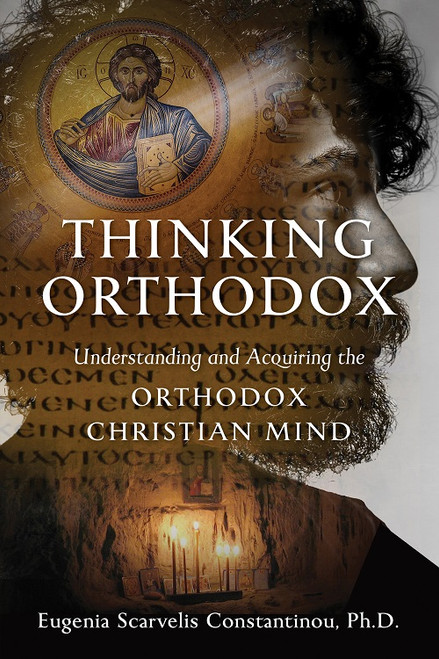
|
Thinking Orthodox: Unders... |
|
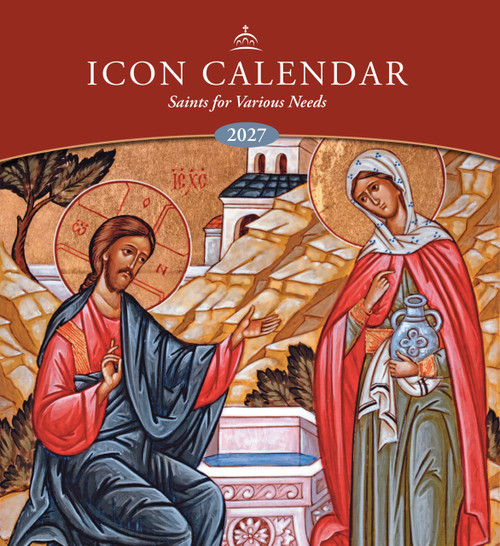
|
2027 Icon Calendar: Saint... |
|
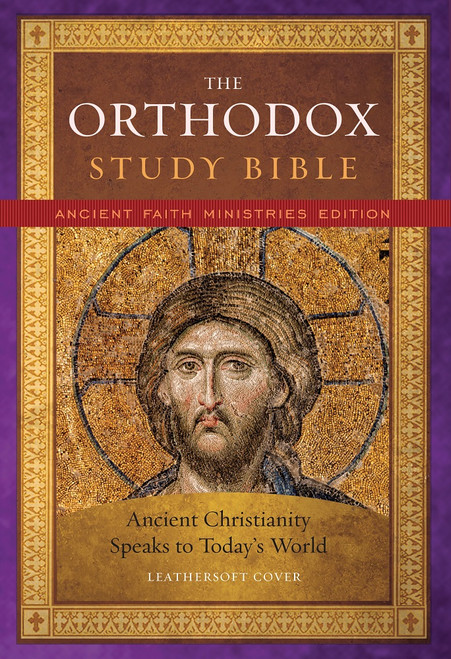
|
The Orthodox Study Bible,... |
|
Facebook
RaveCapture Commitment
RaveCapture transforms how businesses collect and showcase customer experiences. We take authenticity seriously and only allow 100% verified buyer reviews and UGC.
Guarantee
- RaveCapture Companies Are Held Accountable
- All Reviews Are Verified Customers
- Negative Reviews Can Never Be Deleted
With RaveCapture, you’re not just managing a reputation — you’re sharing the voice of your raving fans.
