
4.9
From 1
to 5
Reviews
7083
Recommend
10 / 10
TrustScore
9.9 / 10
Stuart Dunn
Another gem from Fr. Papavassiliou
The Ancient Faith Prayer Book, burgundy cover
The Ancient Faith Prayer Book is compiled and edited by Archimandrite Vassilios Papavassiliou, author of several other Ancient Faith titles including Meditations for Advent, Meditations for Great Lent, Meditations for Holy Week, and my favorite Thirty Steps to Heaven. The book begins with instructions from St. Theophan the Recluse on how to use this prayer book. At the end of the book is a calendar of Feasts and Fasts, as well as dates for Pascha for the next decade. In between these useful "bookends" is the spiritual meat of the text - the Prayers.
The prayers are a blend of ancient prayers and contemporary editions. You will recognize the Trisagion Prayers, Morning Prayers, Evening Prayers, Prayers of Thanksgiving, Prayers Before and After Communion, and the Odes. There are also prayers Before and After Work and Before Using the Internet. There are a lot of prayers related to conception, pregnancy, labor, and miscarriages, which is understandable as married couples want (rightfully so) children. The most interesting section to me was St. Chrysostom's Prayers for Every Hour of the Day. I'm not sure I will be able to, but praying these prayers is a goal I would like to set for myself. This is a very useful prayer book for Orthodox, especially, but for others as well. I personally plan to use this prayer book going forward and recommend you pick up a copy and do likewise. Five stars.
The prayers are a blend of ancient prayers and contemporary editions. You will recognize the Trisagion Prayers, Morning Prayers, Evening Prayers, Prayers of Thanksgiving, Prayers Before and After Communion, and the Odes. There are also prayers Before and After Work and Before Using the Internet. There are a lot of prayers related to conception, pregnancy, labor, and miscarriages, which is understandable as married couples want (rightfully so) children. The most interesting section to me was St. Chrysostom's Prayers for Every Hour of the Day. I'm not sure I will be able to, but praying these prayers is a goal I would like to set for myself. This is a very useful prayer book for Orthodox, especially, but for others as well. I personally plan to use this prayer book going forward and recommend you pick up a copy and do likewise. Five stars.
 Originally Posted on Amazon
Customer
Verified Buyer
008475 Egg Pendant, Fabergé style with cross, red and green
I love this. My father-in-law gave it to me for Christmas and it is beautiful and simple. It glows! The crosses really stand out on the white.
Kindle Customer
Eternity on One Minute a Day
The Morning Offering
One minute a day is all it takes to help you focus your entire day on what really matters! Read in the morning, these short meditations are sufficiently thought-provoking to stay with you as you take on the day with all its possibilities for pitfalls, pratfalls, or potential success, and when you lose sight of the true goal of life - as you often will - these recall to you the main objective: eternity spent in the Divine Presence. Available both in print and on Kindle.
Originally Posted on Amazon
joshua clark
Christ in the Psalms
Very clear and insightful
Originally Posted on Amazon
Andrea
Verified Buyer
A Child’s Guide to the Divine Liturgy
A Child's Guide to the Divine Liturgy is a truly lovely book. It has beautifully engaging elements of the liturgy with scenes that children will recognize and identify with. The practical ways to apply Orthodoxy to your daily life is helpful to children and adults alike. The illustrations are a joy. I recommend this book as a gift for anyone, with or without children. It was a blessing to receive this book.
WholesomeHenri
Must Read for the Artist
The Mystery of Art: Becoming an Artist in the Image of God
What is the Christian's relationship to art? And what does 'Christian art' look like? The answers to these questions largely depend on the Christian Tradition you ask. But don't even bother asking, just walk through the doors; the church building itself will tell you. For most modern protestant churches, 'Christian art' is an attempt to appropriate and repurpose secular trends to fit them inside an overtly Christian box. Think praise music, 'Christian' movies, and hell houses. But there is one catch: the 'Christianized' version (to use an academic expression) sucks. I grew up in a non-denominational church and it did not take me long to realize this.I played the guitar, wrote music, and sang, so there was a lot of pressure to play in the praise band'and write praise songs. 'Use your gifts for God' they told me. But I hardly believed that deconstructionism was pleasing to God. There was no beauty in the 'Christian art' I experienced, so I wrote it off. As far as I was concerned, 'Christian art' was virtually useless.Screen Shot 2014-12-16 at 11.21.33 PMJonathan Jackson laments this very thing in his new book, The Mystery of Art. He writes that,Fundamentalist expressions of Christianity did not exist in the early centuries of the church, except in fringe cults. The result of various puritanical sects gaining momentum over the last few hundred years, particularly in the West, is a spiritual and psychological trauma in the Christian's relationship to the arts. This not only produces bad art, it hinders many great artists from embracing Christianity. Why would an artist embrace a religion that teaches him to be suspicious of beauty? From this perspective, all values, aspirations, aesthetic beauty, and emotional honesty are set aside. Art is reduced to its message. It is far from Dostoevsky's saying, "beauty will save the world.1Far from the superficial art that appalled me as a teenage artist, Jackson maintains that true art does not have to be preachy. In this sense, he obliterates the false assumption of fundamentalism that often decentralized beauty for the sake of an overt attempt to proselytize. And for this reason, Jackson calls back those who have seen the emptiness of such "Christian pop-culture" to the beauty of true art and Orthodox Christianity. With this piece, he paints a beautiful and mysterious portrait of what true art actually is'and it is not a movie or song that is 'reduced to its message.' Such art is a reduction of the beautiful to a knowledge-based structure'a structure that has nothing inherently 'Christian' about it because it does not introduce the hearer to beauty. As Jackson writes, 'knowledge can only assist, it cannot create.'2 Art is not about how much information we can gather3'a relationship with God is not about acquiring information'it is about a mysterious encounter.'Contrived art for the sake of preaching to people is an offense to the mystery and sacredness of creation.'4This why modern 'Christian art' is a failure and repulses so many. Which brings up an interesting question: how is it that most people know what bad art is? This is a question that Christos Yannaras asks in Relational Ontology, and his answer is simple: because we have something to measure it against. An inner understanding. Beauty is God's invitation-to-relationship.True art is beautiful. True art is a vital component to the lifeblood of Christianity and a staple in society. True art is an incarnation.You do not have to be a Christian to create true art5. In fact, it may be that you have to become an artist before you are able to truly become a Christian. Jackson quotes Elder Porphyrios' words in Wounded by Love: 'Whoever wants to become a Christian must first become a poet.' Jackson continues to say that, when someone is drawn to the beauty of a certain piece of music or painting, he is really being drawn to Christ.6 Far removed from Christ is anyone who does not, and cannot, appreciate beauty.Jackson also speaks of art as prayer. He mentions that his incarnation of a character addicted to drugs, or a father who loses his child, was a 'spiritual performance of intercession'7'and by this kind of 'Living Prayer, to use the title of Metropolitan Anthony Bloom's book, the artist sanctifies his work.In stark contrast to the other extreme'the modern art of humanism'Jackson contends that true art can only be achieved through humility and self-emptying. He states that art can have a true light, which is Christ and leads to love, or a false light, which ultimately leads to obsession and emptiness. This is stunningly applicable to the canvas of our own self: "see to it that the light inside of you is not darkness,' (Luke 11:35).True art is not emotionalism. Concerning this, Jackson states that,I have stumbled upon this reality as an actor many times: often the right emotion follows the right physicality. One of the best entryways into a scene is physical and not primarily emotional or intellectual. Countless times, the emotions are simply not present when I begin a scene; so I make the choice to inhabit a particular physicality appropriate to the character. Most of the time, the mind and emotions follow.8When I read this I nearly jumped up and cheered. Though he does not directly mention it, this is also applicable to worship. This is why Orthodox Christians cross ourselves, bow, prostrate, kiss icons, et al. Christians are not dualists'and neither is the artist.This book is about what is truly beautiful and, as a result, is itself a true piece of art. If you are an artist who has struggled with the modern Christian's rejection of the beautiful, this book will delight your soul. Jackson said it best,'It is an incredible thing to discover that Christianity is an experience of saying yes to what is truly beautiful. The puritanical, legalistic, and fundamentalist strains of modern Christianity have left our culture traumatized by a Divinity that is not beautiful. But from the beginning, the pure and ancient faith of Christ, which is still alive today, proclaims that God is beautiful!'9Finally, Jackson puts the nail in the coffin of fundamentalism that distances itself from the pain portrayed in modern music and art:Any talk of Christianity that displays a haughty distance toward the brokenness and vulnerability of humanity has nothing to do with Christ.9This sentence is extremely important to me as an artist who has always written songs out of angst and despair, in hope that they might find their way to the ear of Christ.This book was superb. More often than not I found myself enthralled with Jackson's ability to write single, supercharged sentences that led me to an "aha!" moment. As an artist who has attempted to navigate the the bad art of "trendy Christianity" for my entire life, finally finding a home in Eastern Orthodoxy a year or so ago, I found this book extremely profound. I would highly recommend it. (Seriously, buy it here. You will not be sorry.)Because it's applicable, and because Jackson seems to obliquely reference this kind of thinking on page 24 of his book, I will leave you with this quote by St. Diadochos:Our likeness to God requires our cooperation. When the intellect (nous) begins to perceive the Holy Spirit with full consciousness, we should realize that grace is beginning to paint the divine likeness over the divine image in us. If the intellect (nous) does not receive the perfection of the divine likeness through such illumination, although it may have almost every other virtue, it will still have no share in the perfect love.10I received this book from the publisher in exchange for an honest review. All opinions are my own. This review originally appeared here: http://www.bencabe.com/reviews/the-mystery-of-art-by-jonathan-jackson-book-reviewSources:1. Jackson, Jonathan. The Mystery of Art. Chesterton: Ancient Faith Publishing, 2014. 18-19. Print.2. bid, 31.3. ibid, 37.4. ibid, 106-1075. ibid, 17.6. ibid, 94.7. ibid, 86.8. ibid, 113.9. ibid, 138.10. St Diadochos of Photiki, On Spiritual Knowledge, Text 89. Philokalia. Vol. One p.288
Originally Posted on Amazon
Romanovsky
Thirsting For God in a Land of Shallow Wells
First of all, excuse my poor English. The English language is not my native language.
Second, I am a cradle Orthodox but I still bought the book because I admire people who come to Orthodoxy. Their stories help me answer one simple question: Why am I an Orthodox Christian?
It's not that I doubt my faith. I just don't want it to be blind. I believe every man must have a critical view of his beliefs. Blind faith is irrational. If someone believes in something because other people told him so, or because his parents believed in it, then it might be dangerous. Especially if he lives in a skyscraper and his parents believe that he can fly without wings.
Matthew Gallatin's book and other coverts' books (I also highly recommend Fr James Bernstein's book Surprised by Christ: My Journey From Judaism to Orthodox Christianity ) make me look at my faith from a convert's point of view which helps me appreciate my faith more.
A reviewer says, "But those who rejoice that they are right, rather than take joy in restored relationship with the One who IS Right, may still find themselves in need of a true conversion). Actually, the reviewer is spot on. However, I have not met an Orthodox Christian who rejoices that he is right. Maybe such people exist but this position is very sectarian, not Orthodox. Right doctrines can't make man a better Christian if he doesn't have the right spiritual life that leads him to union with God: through prayer, humility, repentance, reading Scripture, Sacraments of the Church, fighting against his passions, and keeping the commandments of the New Testament. On the other hand, I believe that the true relationship and union with the Lord are only possible in His Church. Not only because this Church preserves the fullness and completeness of the teaching of Jesus Christ and His Apostles but also because it is His Body. All other relationships might be distorted by our own delusion about God or by misunderstanding of the character of these relationships.
I will give you one example how Orthodoxy, the original Christian faith, is significantly different from Protestantism and Catholicism:
Peter Berger, a Lutheran theologian, says about the Orthodox Church: "There are many ways of describing the distinctiveness of Orthodoxy, as against both the Roman Catholic and Protestant versions of Christianity. One way is nicely summed up in a statement by Paul Evdokimov, a lay member of the St. Serge school who did not move to America (he played a courageous role during the German occupation of France, among other things helping Jews to escape from the Nazis). Evdokimov suggests that Western Christianity sees the relationship between God and man as taking place in a courtroom - God is the judge, man is guilty, sentence must be pronounced, Christ takes the sentence upon himself, which allows God to forgive man. The entire transaction is judicial and penitential. By contrast, Eastern Christianity sees the relationship as taking place in a hospital - man is sick, sin is just part of the sickness, Christ is the victor over every part of this sickness (including death, which is the culmination of the sickness). The transaction between God and man is not judicial but therapeutic. It seems to me that this is a much more compassionate view of the human condition and its redemption."
It's just one example of many differences. What makes me think that I am right? To put it shorty, the writings of the early Christians who share the same faith, the unchanging tradition, teaching, and practices of the Orthodox Church, and amazing fruits of the spiritual life that I see in the ancient and modern Orthodox saints. After all, we judge the church by her saints, not by her sinners. As Prof. Osipov says, "Tell me who your saints are and I will tell you what your church is". BTW, a holy man and a righteous man are not the same. There is a significant difference between them. Pharisees were righteous but far away from holiness.
The Orthodox Church preserves the teachings and traditions that were held by Christians, starting from the first centuries of Christianity. It's not a self-proclaimed church, founded by some self-proclaimed priest or scholar, but the Church of the New Testament and "the gates of Hades will not overcome it". (Matthew 16:18) Her history can be traced from Jesus and His Apostles, directly to modern times without interruption. It was the Orthodox Church that proclaimed the canon of Scripture (i.e., defined what books belong in the Bible), and defined the great Christian doctrines relating to the Trinity and the divine and human natures of Christ.
From an Orthodox point of view, Western Christian churches, Protestant and Roman Catholic, have departed from some of the fullness of the truth. This does not mean that they have ceased to be Christian, but it does mean that they have lost some of the Apostolic teachings of the original Christian Church.
One doesn't need to take my word for it. Let's just compare one basic thing. What is the criterion of the truth in Catholicism, Protestantism, and Orthodoxy? Who is the last authority in the Roman Catholic Church? Pope. It doesn't matter what church councils decide. The last word always belongs to Pope. Roma locuta, causa finita ("Rome has spoken, the case is closed"). Even if a new Pope was elected a minute ago, his personal opinion can define any doctrine concerning faith or morals to be held by the whole Church. What makes bishop of Rome infallible? Who, being in sound mind, may say that the Apostle Peter and Pope are equal and always share the same opinion? If the Apostle Peter was given the keys to rule the Church, what makes Roman Catholics believe that this authority was passed directly to Rome? Why do they neglect the fact that St Peter also started the Church in Antioch and Jerusalem? Shouldn't the bishops of Rome, Antioch, and Jerusalem have equal rights? The fact is that the Lord is the head of the Church and He has no vicars. The fullness of the Church's truth doesn't abide in the Apostle Peter or the bishop of Rome. Jesus built His Church on the Apostle Peter and his faith, as well as on other apostles and their faith, not on the person who rules the Church in Rome.
Thus, there is no logic when a man, his position, and his office become the criterion of the truth. BTW, the dogma of Papal infallibility is a novelty, defined dogmatically in the First Vatican Council of 1869-1870. Yes, it can be traced to Catholic medieval theology but it never existed in the fist 10 centuries of Christianity, before the Great Schism. A thorough research shows that the Roman Catholic Church bases its criterion of the truth on the head of their church (Pope), and the church itself is full of novelties and medieval modifications, such as Papal Supremacy and Infallibility, Purgatory, Indulgences, Filioque, etc.
Let's have a look at Protestantism. What gives a man authority to interpret the Bible? They say, "The Holy Spirit". In other words, "I am my own authority". If the Holy Spirit gives everyone authority to interpret the Bible, then how come Protestantism spilled like beans? Why everyone has his or her own interpretation, teaching, and understanding then? Lutheran, Presbyterian, Reformed Presbyterian, Anglican, Episcopal, Methodist, Baptist, Reformed Baptist, Pentecostal, etc. If the Holy Spirit is one, why are their interpretations so different? Why do they contradict each other? Who is right? Where is the criterion of the truth? There are thousands of Protestant churches, sects, and cults and each of them claims to have the only true vision and the only right understanding. Some of them allow gay marriages, gay bishops, and female priests. Some of them don't believe that Christ is the Son of God. Some of them don't believe in His resurrection. Some of them don't believe in the Trinity. They read the same Bible but have different and even opposite interpretations. Where is the truth? Well, maybe everyone is right and it's ok to have a different opinion? Let's try to say the same thing when we are lost in a jungle and everyone has his or her opinion about direction. Everyone has the same map (the Holy Bible) but reads its signs (verses) in different way. Whom should we trust? When everyone understands the signs in his or her own way, claiming his or her own authority, then the criterion of the truth doesn't exist.
What about non-denominational churches? They share the same problems of Protestantism. It's me, God, and the Bible. Non-denominational churches reject the Holy Tradition (which is the life of the Holy Spirit in the Church) and replace it for their own tradition, created by their self-proclaimed oracles. Take a Chinese manuscript written 2 000 years ago and a modern American man who reads it. Would you trust his interpretation of the Chinese manuscript, from an American point of view? Especially if he doesn't know the old Chinese language and doesn't share the tradition of the ancient Chinese who wrote the book. It's the same with the New Testament. To understand and interpret this book, written in the old Greek almost 2 000 years ago, one has to share traditions, practices, and teachings of early Christians. In other words, to belong to the church that wrote, compiled, and interpreted the New Testament. Otherwise, what is the reason to trust different interpretations of modern teachers, pastors, and ministers whose ideas are in conflict with each other as well as with the interpretations of the early Christians? For example, the early Christians believed in the real presence of Christ in the bread and wine. The apostles and their disciples took Christ's words literally. Modern Protestants and non-denominational churches don't believe in the real presence of Christ in their bread and wine. If fact, they are right. Since they don't belong to the original Church, the sacraments of their churches are not valid. They are fruitless because their self-proclaimed priests, pastors, and ministers do not share apostolic succession. In the Orthodox Church, all clergy can trace their ordination through the laying on of hands to the Apostles.
Christ didn't come to build thousands of churches. He didn't come to build denominational or non-denominational churches. Christ and His Apostles founded only one Church. So the task is to find the Church of the New Testament because only this church preserves the truth and can give the right understanding and interpretation of the Bible. As the Apostle Paul says, this Church must be "the pillar and foundation of the truth". (1 Timothy 3:15). The fact that all clergy in the Orthodox Church today can trace their ordination through the laying on of hands to the Apostles and through them to Christ is a guarantee that the Orthodox Church was not founded by someone called Joseph Smith two centuries ago but by Christ Himself. This is called Apostolic Succession. It means that the Orthodox Church is the authentic and genuine Church or Body of Christ in the world today. It continues to teach not one man's interpretation of the faith but the complete deposit of faith as it was handed down to the Apostles by Jesus.
In the Orthodox Church, we hold to the faith which has been believed everywhere, always, and by all, from the early days when the Eastern and Western churches held the same Orthodox Faith and were in communion with each other based on the Faith of the Apostles. Thus, in the Orthodox Church, the criterion of the truth is the concordant teaching of the Church Fathers. If the Church Fathers of different ages and different countries have the same idea, view, or interpretation (of course, always in accordance with the Bible), only then we can be sure that it's not just someone's personal opinion but the teaching of the Church. The Church Fathers compiled the Bible and they knew how to interpret it. They were neither mere intellectuals nor University professors, but theologians AND ascetics who lived a holy life. The Holy Spirit inspired the authors of the Bible. And it was the same Holy Spirit that gave the Church Fathers the power and authority to interpret the Bible. The life of common people, including scholars and professors, is not holy. Therefore, they don't receive the Holy Spirit that gives them authority to interpret the Bible. Yes, they might be righteous but as I said above: a righteous man and a holy man is not the same. A righteous man is anyone who keeps the 10 commandments of the Old Testament, even if he does it outwardly, like a Pharisee. A holy man is the one who not only keeps the commandments of the Gospels (they are more than 10 commandments of OT) but also acquires the Holy Spirit through prayer, fasting, repentance, humility, fighting his passions, and cleansing himself from sins and sinful thoughts.
Let's get back to our jungle. Since it were the Church Fathers who threw away hundreds of false maps (false Gospels), compiled the only right map (the Bible), and then used this map numerous times to get out of the jungle, then it's logical to trust the Church Fathers, not those people who didn't even exist when the map was made.
Protestants missed 1 500 years of Christianity. They rejected lots of nonsense of the Roman Catholic Church but together with nonsense, they rejected lots of truths. Who knows better about the ancient Christian Church, her Sacraments, teachings, and practices: modern Protestant theologians or the disciples of the Apostles? Protestants trust their own theologians. The Orthodox Church trusts the disciples of the Apostles (the Apostolic Fathers). That's why Orthodox Christians still read and treasure their writings. For us, criterion of the truth is not our own understanding but the concordant teaching of the early Christians.
BTW, who is a Christian? Does this word have the same meaning like 2 000 years ago? Orthodoxy, the ancient Christian faith, says that a Christian is not the one who goes to the church every Sunday. It's not the one who knows and interprets the Bible better than others. It's not the one who prays, fasts, gives alms, and does all other OUTWARD things. (Pharisees did the same but they didn't become Christians). And, of course, it's not the one who believes that 2 000 years ago the Son of God came to die for his sins, therefore all his sins have been forgiven. The latter is nothing but a self-delusion.
A Christian is the one who needs Jesus Christ as His Savior every moment of his life. It is the one who sees his own sickness (anger, jealousy, hatred, self-opinion, lust, lies, pride, self-importance, sinful thoughts, judging others, etc), fights against it, and realizes that he can't conquer his passions with his own strength. Therefore, he feels the need in the Lord Jesus Christ as his Savior. A Christian says, "I am not a righteous man but a great sinner. I can't save/help/heal myself. That's why I need God. That's why I need Christ as my Savior. Lord, have mercy on me."
The Christian faith is not only the way of life but also the state of mind. It is the condition of humility and repentance which is similar to the condition of the tax collector and the good thief. The tax-collector didn't have a delusion about himself. He knew who he was: a sinner. Therefore, he humbled himself and prayed, `God, have mercy on me, a sinner' (Luke 18:9-14). The good thief didn't exalt himself either. He repented on the cross and received the forgiveness. (Matthew 23:39-43)
The essence of Christian life is neither reading interpretations of the Bible, nor listening to Sunday sermons, nor bringing in more members to the church but spiritual life that leads us to experiencing God. Orthodox Spiritual life is a warfare against our passions. It's the right prayer (with great attention, humility, reverence, and repentance). And of course, it's keeping the commandments of the Gospels (not just 10 commandments of the Old Testament); it's reading the Bible and writings of the Church Fathers, living in humility, and taking part in the Sacraments of the Church. This is what original and ancient Christian life like, the path where we "work out our salvation with fear and trembling". (Philippians 2:12).
After all, Orthodoxy is not about history, doctrines, rituals, or it's about the right spiritual life. As the Russian thinker Nicolai Berdyaev says:
"Orthodoxy is first of all, an orthodoxy of life and not an orthodoxy of indoctrination. For it, heretics are not so much those who confess a false doctrine but those who have a false spiritual life and go along a false spiritual path. Orthodoxy is before all else, not a doctrine, not an external organization, not an external norm of behavior but a spiritual life, a spiritual experience and a spiritual path. It sees the substance of Christianity in internal spiritual activity. Orthodoxy is less the normative form of Christianity (in the sense of a normative-rational logic and moral law) but is rather its more spiritual form".
So I choose to be an Orthodox Christian because the Orthodox Church is the original Christian Church, founded by the Lord Jesus Christ and described in the pages of the New Testament. For over twenty centuries she has continued in her undiminished and unaltered apostolic faith, worship and spiritual practice. Since the Orthodox Church is the Church of the New Testament which is the living Body of Jesus Christ, then I don't see a reason to belong to any other church.
I want to apologize to my Catholic, Protestant, and non-denominational brothers and sisters in Christ for I was too harsh on their churches. I am also sorry that I wrote too much about my arguments and too little about the book. However, Matthew Gallatin's book is one of the arguments, why I am an Orthodox Christian.
Please forgive me if I said something wrong or insulted someone's feelings. Thank you, Mr Gallatin, for your wonderful book.
Originally Posted on Amazon
Kindle Customer
Incredible
Nearly Orthodox: On Being a Modern Woman in an Ancient Tradition
Beautiful book. The author has a poetic way of writing that entrances you and pulls you in. Even non-orthodox Christians could relate to her circumstances and thoughts. Incredible book that is a must-read.
Originally Posted on Amazon
Customer
Verified Buyer
A Child’s Guide to the Divine Liturgy
This marvelous little volume belongs in the hands of faithful Orthodox Christians as they pass the beauty of the faith from generation to generation. Megan Gilbert’s exquisite blend of drawing, color, and collage bring a tenderness that can touch the heart of both the child and the adult. A Child’s Guide to the Divine Liturgy brings the essentials not only of the liturgy, but also the elements of sacramental life, into a format friendly to little hands, and right-sized to tuck into the bag of the parent, godparent, grandparent or nursery helper.
There is a wonderful quietness to this book that enhances a sense of devotion, as we see ourselves in the scenes of the liturgy and observe the details of the implements and icons that are part of our Orthodox experience. It does not forget the preparations we make to encounter the mysteries or take them out into our every day lives. One of the finest images in the book is the very last one, showing the child with lifted hands in the icon corner of the home, reflecting how little ones love to imitate the beauty and gestures they see at church.
This tiny treasure of a book will make a fine gift for births, birthdays, and baptisms, for new parents, grandparents, godparents, and anyone who loves to read with a child in his or her lap. I can imagine a child wanting to keep this book as a beloved possession even as they grow to adulthood.
Mark G Bullard
The Gospel of Matthew: Torah for the Church
Very clearly written
Originally Posted on Amazon
Julie
Raising Them Right: A Saint’s Advice on Raising Children
As a Montessori educator and an Orthodox Christian, I look forward to reading this book. I have already read many quotes by St. Theophan and can see the parallels to Montessori methodology just with more of an Orthodox theme. I have seen some comments by people who do not understand this mindset, but it only shows a misunderstanding of the role of the adult in a child's formative years. Some of his teachings may be more frigid (?) in many a contemporary parent's opinion because in these times we tend to mollycoddle our children, but by this we are losing sight of the role we have as parent's and educators. Setting firm expectations and giving children freedom within limits is showing respect for the child. We are also their models and if we spoil our children and continue to mollycoddle them, then what is that teaching? I am writing this with limited knowledge in this saints teachings, but I do plan on reading this book and following up! On a side note: for those who are uninspired by this book. It may behoove us to take advice from a human being who was writing for God ultimately... We don't know everything. :)
I rated this book prior to reading it because I didn't want anyone to mistake my commentary for a negative post. I highly doubt I will be changing the rating in the end anyway.
I rated this book prior to reading it because I didn't want anyone to mistake my commentary for a negative post. I highly doubt I will be changing the rating in the end anyway.
Originally Posted on Amazon
Eugenia M. Sintsirmas
The Gospel of John: Beholding the Glory
Happy with purchase
Originally Posted on Amazon
Amani Mikail
Thirsting For God in a Land of Shallow Wells
Excellent book, thank .
Originally Posted on Amazon
cam
was a great view into the journey toward...
Nearly Orthodox: On Being a Modern Woman in an Ancient Tradition
This book, full of humor and experience, was a great view into the journey toward Orthodoxy.
Originally Posted on Amazon
Presbytera C
Verified Buyer
A Child’s Guide to the Divine Liturgy
What a joy A Child's Guide to the Divine Liturgy has brought to me as a mother of 10 kids!!! It is just what has been needed to aid tender, little hearts in their endeavors to attend and comprehend bits and pieces of our Holy Faith and the Divine Liturgy. The illustrations coinciding with the prayers, captivated my little ones under 10 years of age...they love their new Divine Liturgy Book (as they call it). It would be a wonderful gift for your children, God children, nieces or nephews, grandchildren or little loved ones for Christmas!
....a book holding many of the precious treasurers of our Faith for tiny ones to behold!
....a book holding many of the precious treasurers of our Faith for tiny ones to behold!
Verified Buyer
A Child’s Guide to the Divine Liturgy
This sweet little book is great for highlighting the different parts of the Divine Liturgy. The book helps you follow the Liturgy without getting bogged down in explanations though it does have a glossary in the back for reference. I loved the illustrations - they have this touch of reality and whimsy with the use of real fabrics in the illustrations. My favourite is the illustration for the Hymns of the Day and Patron Saint. I loved the closeness of the Patron Saints with the Faithful. I also liked that that there was icons and troparions for the 12 Feasts and illustrations of common items seen every Sunday at Church. A Child's Guide to the Divine Liturgy is a delightful book that lets you know where you are in the Liturgy and allows you to pray along with the Faithful.
K
The Scent of Holiness: Lessons from a Women's Monastery
wonderful journey, lessons of life presented ever so gently and with humor by the women in monastery.
Originally Posted on Amazon
K
Everywhere Present: Christianity in a One-Storey Universe
great read for those wondering about spirituality, religion today etc.
Originally Posted on Amazon
Amazon Customer
A must read for those who are seeking so...
An Introduction to God: Encountering the Divine in Orthodox Christianity
I highly recommend Fr. Andrew's book! It is a must read for Orthodox Christians who want to deepen their faith in God. It is even more relevant to those turned off by an American version of shallow Christianity or religion in general. This book will show you that God is more than a tyrant in heaven waiting to destroy the wicked sinner who disobeys him. I highly recommend it for agnostics who are unsure if there is a God, or those seekers wishing to find what it truly means to be a follower of God.This is a much needed book. It is practical and readable, but carries a depth which will send you on a journey to further your relationship with God. I know that this book has deepened my faith in God. Fr. Andrew points the reader to the place where they can find their spiritual thirst quenched. Please read this! You won't be disappointed.
Originally Posted on Amazon
Tom Willingham
The Scent of Holiness: Lessons from a Women's Monastery
For those who have never visited a monastery this is aver meaningful way. For those who have many memories and events you promise yourself to keep in mind are refreshed. For all of us a way to introduce or increase the zeal of our faith and therefore our life.p
Originally Posted on Amazon
About Ancient Faith Store
At Ancient Faith Store, we are dedicated to providing a rich collection of resources that celebrate and preserve the Orthodox Christian faith. Our mission is to help individuals and families grow in their spiritual journey through a wide array of products, including books, music, icons, and gifts that reflect the beauty and depth of Orthodox Christianity.
We believe that faith is a journey, and we strive to accompany you every step of the way with materials that inspire, educate, and uplift. Whether you're looking for a profound theological work, a children’s book that teaches the values of our faith, or a beautifully crafted icon to adorn your home, you'll find it here.
Our commitment to quality and authenticity means that every item is carefully selected to ensure it aligns with the teachings of the Church. We are passionate about fostering a vibrant Orthodox community, and we invite you to explore our store to find the tools that will enrich your spiritual life and connect you more deeply to the traditions of our faith. Thank you for being a part of our journey.
Visit Website
We believe that faith is a journey, and we strive to accompany you every step of the way with materials that inspire, educate, and uplift. Whether you're looking for a profound theological work, a children’s book that teaches the values of our faith, or a beautifully crafted icon to adorn your home, you'll find it here.
Our commitment to quality and authenticity means that every item is carefully selected to ensure it aligns with the teachings of the Church. We are passionate about fostering a vibrant Orthodox community, and we invite you to explore our store to find the tools that will enrich your spiritual life and connect you more deeply to the traditions of our faith. Thank you for being a part of our journey.
Ancient Faith Store is a Verified Merchant
Questions? Contact Us
support@ancientfaith.com
800-967-7377
Mon-Fri (9am-5pm CST)
Top Rated Products
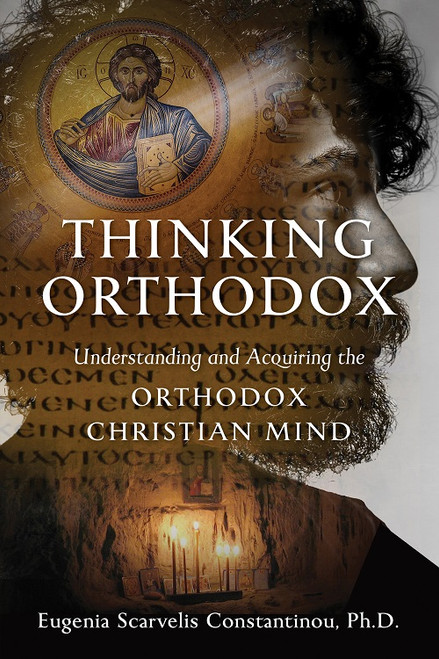
|
Thinking Orthodox: Unders... |
|
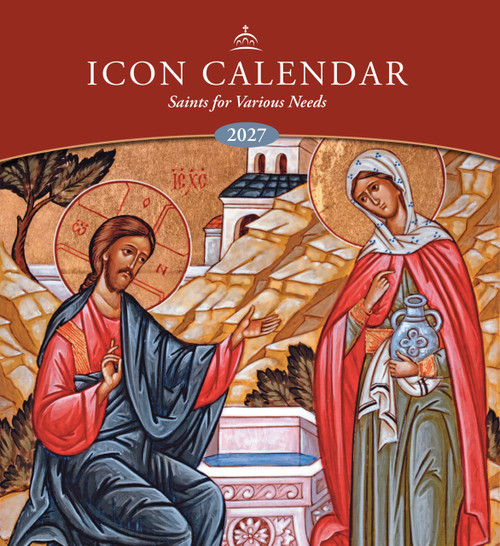
|
2027 Icon Calendar: Saint... |
|
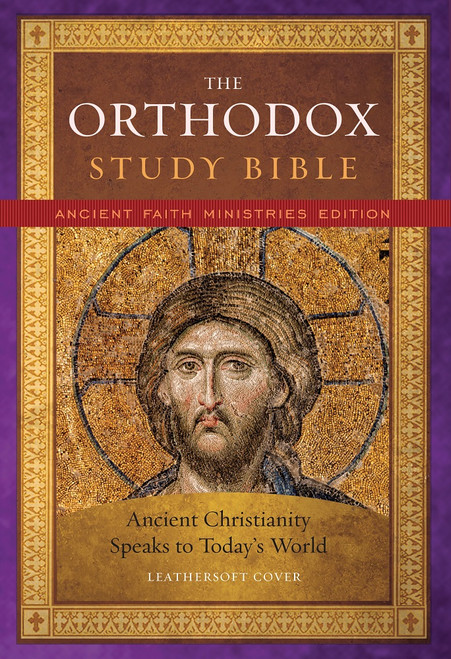
|
The Orthodox Study Bible,... |
|
Facebook
RaveCapture Commitment
RaveCapture transforms how businesses collect and showcase customer experiences. We take authenticity seriously and only allow 100% verified buyer reviews and UGC.
Guarantee
- RaveCapture Companies Are Held Accountable
- All Reviews Are Verified Customers
- Negative Reviews Can Never Be Deleted
With RaveCapture, you’re not just managing a reputation — you’re sharing the voice of your raving fans.
