
4.9
From 1
to 5
Reviews
7087
Recommend
10 / 10
TrustScore
9.9 / 10
Daniel T
Verified Email
God Is a Man of War: The Problem of Violence in the Old Testament
I got to say I’m thoroughly impressed by Fr. Stephen De Young’s work. As a frequent reader of other books and Orthodox publications I thought to myself: “This is going to be another book looking at Old Testament and trying to find peace despite the violence present seeking to find scriptural congruency”. One where the author states “Yes there’s violence, but God is loving” and leaves the reader on a shallow cliff left to think about the subject on his or her own. Thankfully, I was thoroughly surprised that it was not that kind of book. Fr. Stephen De Young confronts the controversial subjects of the matter and explains how it gives the Bible real, historical meaning without taking away from the 'difficult passages for the modern eye'. He takes in account the entirety of Scripture and what we understand about God the Father and Christ in order to guide the reader to the correct lens one should take; not one of bloodshed and a wrathful God, but one of a carefully thought out plan of salvation, one in which animal sacrifice carried out such great meaning as a precursor of the ultimate sacrifice to come. I encourage anyone interested in understanding deeper the passages of the Old Testament, most especially the 'problematic ones' to pick up this book to see how the Church views sacrifice, ritual, sin, and war from an Orthodox perspective.
Alli
Verified Email
The Lightkeeper: A Novel
I loved this book and read it straight through in one sitting (as a mom with two young children, these days I don't often get so engrossed in a book that I stay up way past my bedtime to keep reading!). I really enjoyed the dynamic between Ronan and the Lightkeeper. I even cried. Highly recommend.
Sk
The Christian Old Testament: Looking at the Hebrew Scriptures through Christian Eyes
Really great
 Originally Posted on Amazon
Adrienne F
Verified Email
The Cellarer's Celery
I read this to a small homeschool co-op at my Orthodox church. The kids delighted in it. We loved the rhyming words and tied our lessons on phonics into many of the words in the story. They also narrated it quite well because it has a very beautiful narrative flow. Sometimes poetry does not read like a story, but this one does. I agree that it has a whimsical flow and introduces children to some new vocabulary words in a fun way that make it easy for them to figure out what the word means. The illustrations are lovely too.
Kelsey M
Verified Email
God's Saintly Friends (board book)
This is a sweet book about what saintly people do, focusing on their relationships with others. The beautifully simple line-drawing illustrations focus on the main characters; the color palette is gentle and pleasing. The theme of describing what a saint is like is clear throughout the eight stories in the book, and is made understandable with relatable concepts. My kids love it, and we’re excited to add it to our collection of Christian kids’ books!
Laura W
Verified Email
An Introduction to God: Encountering the Divine in Orthodox Christianity
An Introduction To God by Father Andrew Stephen Damick.
Father Andrew had authored many books in his time as priest but this is his first published by Ancient Faith. He recently recorded it on audible so I was asked to review it. I was thrilled when I heard that it was on audible because as a busy mom I struggle to find the time to read. This book was an easy listen, just a little over 3 hours, while also being very thought provoking. “An Introduction To God” the title reads, my thoughts were that I already knew God so I wasn’t sure what kind of benefit this would be for me. However, as I started listening I quickly realized that I still had much to learn about encountering God. Sure, as an orthodox Christian (and an avid listener of his (and Father Stephens) Lord of Spirits podcast) I already knew some of the things discussed here. The ending of the book may be what stuck with me the most. When he asks if you have experienced God and gives examples. His examples hit me to my core.
I would recommend this book to anyone looking into orthodoxy, looking to pursue a deeper more meaningful relationship with God or someone who doesn’t believe at all. You will gain something from this book.
Charlie Stayton
Introduction to God
An Introduction to God: Encountering the Divine in Orthodox Christianity
An Introduction to GodFr. Stephen Damick has hit a home run out of the ballpark of Theology with his book An Introduction to God. In this book he asks all the questions that anyone who is seeking God always asks. Important question of 'Where God Is?', 'Who God Is?'. 'Why We Go to Church?' and 'Why does Morality Matter?' Are all questions that not only Orthodox Christians ask, but any Christian hoping to understand our connection to God. The Audible book is narrated by Fr. Damick himself and is an enjoyable and easy listen. At a little under 4 hours, it is perfect for those early commutes to work or for a weekend listen. It is also a perfect companion to his other book Arise O God. I would highly recommend both titles whether listening to them in your car or in your favorite Hobbit hole. They should be on your top list as an Orthodox Christian.Charlie Stayton
Originally Posted on Amazon
Charlie S
Verified Email
An Introduction to God: Encountering the Divine in Orthodox Christianity
An Introduction to God
Fr. Stephen Damick has hit a home run out of the ballpark of Theology with his book An Introduction to God. In this book he asks all the questions that anyone who is seeking God always asks. Important question of “Where God Is?”, “Who God Is?”. “Why We Go to Church?” and “Why does Morality Matter?” Are all questions that not only Orthodox Christians ask, but any Christian hoping to understand our connection to God. The Audible book is narrated by Fr. Damick himself and is an enjoyable and easy listen. At a little under 4 hours, it is perfect for those early commutes to work or for a weekend listen. It is also a perfect companion to his other book Arise O God. I would highly recommend both titles whether listening to them in your car or in your favorite Hobbit hole. They should be on your top list as an Orthodox Christian.
Charlie Stayton
Alex J
Verified Email
Orthodoxy and Heterodoxy: Finding the Way to Christ in a Complicated Religious Landscape (2017 edition)
An almost encyclopedic introduction to the world’s Christian denominations and non-Christian faith traditions in their relation to Orthodoxy.
It is increasingly popular in the post-secular age for one to wonder aloud whether all religions are simply culturally distinct ways of organizing under a higher power to explain for the persistence of religious belief in a world where mystery seems in short supply. American Christians have a complicated history in terms of communicating a unified vision of what Christianity means in a world plagued with political agendas, church splintering, and articulating some of the finer distinctions or justifications for their faith against other belief systems. More to the point, a person raised in the Orthodox faith may look out at the religious landscape of the world in bewilderment – wondering how and where certain expressions of belief in the divine diverged from their own encounter with God. Fr. Andrew Stephen Damick approaches this question with renewed care and attentiveness – articulating a vision of the ancient Christian faith that is historically identifiable, logically consistent, and intellectually coherent. Said another way, it can be easy to sign off religious belief as a matter of personal conviction and an intimate experience paired with a general sense of virtue, but that would rob one from a truer understanding of how Orthodoxy impacts its believers in ways distinct from other Christian denominations or non-Christian religions. More than mere opinion, the commitment to understanding religion as a legitimate study in “Orthodoxy and Heterodoxy” helps the reader accessibly understand how different faith traditions guide the believer – and ultimately where those paths were forged in history.
Fr. Andrew Stephen Damick’s book operates from the Eastern Orthodox tradition, which regularly makes a claim that it practically and theologically teaches Christianity in the ways those might have understood and experienced it if they were taught from the original twelve apostles, nearly two thousand years ago. “Orthodoxy and Heterodoxy” unfolds in a natural way that coheres those claims by walking through the religious debates that unified and divided Christians from themselves, each other, and the world. It begins with stating the importance of sound religious doctrine and then precedes into explaining what the early Church councils determined what was and was not a justified belief about the teachings and reality of Jesus Christ and His immediate followers. In a sense, Fr. Damick sets the stage by echoing to the earliest agreed upon discussions by the then global Church in their determination of what is Christian (Orthodox) and what is heresy (Heterodox). From this point in time, the book dedicates chapters to major eras of time in which the global Church divided from Orthodoxy, including the emergence of Roman Catholicism, the Magisterial Reformation, the Radical Reformation, Evangelicalism and Revivalism, and (in what is interestingly prescribed as the fourth wave and current age of Protestantism) Pentecostalism. In doing so, the reader can consider the many debates and questions (as well as quite a few answers) about the faith between Orthodoxy and other iterations of Christianity. By explaining how Orthodoxy agrees and disagrees with the varying traditions and denominations of Christianity, the Christian reader is given new tools to understand their own beliefs, as well as new ways to lovingly affirm their religious neighbors.
Fr. Damick then dedicates four chapters to non-Christian religious belief systems to conclude the book, divided into two sections each for Non-Mainstream Christians and Non-Christian Religions. It is clear that the author dedicates more time, both orally and from a written standpoint to help the reader delineate between Orthodox Christian beliefs and various other traditions or denominations due to their seeming similarity, but some of the most interesting work comes in the Orthodox engagement with distinctly non-Christian religious systems. Speaking to the shared traits and vast differences between Orthodoxy and, say, Buddhism or Islam might seem like easier work (for example – all three emphasize altruistic behavior but only Orthodoxy states that Jesus Christ is God in the flesh), “Orthodoxy and Heterodoxy” goes on to give historical and anthropological context for the emergence of some religious traditions, and applies as much nuance as possible in rendering a generous reading of the actual goals and practices of non-Orthodox belief systems. The book ends with an epilogue that offers instruction on Orthodox relations with their global (and religiously vast) neighbors, as well as two appendices that address the recent emergence of atheism and agnosticism, as well as a personal account on how the author himself came to Orthodoxy. The final words are an appreciated touch of vulnerability – it reminds the reader that the search for the divine, whether obvious due to years of careful thought and research or curious due to a lack of available information, all starts with the humble drive to better understand one’s place in the cosmos.
The audiobook is narrated by the author, Fr. Andrew Stephen Damick, and runs for approximately 15 hours. That timestamp should not be seen as daunting because this audiobook is not unlike a good podcast, where the “reader” can have the content speaking for hours and still crave more. Fr. Andrew is no stranger to formats such as this – as his hosting of four podcasts, and co-leading of two more, allow for a rhetorically engaging speaking voice that fits the content naturally. For those of us that have an ear and ability to retain the spoken word at higher speeds, I found listening to this audiobook at 1.25x speed to still sound well-paced, natural, and inoffensive.
A book like no other, “Orthodoxy and Heterodoxy” is thorough without losing the reader whilst simultaneously discussing dozens of what could be seen as sensitive details about many religious traditions and Christian denominations. I would heavily recommend this book for all newcomers to religion, whatsoever; while Fr. Damick is clear that this is not an exhaustive account of the source material, it provides a healthy introduction to both the content, as well as the matter, of the religious persons interaction with other religious matters and content. For the tenured religious person (specifically Orthodox persons), this book helps in understanding the relationships, agreements, and disagreements with other religious traditions from across the world. For Christians (and speaking as someone that has come to Eastern Orthodoxy from a non-Orthodox Christian background) this audiobook might be considered required reading for being faithful to the ancient words of Jesus Christ. This book does not judge, but it is clear and helpful in pointing out where and why certain practices of came to be known as “Christian” considering their relationship (or non-relation) to the ancient Christian world.
How we may encounter the divine may been pushed upon us to seem like a private matter, but if Fr. Andrew Stephen Damick’s “Orthodoxy and Heterodoxy” has anything to say on the topic it’s that, not only is it not a private matter, but it may be the only way to experience, understand, and walk the narrow path to the one true God in a world with many roads.
Cecilia
Verified Email
101 Orthodox Saints
This is an amazing encyclopaedia of saints! As soon as it arrived (from US to UK), my 9 year old daughter jumped at it and did not want to leave it out of her hands until she finished it all. The presentation of the book is so well done that it really attracts children to want to read it: really good quality of paper, lots of images and beautifully illustrated. My daughter loved the fun facts on each page. We were so pleased to find all our name saints. My daughter was really excited to find a saint whose relics can be found in Romania (where we are originally from) and asked to go and visit the Church where they are laid next time we visit Romania. It stimulates the children's curiosity to want to find out more.
I initially ordered a few for parents in our church, but then other parents and children saw them after service at Church and we ended up ordering 14 more!
It really is a very captivating book for children teaching them about saints! We would love for a second book to come out!
I initially ordered a few for parents in our church, but then other parents and children saw them after service at Church and we ended up ordering 14 more!
It really is a very captivating book for children teaching them about saints! We would love for a second book to come out!
Cecilia
Verified Email
Beyond the White Fence
This book is absolutely amazing and captivating for children (and grown-ups!:)! I read it to my 6 and 9 year old kids in the evenings. Each chapter finishes in such a way that you want to read the next chapter immediately to find out what happened next. They kept asking me to read them 'The Katie book'. It was really interesting for them to learn about saints from the perspective of the culture at the time and how it was so different compared with the times we live. The story line is about a group of cousins and siblings going back in time to different periods and learning about the saints of their own names. It also teaches children about learning to accept each other and learning to work together and appreciate each other's skills and virtues. I highly recommend it. It's a great way for children (and adults) to learn more about the lives of saints and the sacrifices they made for the love of Christ.
Alex Holguin
An almost encyclopedic introduction
Orthodoxy and Heterodoxy: Finding the Way to Christ in a Complicated Religious Landscape (2017 edition)
An almost encyclopedic introduction to the world's many religious expressions. It is increasingly popular in the post-secular age for one to wonder aloud whether all religions are simply culturally distinct ways of organizing under a higher power to explain for the persistence of religious belief in a world where mystery seems in short supply. American Christians have a complicated history in terms of communicating a unified vision of what Christianity means in a world plagued with political agendas, church splintering, and articulating some of the finer distinctions or justifications for their faith against other belief systems. More to the point, a person raised in the Orthodox faith may look out at the religious landscape of the world in bewilderment ' wondering how and where certain expressions of belief in the divine diverged from their own encounter with God. Fr. Andrew Stephen Damick approaches this question with renewed care and attentiveness ' articulating a vision of the ancient Christian faith that is historically identifiable, logically consistent, and intellectually coherent. Said another way, it can be easy to sign off religious belief as a matter of personal conviction and an intimate experience paired with a general sense of virtue, but that would rob one from a truer understanding of how Orthodoxy impacts its believers in ways distinct from other Christian denominations or non-Christian religions. More than mere opinion, the commitment to understanding religion as a legitimate study in 'Orthodoxy and Heterodoxy' helps the reader accessibly understand how different faith traditions guide the believer ' and ultimately where those paths were forged in history.
Fr. Andrew Stephen Damick's book operates from the Eastern Orthodox tradition, which regularly makes a claim that it practically and theologically teaches Christianity in the ways those might have understood and experienced it if they were taught from the original twelve apostles, nearly two thousand years ago. 'Orthodoxy and Heterodoxy' unfolds in a natural way that coheres those claims by walking through the religious debates that unified and divided Christians from themselves, each other, and the world. It begins with stating the importance of sound religious doctrine and then precedes into explaining what the early Church councils determined what was and was not a justified belief about the teachings and reality of Jesus Christ and His immediate followers. In a sense, Fr. Damick sets the stage by echoing to the earliest agreed upon discussions by the then global Church in their determination of what is Christian (Orthodox) and what is heresy (Heterodox). From this point in time, the book dedicates chapters to major eras of time in which the global Church divided from Orthodoxy, including the emergence of Roman Catholicism, the Magisterial Reformation, the Radical Reformation, Evangelicalism and Revivalism, and (in what is interestingly prescribed as the fourth wave and current age of Protestantism) Pentecostalism. In doing so, the reader can consider the many debates and questions (as well as quite a few answers) about the faith between Orthodoxy and other iterations of Christianity. By explaining how Orthodoxy agrees and disagrees with the varying traditions and denominations of Christianity, the Christian reader is given new tools to understand their own beliefs, as well as new ways to lovingly affirm their religious neighbors.
Fr. Damick then dedicates four chapters to non-Christian religious belief systems to conclude the book, divided into two sections each for Non-Mainstream Christians and Non-Christian Religions. It is clear that the author dedicates more time, both orally and from a written standpoint to help the reader delineate between Orthodox Christian beliefs and various other traditions or denominations due to their seeming similarity, but some of the most interesting work comes in the Orthodox engagement with distinctly non-Christian religious systems. Speaking to the shared traits and vast differences between Orthodoxy and, say, Buddhism or Islam might seem like easier work (for example ' all three emphasize altruistic behavior but only Orthodoxy states that Jesus Christ is God in the flesh), 'Orthodoxy and Heterodoxy' goes on to give historical and anthropological context for the emergence of some religious traditions, and applies as much nuance as possible in rendering a generous reading of the actual goals and practices of non-Orthodox belief systems. The book ends with an epilogue that offers instruction on Orthodox relations with their global (and religiously vast) neighbors, as well as two appendices that address the recent emergence of atheism and agnosticism, as well as a personal account on how the author himself came to Orthodoxy. The final words are an appreciated touch of vulnerability ' it reminds the reader that the search for the divine, whether obvious due to years of careful thought and research or curious due to a lack of available information, all starts with the humble drive to better understand one's place in the cosmos.
The audiobook is narrated by the author, Fr. Andrew Stephen Damick, and runs for approximately 15 hours. That timestamp should not be seen as daunting because this audiobook is not unlike a good podcast, where the 'reader' can have the content speaking for hours and still crave more. Fr. Andrew is no stranger to formats such as this ' as his hosting of four podcasts, and co-leading of two more, allow for a rhetorically engaging speaking voice that fits the content naturally. For those of us that have an ear and ability to retain the spoken word at higher speeds, I found listening to this audiobook at 1.25x speed to still sound well-paced, natural, and inoffensive.
A book like no other, 'Orthodoxy and Heterodoxy' is thorough without losing the reader whilst simultaneously discussing dozens of what could be seen as sensitive details about many religious traditions and Christian denominations. I would heavily recommend this book for all newcomers to religion, whatsoever; while Fr. Damick is clear that this is not an exhaustive account of the source material, it provides a healthy introduction to both the content, as well as the matter, of the religious persons interaction with other religious matters and content. For the tenured religious person (specifically Orthodox persons), this book helps in understanding the relationships, agreements, and disagreements with other religious traditions from across the world. For Christians (and speaking as someone that has come to Eastern Orthodoxy from a non-Orthodox Christian background) this audiobook might be considered required reading for being faithful to the ancient words of Jesus Christ. This book does not judge, but it is clear and helpful in pointing out where and why certain practices of came to be known as 'Christian' considering their relationship (or non-relation) to the ancient Christian world.
How we may encounter the divine may been pushed upon us to seem like a private matter, but if Fr. Andrew Stephen Damick's 'Orthodoxy and Heterodoxy' has anything to say on the topic it's that, not only is it not a private matter, but it may be the only way to experience, understand, and walk the narrow path to the one true God in a world with many roads.
Originally Posted on Amazon
Chelsea G
Verified Email
God's Saintly Friends (board book)
A warm, wonderful and BEAUTIFUL board book! In addition to bringing to mind the lives of specific Saints, it highlights the relationships the Saints had with one another as Saintly Friends, and indeed the need all of the Saints had for support and encouragement from others to become refined in the Faith. What a beautiful way to share this with our children and to remind ourselves of the need for more Saintly Friends!
Melissa C
Verified Email
Orthodoxy and Heterodoxy: Finding the Way to Christ in a Complicated Religious Landscape (2017 edition)
*Note, I listened to the audible version*
I believe that this book holds an invaluable place in every Christian's library. In today's 'religious landscape' as the title states, it can be very confusing as to why the church we personally attend states belief(doctrine) in one way and other Christians believe something completely different. Most Christians I know all profess belief in the same Bible, yet that sometimes seems to be the only commonality we have. It is equally difficult to find the basic history of different denominations of Christianity without too much additional information or lots of digging.
Fr. Andrew Stephen Damick begins by introducing why our Christian doctrine matters and what the Orthodox Church teaches beginning at the time of the apostles. I felt like Fr. Andrew does a fantastic job of being sensitive to not offend non-Orthodox Christians, while at the same time upholding the truths that the Bible and Orthodox tradition teach. He humbly acknowledges that no one can truly be unbias in their perspective, but notes that he makes an effort to make this book factual and when he is generalizing he makes a point to say so. After discussing history and Orthodoxy, the book discusses the schism between Orthodoxy and Roman Catholicism, then it moves into the reformations and different branches of Evangelicalism. There were so many different denominations listed, I will definitely be listening again to pick up more details that I'm sure I missed. Fr. Andrew included many definitions of terms that I hear defining Christian groups without having understood fully what they meant. The last few sections of the book included Non-Christian Religions and finally Atheism and Agnosticism.
This book is read aloud by Fr. Andrew and he reads clearly and articulately. I found the pace to be pleasant. The book is long, but I already want to relisten to it and plan to do so several times more. I very much enjoyed the content of this book and would definitely recommend it to anyone seeking to understand how the Christian faith ended up where we are today with over 40,000 different denominations.
Anna F
Verified Email
God's Saintly Friends (board book)
Our three year-old daughter instantly connected with "God's Saintly Friends". She intently studies each page of illustrations. She enjoys how the Saints are shown as actively participating in some of the actions she does everyday: embracing others, writing notes, caring for loved ones. The short Saint story on each page captivates her. "Read again, Mom!" And so we usually read the book through at least three times in each sitting. "God's Saintly Friends" is a beautiful introduction to Saints and their virtues.
Ben Bauman
A great introductory text to the Orthodo...
An Introduction to God: Encountering the Divine in Orthodox Christianity
I'm always looking for books or pieces of media to share our faith with non orthodox readers, and An Introduction to God fills that role very well. It's core breakdown of who God is, and how He has related to humanity throughout history is both insightful and accessible. So often books of this genre come across as a narrative of how one particular person discovered the church. I appreciate this book's tone in presenting Orthodoxy to readers from a variety of backgrounds
Originally Posted on Amazon
Ben
Verified Email
An Introduction to God: Encountering the Divine in Orthodox Christianity
This book is a great introductory text to the Orthodox Christian idea of mankind’s relationship to God.
I’m always looking for books or pieces of media to share our faith with non orthodox readers, and An Introduction to God fills that role very well. It’s core breakdown of who God is, and how He has related to humanity throughout history is both insightful and accessible. So often books of this genre come across as a narrative of how one particular person discovered the church. I appreciate this book’s tone in presenting Orthodoxy to readers from a variety of backgrounds.
I’m always looking for books or pieces of media to share our faith with non orthodox readers, and An Introduction to God fills that role very well. It’s core breakdown of who God is, and how He has related to humanity throughout history is both insightful and accessible. So often books of this genre come across as a narrative of how one particular person discovered the church. I appreciate this book’s tone in presenting Orthodoxy to readers from a variety of backgrounds.
Davede
Verified Email
The Religion of the Apostles: Orthodox Christianity in the First Century
This book brings together so many things for me, like seeing the threads of a tapestry and then stepping back until the whole work can be seen. With greater understanding of individual topics of the Old Testament and with more background to the landscape of religious practice of the Second Temple period, the organic continuation with Orthodox practice and belief is more clearly seen. What a great God we have that has been governing His people from the very beginning, showing Himself to them, and leading them into all Truth.
One of the greatest effects of reading this book is the induction of a burning desire to read the entire Old Testament. No longer does it sit there, a dusty old pile of scrolls that are either filled with inapplicable obscure laws, or mad ravings of a pious preacher, but rather they come alive with the Breath of God, leading the reader to God’s Son, the ultimate fulfillment of every jot and tittle of the Law and Prophets.
While this is written from an obviously Orthodox perspective, I believe it would be appreciated by every Christian of whatever tradition, perhaps especially those who have felt the draw to investigate the Jewish origins of our Faith, and desire above all the ultimate recapitulation of all God’s people into a loving Communion of the Saints.
Stephanie J
Verified Email
Beyond the White Fence
I read this book to my 2 seven year old daughters and they loved it!! They asked for more every time I finished reading for the day. This story really made the saints come to life for them and reminded them (and me) about the great cloud of witnesses we are surrounded by. I would highly recommend this book!
Rosemary B
Verified Email
The Cellarer's Celery
This book is a delight to read, with its poetic language perfectly suited to captivating little ears, while gently weaving in through the illustrations and story, major themes and images of the orthodox life. This familiarises children with the daily life and work of monks and also their own life in the church.
In addition to the rich depiction captured of orthodoxy in the details of book, we explore major themes of friendship, hardwork, servant hood, forgiveness, sacrifice, grace and love.
This book is a beautiful addition to any library and is already so well loved in our home!
In addition to the rich depiction captured of orthodoxy in the details of book, we explore major themes of friendship, hardwork, servant hood, forgiveness, sacrifice, grace and love.
This book is a beautiful addition to any library and is already so well loved in our home!
About Ancient Faith Store
At Ancient Faith Store, we are dedicated to providing a rich collection of resources that celebrate and preserve the Orthodox Christian faith. Our mission is to help individuals and families grow in their spiritual journey through a wide array of products, including books, music, icons, and gifts that reflect the beauty and depth of Orthodox Christianity.
We believe that faith is a journey, and we strive to accompany you every step of the way with materials that inspire, educate, and uplift. Whether you're looking for a profound theological work, a children’s book that teaches the values of our faith, or a beautifully crafted icon to adorn your home, you'll find it here.
Our commitment to quality and authenticity means that every item is carefully selected to ensure it aligns with the teachings of the Church. We are passionate about fostering a vibrant Orthodox community, and we invite you to explore our store to find the tools that will enrich your spiritual life and connect you more deeply to the traditions of our faith. Thank you for being a part of our journey.
Visit Website
We believe that faith is a journey, and we strive to accompany you every step of the way with materials that inspire, educate, and uplift. Whether you're looking for a profound theological work, a children’s book that teaches the values of our faith, or a beautifully crafted icon to adorn your home, you'll find it here.
Our commitment to quality and authenticity means that every item is carefully selected to ensure it aligns with the teachings of the Church. We are passionate about fostering a vibrant Orthodox community, and we invite you to explore our store to find the tools that will enrich your spiritual life and connect you more deeply to the traditions of our faith. Thank you for being a part of our journey.
Ancient Faith Store is a Verified Merchant
Questions? Contact Us
support@ancientfaith.com
800-967-7377
Mon-Fri (9am-5pm CST)
Top Rated Products
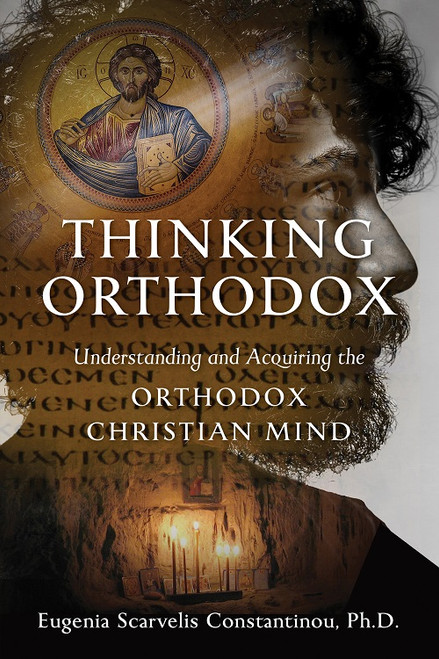
|
Thinking Orthodox: Unders... |
|
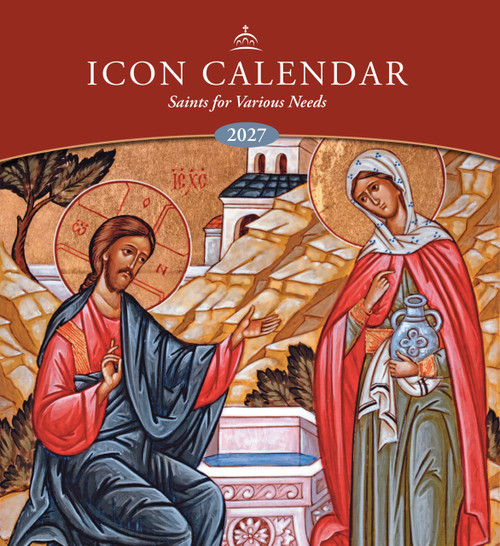
|
2027 Icon Calendar: Saint... |
|
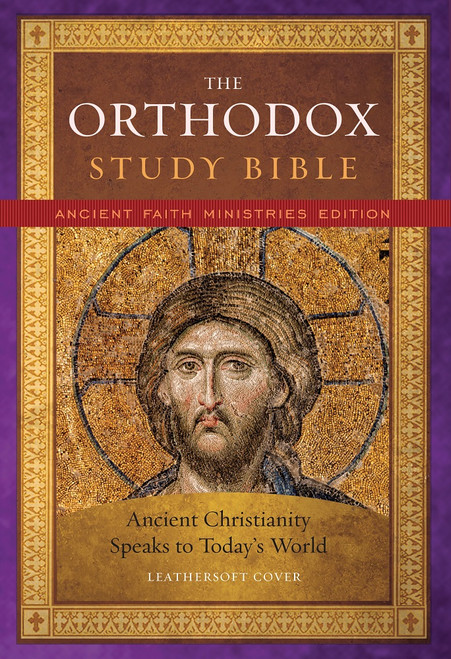
|
The Orthodox Study Bible,... |
|
Facebook
RaveCapture Commitment
RaveCapture transforms how businesses collect and showcase customer experiences. We take authenticity seriously and only allow 100% verified buyer reviews and UGC.
Guarantee
- RaveCapture Companies Are Held Accountable
- All Reviews Are Verified Customers
- Negative Reviews Can Never Be Deleted
With RaveCapture, you’re not just managing a reputation — you’re sharing the voice of your raving fans.
