
4.9
From 1
to 5
Reviews
7087
Recommend
10 / 10
TrustScore
9.9 / 10
Elias Calisto
Thorough and from the Heart
Becoming Orthodox: A Journey to the Ancient Christian Faith
I read Fr. Peter Gillquist's book long after I had become a catechumen in the Orthodox Church but decided to read it after hearing the enourmous influence he had in helping to expand the Orthodox faith to us non-ethnic Orthodox folks here in the United States.
The books is short but detailed and shares a powerful message. i liked the book so much I also purchased the audiobook when I found out it was narrated by Fr. Gillquist himself and almost had tears in my eyes at hearing him get emotional while reading the part where him and all his colleagues were told they'd finally be received into the Orthodox Church.
This has become one of my go-to books when a curious Protestant friend asks me for some reading material on the Orthodox Church.
 Originally Posted on Amazon
Wordlark
A Clear Comparison of Christian World Views
Thinking Orthodox: Understanding and Acquiring the Orthodox Christian Mind
Thinking Orthodox offers the reader a sweeping insight to the nature of Eastern Orthodox thought and a comprehensive comparison to the prevalent mindsets behind Western Christianity, both Roman Catholic and Protestant. It serves as a compelling guide for anyone exploring Orthodoxy, those who have converted, and those born into the faith, all the while engendering insight and compassion among these viewpoints. The first 35 pages alone are worth the price of the book and the shift in perspective it affords.
Dr. Constantinou presents her teaching in a highly readable style that is satisfying to both academic and lay readers. Her voice is at once authoritative, but tempered with a gentle humility. We live in a time when the opinions and assumptions of the individual are considered primary, where truth has become arbitrary and personalized, and deductive reasoning is prized beyond those aspects of life that continually defy reasoning. Dr. Constantinou is not against science and rational thought, but puts them in a clear context of spiritual knowing that supersedes mere human intellect.
The strongest component of Dr. Constantinous book is her exposition of the relationship between the Holy Scriptures, Tradition, and the writings of the earliest founders of the Church in creating a distinctive Orthodox worldview. She is careful to point out the pitfalls of approaching these pillars of faith without proper respect and scholarship. She unfolds the path to finding confidence in our Orthodox beliefs through an understanding and reliance upon a way of thinking that has withstood the assaults of historical, political, and cultural change. She sets a firm foundation upon which we can continue to grow in faith, love, and understanding without falling prey to idle speculation or adherence to the plethora of isms that have plagued the history of Christianity.
For anyone seeking to wed his or her mind and heart to Christ in His Church, this volume is an invaluable resource.
Originally Posted on Amazon
Russ H
Verified Buyer
The Religion of the Apostles: Orthodox Christianity in the First Century
Awesome!
Fantastic!!
Terrific!!!
Fantastic!!
Terrific!!!
Kay H
Verified Email
Thinking Orthodox: Understanding and Acquiring the Orthodox Christian Mind
Thinking Orthodox offers the reader a sweeping insight to the nature of Eastern Orthodox thought and a comprehensive comparison to the prevalent mindsets behind Western Christianity, both Roman Catholic and Protestant. It serves as a compelling guide for anyone exploring Orthodoxy, those who have converted, and those born into the faith, all the while engendering insight and compassion among these viewpoints. The first 35 pages alone are worth the price of the book and the shift in perspective it affords.
Dr. Constantinou presents her teaching in a highly readable style that is satisfying to both academic and lay readers. Her voice is at once authoritative, but tempered with a gentle humility. We live in a time when the opinions and assumptions of the individual are considered primary, where truth has become arbitrary and personalized, and deductive reasoning is prized beyond those aspects of life that continually defy reasoning. Dr. Constantinou is not against science and rational thought, but puts them in a clear context of spiritual knowing that supersedes mere human intellect.
The strongest component of Dr. Constantinou’s book is her exposition of the relationship between the Holy Scriptures, Tradition, and the writings of the earliest founders of the Church in creating a distinctive Orthodox worldview. She is careful to point out the pitfalls of approaching these pillars of faith without proper respect and scholarship. She unfolds the path to finding confidence in our Orthodox beliefs through an understanding and reliance upon a way of thinking that has withstood the assaults of historical, political, and cultural change. She sets a firm foundation upon which we can continue to grow in faith, love, and understanding without falling prey to idle speculation or adherence to the plethora of isms that have plagued the history of Christianity.
For anyone seeking to wed his or her mind and heart to Christ in His Church, this volume is an invaluable resource, and should be in the hands of every Orthodox believer.
Susan P
Verified Buyer
Eyeglass case, Eternal Bloom
Very well-made and incredibly beautiful. It is being used as a holder for a prayer rope. Very pleased.
Niki A
Verified Buyer
The Religion of the Apostles: Orthodox Christianity in the First Century
Excellent! Learned more about the Old Testament.
Paula P
Verified Buyer
The Religion of the Apostles: Orthodox Christianity in the First Century
This much anticipated book is "filled to overflowing", as Fr Stephen thoroughly explains the Faith of the Apostles in the first century. In hindsight, it is a teaching that has been long awaited. The continuity between the Old Testament and its fulfillment in the New Testament, tied together and explained at strategic points throughout history, gives way to a deeper appreciation of God in His ineffable love, wisdom, and long-suffering within His plan to gather all unto Himself, that almost moves the reader to silence. God is greatly glorified in the faith of the Apostles, which Fr Stephen so clearly elucidates. And so, it is a blessing to all who read this book.
Many thanks.
Many thanks.
P B
Verified Buyer
The Lightkeeper: A Novel
Loved it !!
David P
Verified Buyer
The Religion of the Apostles: Orthodox Christianity in the First Century
There is much to think about here.
Foster L
Verified Email
The Religion of the Apostles: Orthodox Christianity in the First Century
I have thoroughly enjoyed reading this book, and recommend it to anyone interested in history, worldview, and the Bible. There are a few points of contention that I will get into below, but overall this is a highly valuable and readable work.
In this book, Fr. De Young pieces together what he calls an "Old Testament Christianity," arguing that the spiritual beliefs and practices of the apostles of Christ are in seamless continuity with those of Moses and the Jewish faith up to the time of Christ. He further suggests that these practices are preserved today in the Orthodox church. De Young brings to the discussion an extremely diverse yet thoroughly interconnected knowledge base. His pedigree covers ancient near eastern and hellenistic studies, jewish and Christian theology, and strong familiarity with ancient languages and belief structures. Throughout the book he makes reference to cultural backgrounds, archaeological discoveries, modern biblical scholarship, and orthodox patristic exegesis.
There is likely much to say about his academic credentials, but the book doesn't enumerate his degrees. It does reference his podcast work, and anyone familiar with his podcasts (The Whole Council, Lord of Spirits) will undoubtedly get a lot from this book. For those unfamiliar with his podcasts or his blog, Stephen De Young has become the go-to Orthodox source for "what do I do with this weird bible passage?" Religion of the Apostles lays out a large map for interpreting confusing themes like biblical violence as well as what might be called “Christian esoterica” like angelic astronomy and demonic giants. In exploring such themes, this book brings to life a rich spiritual world as experienced historically by Christians. This worldview strongly contrasts our modern secular materialism, and offers a rich and true alternative to contemporary new age spiritualities and alternative Christianities.
***For Orthodox readers***, this book will draw your attention to the deep meanings strewn throughout the liturgies, prayers, iconography and patristic writings that you may not have previously noticed.
***For non-orthodox, Christian readers***, this book will draw your attention to the remarkable continuity of thought from Moses to the apostles of Christ, and will very convincingly explain how the earliest Christians worshipped and what they believed.
***For non-Christian readers***, this book will draw your attention to the rich history of thought and experience behind the Christian faith, and will discuss the extent to which ancient ideas have continued or changed through the modern age. Placing Christianity within the context of ancient hellenistic and near eastern religion will give you a better understanding of the meaning of this faith both at its conception and today.
There is a bottomless well of material that can be approached through this fascinating lens De Young offers, and I can only imagine that this book is the first in a long stream of works. In anticipation of future works, there are a few things that I would be remiss not to discuss. While I thoroughly enjoyed this work and can recommend it, there are some points of contention that I hope can be helpful not only to interested readers but also to the author and publishers. There is simply no good excuse for the lack of notes and citations in this book, and I’m not the first reviewer to comment on this. This book, while not academic, is nevertheless not casual reading, and there are sentences throughout which make explicit reference to "studies" and "research" to argue a point. De Young has quite evidently done extensive scholarly research, and I don't necessarily doubt the authenticity of his claims. Yet there are few notes and even less citations.
Curious readers who want to dive deeper are likely to be left unsatisfied at several points. Skeptical readers might easily dismiss the whole work as lousy scholarship based on this simple shortcoming. Adjacent to this is the awkward bibliography, which is less problematic but is just weird. The single page (front/back) bibliography includes works that are not directly used in the text (in the authors words these are general suggestions for further reading), while the text includes several works that don't show up in the bibliography.
I recognize that numerous patristic references in the text are contained under the single bibliographic entry for the multi-volume Ante-Nicene Fathers collection, however De Young’s contemporaries working in the same publishing environment (i.e. Dr. Jeannie Constantinou) provide readers with individual patristic citations according to relevant usage within the text. It's immensely more helpful for readers who want to dive into a particular topic or are returning to specific topics within the book. Again, I can't see any good reasoning for this, and I hope that future publications from this author will recognize that citations and notes are more than appropriate for the diverse audience that this book addresses. All this being said, the scriptural references included are numerous and thorough.
All in all this book is highly recommended, if not with a few qualms. I learned a lot from The Religion of the Apostles and continue to pick it up as I understand more and more about the topics it brings to light. I really look forward to future publications from this author as well as similar works from Ancient Faith Publishing.
Nancy T
Verified Buyer
Icon Bracelet with double row wood beads
I have many requests for this bracelet at our church bookstore!
Dianna B
Verified Buyer
The Lightkeeper: A Novel
I could not put this novel down! The author does an amazing job of making you feel you know the characters, yet also want to know even more about them. The imagery is strong and the writing is at times gentle and sometimes powerful, much like the different depictions of the sea. This is a beautiful story of love and friendship, you’ll find yourself daydreaming about these characters.
Jared J
Verified Buyer
Tapestry bookmark, red with Byzantine cross
Beautifully done!
Grayson R
Verified Email
The Religion of the Apostles: Orthodox Christianity in the First Century
'Religion of the Apostles' is a formidable contribution to the current discourse about re-enchantment. Fr. DeYoung reclaims an authentic, contemporary Christian alternative to the prevailing secular materialist paradigm, founded on the unbroken spiritual life of God's chosen people, preserved in the traditions of the present-day Orthodox Church. He undertakes this monumental task by painstakingly building his case from the ground up, welding archaeological work with patristic theology and historical literature on the beliefs and practices common during the Second Temple period.
Regardless of the perspective from which you approach this book, one thing is certain—you'll never look at Christianity the same way again.
Regardless of the perspective from which you approach this book, one thing is certain—you'll never look at Christianity the same way again.
Kenneth Jennings
EXCELLENT
Thinking Orthodox: Understanding and Acquiring the Orthodox Christian Mind
Without question, this is a book that I believe would be an excellent gift to a newly baptized Orthodox believer, as well as anyone seriously interested in the Orthodox faith.
From the very first chapter until the last, she unpacks the faith that provides the tools for obtaining an Orthodox phronema in a way that is remarkably understandable. It is a rare gift.
This most certainly is a book I plan on re-reading again and again.
I highly recommend it.
From the very first chapter until the last, she unpacks the faith that provides the tools for obtaining an Orthodox phronema in a way that is remarkably understandable. It is a rare gift.
This most certainly is a book I plan on re-reading again and again.
I highly recommend it.
Originally Posted on Amazon
marjorie z
Verified Buyer
The Religion of the Apostles: Orthodox Christianity in the First Century
excellent on a subject about which most christians know virtually nothing. i've been searching for a book on this subject for months.
Miriam F
Verified Buyer
Everyday Saints and Other Stories
Such a beautifully written book full of stories. Both entertaining and edifying. I have recommended this book to several people since I have read it!
Pedro S
Verified Email
When You Fast: The Why and How of Christian Self-Discipline
L Joseph Lentendre's When You Fast is an excellent introductory work to fasting. Fasting is one of the three key spiritual practices of Christian discipleship, along with prayer and almsgiving, but it is often neglected in contemporary Christendom. In addition to explaining why we fast (to prepare, to be free, and to be fruitful), how we fast (following patterns the Church has founded from antiquity), and when we fast (also following the rhythm the Church has maintained from antiquity), this work provides good guidance on how to think about the practice of fasting in a manner that should encourage any Christian to deepen his or her own faith.
Unlike many other works that try to popularize Orthodox ascetical labors, Lentendre is beautifully concise and clear. He doesn't assume that his readers/listeners are fluent in Orthodox jargon, but he also doesn't dumb down his language; he presents the language of asceticism just as the saints do, and then he defines his terms concretely. This book approaches the subject from the perspective of Orthodox Christianity and grounds fasting in the sacramental, liturgical, and ascetical traditions of the Orthodox Church. Nonetheless, Lentendre gives a wonderful overview that any Christian should be able to engage with. I've recommended this book to friends who are Catholic & Protestant clergy and laypeople; those who picked it up ended up finding it very helpful. The universally Christian scope is bolstered by Lentendre's drawing from sources as diverse as Dante's Divina Commedia, C.S. Lewis's Screwtape Letters, and Cal Newport's Digital Minimalism, in addition to referencing Orthodox sources.
After all this, Lentendre also provides an appendix that alone is worth the price of admission: a concrete, modern explanation of “the Eight Thoughts” (from which “the seven deadly sins” are drawn), or Eight Passions, about which a great deal of ascetical writing is concerned; as noted in the text, being able to name the passions we are fighting against is a key step to overcoming them. If you are interested in better understanding the Christian spiritual practice of fasting, consider picking up this short book; there are far worse ways you can spend two hours than reading/listening to this book.
Petar J
Verified Email
The Religion of the Apostles: Orthodox Christianity in the First Century
The following is the review of the e-book and the audiobook, so keep that in mind. The Religion of the Apostles: Orthodox Christianity in the First Century by Stephen De Young had several aims. I am paraphrasing: “To outline the contours of the religious practice and beliefs of the Jewish people in the first century AD; to rectify the assumed discontinuity between Old and New Testamental beliefs, practices and scriptures, and to be used in the Orthodox Christian apologetics”. The book achieved and exceeded its aims, at least this is my humble opinion, but it is not without its faults, about which I will speak later. Additionally, the book’s aim, which was unmentioned but fulfilled anyway, is to give Orthodox Christians grounding in their beliefs and practices. Too many of us gather as the one Body and participate in the life of the Orthodox Church without understanding the modes of that participation. I have seen criticism levelled against the book, and those mainly revolve around not providing enough references. If you are looking for a scholarly book full of references and footnotes (the book is not without them), this is not the book for you. The book was not written to be a scholarly reference for somebody’s doctoral thesis. The book had different aims.
As mentioned above, the book does have some issues. The issues are mainly in its pacing and the presentation of the material. However, this criticism I would not entirely place on the author, much of it has to do with the material, which gets complicated at times. The book starts very well. It presents the material very cleanly and concisely, which for me was a refreshing change. Too many authors in the field of religious studies try to be “scholarly”, which comes off as pretentious. Part 2 is where the trouble begins. Part 2 very soon becomes repetitive and a bit tiresome. While Part 3 is too complicated, to the point of feeling like reading somebody’s PhD thesis, which makes a reader lose focus. This is particularly obvious in the audiobook version, with the listener (me) losing focus in Part 3, hearing every third word or so. However, as mentioned before, much of it has to do with the subject matter of this particular section. This section answers questions that many regular non-western Orthodox parishioners (people with roots in the Middle East, Balkans, Russia) have never raised during their religious lives. Part 4 is where the book goes back to its beginnings, slowing the pace down and being much clearer.
From the technical perspective, the e-book is well-formatted, and the audiobook is well-narrated by the author himself, with the occasional “end quote”, which would pop out sound-wise and was clearly recorded later in the process.
To summarise, the book is excellent, and the benefits to the Orthodox readers and listeners are immeasurable. First, because the book shows us two fundamental things:
1. That the first Christians did not “invent” anything.
2. That the first Christians did not “corrupt” anything.
Second, because it shows us that the first Christians listened to the voice of one crying in the wilderness: “Repent (in Greek “metanoite” – change your mind, your worldview), for the kingdom of heaven is at hand!”. And then listened to the call of the Apostles and their descendants through the ages, until today: “Taste and see that the LORD is good”.
However, the book is not without its problem, which will be negligible after a careful re-reading. The first of many, I am sure.
Joyce N
Verified Buyer
The Religion of the Apostles: Orthodox Christianity in the First Century
A good read. Many of our parishioners had requested this book.
About Ancient Faith Store
At Ancient Faith Store, we are dedicated to providing a rich collection of resources that celebrate and preserve the Orthodox Christian faith. Our mission is to help individuals and families grow in their spiritual journey through a wide array of products, including books, music, icons, and gifts that reflect the beauty and depth of Orthodox Christianity.
We believe that faith is a journey, and we strive to accompany you every step of the way with materials that inspire, educate, and uplift. Whether you're looking for a profound theological work, a children’s book that teaches the values of our faith, or a beautifully crafted icon to adorn your home, you'll find it here.
Our commitment to quality and authenticity means that every item is carefully selected to ensure it aligns with the teachings of the Church. We are passionate about fostering a vibrant Orthodox community, and we invite you to explore our store to find the tools that will enrich your spiritual life and connect you more deeply to the traditions of our faith. Thank you for being a part of our journey.
Visit Website
We believe that faith is a journey, and we strive to accompany you every step of the way with materials that inspire, educate, and uplift. Whether you're looking for a profound theological work, a children’s book that teaches the values of our faith, or a beautifully crafted icon to adorn your home, you'll find it here.
Our commitment to quality and authenticity means that every item is carefully selected to ensure it aligns with the teachings of the Church. We are passionate about fostering a vibrant Orthodox community, and we invite you to explore our store to find the tools that will enrich your spiritual life and connect you more deeply to the traditions of our faith. Thank you for being a part of our journey.
Ancient Faith Store is a Verified Merchant
Questions? Contact Us
support@ancientfaith.com
800-967-7377
Mon-Fri (9am-5pm CST)
Top Rated Products
|
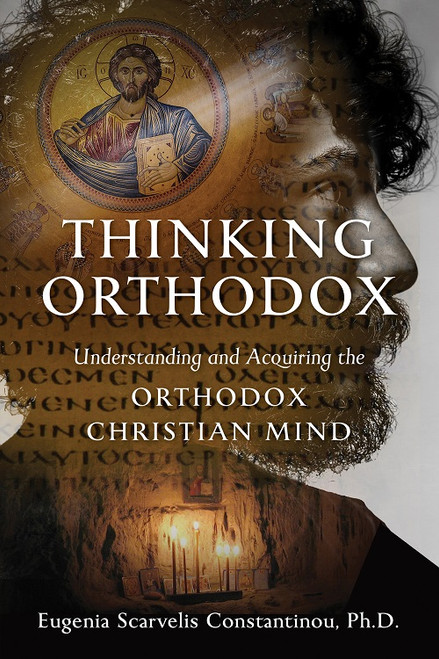
Thinking Orthodox: Unders... |
|
|
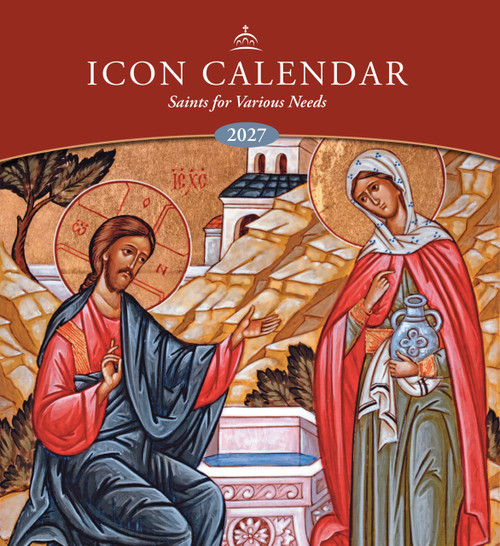
2027 Icon Calendar: Saint... |
|
|
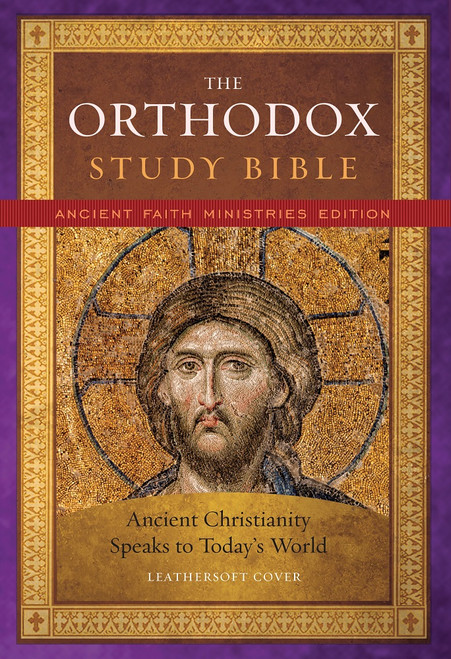
The Orthodox Study Bible,... |
|
Facebook
RaveCapture Commitment
RaveCapture transforms how businesses collect and showcase customer experiences. We take authenticity seriously and only allow 100% verified buyer reviews and UGC.
Guarantee
- RaveCapture Companies Are Held Accountable
- All Reviews Are Verified Customers
- Negative Reviews Can Never Be Deleted
With RaveCapture, you’re not just managing a reputation — you’re sharing the voice of your raving fans.
