
4.9
From 1
to 5
Reviews
7083
Recommend
10 / 10
TrustScore
9.9 / 10
Lance
Excellent book by a talented writer.
Nearly Orthodox: On Being a Modern Woman in an Ancient Tradition
Angela Carlson writes with a clear voice that's both humble and interesting. You don't have to be religious to understand her journey but it helps. I couldn't put this book down. I recommend it, highly. The writing is so good.
 Originally Posted on Amazon
RK Barberg
A wandering soul connects ancient Faith....
Nearly Orthodox: On Being a Modern Woman in an Ancient Tradition
Coming from similar background stories as the author: Catholic to Protestant to Orthodoxy, I found myself, again and again, in several chapters; particularly her struggles with divorce, relationships, husband and children; the journey into Orthodoxy. Carlson took three years to convert and her "wait" described throughout the book FINALLY gave a breath of fresh air in honesty and raw transparency; that making any change is not at ALL full of sunburst and rainbows, that truth - in churches - is somewhat lacking in a dose of reality. Keep in mind, this IS HER story; may not be yours BUT one can relate, one SHOULD relate-for we are all coming from many areas to seek the ONE thing needful. Her gorgeous poetic writing intertwined within the mysteries of the church and her journey are welcoming and soothing. I highly recommend this book for those starting on or well into the journey, because-after all-aren't we all -- we still have our race to finish.
Originally Posted on Amazon
Brigid
I loved the way she wove different threa...
Nearly Orthodox: On Being a Modern Woman in an Ancient Tradition
A friend loaned me her copy of this book, asking for my thoughts. I have been many things'nanny, firefighter, book-obsessed tree-climbing pintsized revolutionary (...apologies, Mrs. Cheney)'but I have never been a punk rocker. And my spiritual journey has been within the Orthodox church since I was six years old. Still, Angela Doll Carson's Nearly Orthodox made me feel understood. It made me feel not-alone.She's a phenomenal writer, vivid and crisp, and she strikes a balance between poetic imagery and the story itself. I loved the way she wove different threads together, tying anecdotes about her kids to theological quotes to her own thoughts and hesitation. She has the courage and stubbornness to ask hard questions, and to not flinch if she doesn't like the answer at first glance. It was a wonderful book, and I highly recommend it. I expect it'll find its way onto my own bookshelf, too.Also I finished it in one night and cried all over my friend's book. Sorry, dear.
Originally Posted on Amazon
Luci Shaw
What I greatly admire about "Nearly Orth...
Nearly Orthodox: On Being a Modern Woman in an Ancient Tradition
What I greatly admire about "Nearly Orthodox" and its author, Angela Doll Carlson, is the grit and fiber of her faith, long-sought along a far-from-easy pilgrimage into a Christian faith that has stood the test of time. Talk about determination. This author sees a goal ahead and goes for it no matter how long or arduous the trip.
Originally Posted on Amazon
Anna
Engrossing memoir!
Nearly Orthodox: On Being a Modern Woman in an Ancient Tradition
I'm wary of conversion stories. Depending on what stage the convert wrote them in, they can be a bit too triumphalist or naif for my tastes. Angela Doll Carlson's book, Nearly Orthodox, does not suffer from either of these.Some converts enter the church enthusiastically and zealously. Angela entered it with trepidation.It's important to have stories from converts who made the choice to convert even if they had reservations. Sometimes we can get too caught up on the aesthetics of Orthodoxy; since many other Christian expressions do not offer the richness that come part and parcel with an Orthodox service so those things can be appealing to inquirers who feel that something is missing from their current practices. However, Orthodoxy can seem severely outdated or politically incorrect, causing inquirers to curb their enthusiasm (I mean, we have actual patriarchs).However, it is evident from the pages of her book that her desire to know and serve God is strong. In here are stories about growing up Catholic; Angela's punk rocker years; the side trip to Protestantism; marriage and family life; and vignettes on being an inquirer, then a catechumen, then finally her conversion. Angela puts her story out there in a vulnerable way that I can't help but admire.This is an absorbing read. I would recommend this book especially to inquirers or catechumens who have reservations about how strange Orthodoxy can be, and to those who feel they might not fit some sort of expected 'convert' mold.
Originally Posted on Amazon
Melpomeni Mari
The Scent of Holiness: Lessons from a Women's Monastery
Speaks right to your heart
Originally Posted on Amazon
Stuart L
Verified Buyer
Fire from Ashes: The Reality of Perpetual Conversion
I recently received the long awaited book written jointly by Father Joseph Huneycutt and Steve Robinson. I say long awaited as I had heard several years ago that they were working on a book together.
In one of my brief conversations about the book I was told that it was going to be a serious book about a serious subject and the reality is that it is that but also a book of hope and hopefulness.
Fire from Ashes has a subtitle which well describes the theme of the five reflections and overall theme of the book....The Reality of Perpetual Conversion. In the introduction the autors have set forth the theme of this book. The autors write:
Reality is the first step toward salvation.
It is also the second step, the third, the fourth, and the last.
There is reality we don't want to face.
There is reality we can avoid for a season.
There is reality we are forced to tackle.
Reality is ultimately unavoidable.
After sharing the ashes they begin to let us know that there is fire still there in the midst of these ashes. The authors write Do not despair, these sentences need not be understood to mean we are stuck with hard times, denial or sinful patterns of life. The reality is that all reality is not bad.
In each of the five reflections we are faced with the reality of our sinfulness but at the same time we read of the reality of our conversion. We are faced with the ashes that are our lives but also we are shown that even in the coldest dead fire there are still embers of hope that can be quickly enflamed through perpetual conversion.
Yes the book is not light reading but it is reading filled with much hope. Steve Robinson throughout the book provided us with many illustrations that bring light and hope to what is being written about especially some of the quotations from the spiritual fathers past and present. We also have hints even in this dark book of the humor that we have come to expect from Father Joseph and Steve.
I would highly reccommend that you all pick up a copy and read it once but not just once but each and every time you start to feel the cold ashes of reality overwhelming you and in reading you will be reminded that if we bend low over the ashes and blow into them they will come back as fire to which we may add new wood to keep the fire of hope and joy burning brightly.
Shadow_Wanderer
The Scent of Holiness: Lessons from a Women's Monastery
A bit repetitive in some areas, but overall very encouraging and inspiring!
Originally Posted on Amazon
Alane M. King
Surprised by Christ: My Journey from Judaism to Orthodox Christianity
Very easy to read and understand. Great to get the insights from a previous Jewish person and to get a little understanding of what the Jewish Talmud compares to Jesus. Sustains my Faith!
Originally Posted on Amazon
Amazon Customer
LOVELY
Nearly Orthodox: On Being a Modern Woman in an Ancient Tradition
Fantastic, writing is beautiful full of life and humor. I would recommend this book to everyone no matter what faith or spiritual belief.
Originally Posted on Amazon
Kassia
Surprised by Christ: My Journey from Judaism to Orthodox Christianity
A good book to start out as an introduction to Christian Orthodoxy for the Evangelical Protestant. The author's life experience growing up as a Jew converting to Christianity, the contrast of Evangelical Protestantism and Roman Catholicism to Orthodox Christianity, and how Orthodox Christianity is the fulfillment of Orthodox Judaism provides a good framework for the Western Christian looking into Eastern Christianity. I highly recommend this book as a must read for the inquirer into Christian Orthodoxy.
Originally Posted on Amazon
WholesomeHenri
A Book About The Struggle
Nearly Orthodox: On Being a Modern Woman in an Ancient Tradition
Nearly Orthodox, written by Angela Doll Carlson, is an honest look into the murky waters of everyday life where the vestiges of faith and family and feeling are often lost to the mud. The book takes on a personal tone as Carlson lays bare her struggles as a cradle Catholic, emerging Protestant, and Eastern Orthodox inquirer. She writes about family life, the divorce of her parents, and the death of her grandparents. About punk rock, rebellions, tattoos, cigarettes and first kisses. And pain and tears and healing. Carlson's narration of her own pain and shortcomings are her offering to a hurting world'outstretched, like arms on the cross, to bridge the gap of formality and break the barriers of apathy. Through her introspective approach, Carlson weaves intricate themes into this highly autobiographical account of her conversion to Eastern Orthodox Christianity. But the book is not exclusively about dogmas or rules or even about a single point in time when she decided to convert to the faith; it is about stories. About having been somewhere, being somewhere, and going somewhere. About navigating the tempestuous seas of life. About the struggle and the wounds and the heartache. And yet, a book about hope and healing and life.Each chapter is composed of verbal snapshots of Carlon's life, all of which contribute to the main point of the section. The overall meaning of each chapter, however, is not black and white, shrouding the simple profundity of this piece in description and metaphor: a profundity that is sensed and not spelled out. As a result, this book may very well frustrate you; but if you let her words speak through the metaphor, the result will lure demony figures from the shadows of your soul into the light of acknowledgement and propel you into the search for healing.It should be noted that this book, though autobiographical, is not chronological. Within the confines of a single chapter, Carlson may talk about her childhood and then jumps forward to her second year as a catechumen in the Orthodox Church. Oftentimes this takes the form of a simple line break and other times the lines flow right up against one another. She often speaks about one aspect of a situation only to revisit it a hundred pages later'all the while slowly revealing more of who she is. It is kind of like a distant image slowly coming into focus; and the ending picture is quite artfully composed. After an initial shock concerning the non-linear nature of this book, I adjusted to the format and wound up enjoying its layout and appreciating its meaning.Alongside the massive jumps of time between stories, Carlson brushes up against a number of theological themes as she wrestles with the ancientness of Eastern Orthodoxy and the modernness of her own womanhood. She talks about feminism, Mary, women in the Church, and motherhood; the body, the nous, and the Jesus prayer; about veneration and communion of the saints, icons, and taking a saint's name. She even touches on confession, fasting, and closed communion'communicating the similarities, as well as the differences, between the Eastern and Western approaches. And she talks about trying to keep everything balanced. About searching, and failing, to ground her identity in something.Two-thirds of the way through the book she finds herself stuck in an area familiar to many of us who have travelled the road to Orthodoxy: turning interest in the faith, isolated in the rational mind, steeped in the newness of the ancient tradition, a living practice. About living instead of looking, struggling instead of coasting, walking instead of standing still. It is not until the end of the book that she really tells us why she was interested in the Orthodox Church in the first place. The last 20 pages of the book are devoted to what moved her from mere interest in Orthodoxy to the feeling that her conversion was absolutely necessary. She writes,"It was the unchanging nature of Orthodoxy that drew me in from the start." (257)"It was the mystery that drew me in, The promise of healing . . . " (268)Particularly striking is her explanation of where she found herself near the end'which many of us have experienced as just the beginning'of the journey."I was only nearly orthodox, no longer Catholic, never Protestant, living in the muddle middle, walking towards the Mystery." (270)I appreciated the rawness of this book; the stories, the pain, the struggle. I would highly recommend it'and yet I am torn because some Protestants may not understand it based on the fact that her worldview was shaped Catholic, never Protestant, and is now Orthodox. Even still, I would recommend it'especially to women who are looking, struggling, searching. Carlson is completely open: she talks about anxiety and worry and self-consciousness in this intersection of ideas, collision comfort and confusion, and 'muddle middleness' of life. Wherever you may find yourself, this is a tremendous book; one that will speak particularly to the modern woman.May God help us all to continue walking towards the Mystery.Review originally published on www.BenCabe.com/blog
Originally Posted on Amazon
J. Holder
Everywhere Present: Christianity in a One-Storey Universe
A wonderful book about the actual presence of God in our lives. Highly recommended.
Originally Posted on Amazon
Wesley J. Smith
I am an Orthodox Christian convert
Thirty Steps to Heaven: The Ladder of Divine Ascent for All Walks of Life
I am an Orthodox Christian convert. I have often heard of St. John of the Ladder and thought it over my head. I laughingly call this St. John of the Ladder for Dummies. Very approachable without being shallow.
Originally Posted on Amazon
Debbie L
Christ in the Psalms
Love this Orthodox look into the Psalms - Christ is revealed and explained and related to both Old and New Testament writings AND Divine Liturgy!!! Simply awesome. Just finished my first devotional reading of this book with the Psalms today and plan on beginning to reread both tomorrow...too good to not meditate on for many years to come.
Originally Posted on Amazon
Daf
Must read
Thirty Steps to Heaven: The Ladder of Divine Ascent for All Walks of Life
A must read for any Orthodox Christian. Easy to read and understand.
Originally Posted on Amazon
WholesomeHenri
Turning the Heart to God: by St. Theophan the Recluse
Turning the Heart to God is a partial translation of Saint Theophan's larger work, The Path to Salvation: A Manuel of Spiritual Transformation. Before reading either of these books it is important to consult your Spiritual Father, as they can be easily misunderstood and misapplied which could lead to demonic delusion. Turning the Heart to God is a book that details varying spiritual conditions, how to recognize them, and how they are healed--this being the case, it must be noted that it is extremely dangerous to preform surgery on yourself and it is thus necessary to have a Spiritual Father to consult before, during, and after reading this book.
A Short Biography of Saint Theophan the Recluse
Saint Theophan the Recluse, born in 1815, just after the Napolean's invasion of Russia in 1812, found himself in the middle of a cultural transition.1 Several years after being ordained a hieromonk (a monk who is also a priest) in 1841, Saint Theophan travelled to Jerusalem where he helped establish a Russian ecclesiastical presence.2 Over the next six years he learned Greek, Hebrew, Arabic, and French, studied the Church Fathers, and stayed in several monasteries on Mount Sinai and Mount Athos. In 1855 he was "raised to the rank of archimandrite"3. Two years later he became the rector of St. Petersburg Theological Academy and two years after that the Bishop of Tambov (1859). Bishop Theophan would later be transferred to oversee the Diocese of Vladimir and Suzdal (1863) and become Father Superior of the Visha Hermitage (1866).4 Regardless of his rapid increase in rank and responsibility, Bishop Theophan's main desire was to live a simple life of seclusion. In 1872 this desire was realized. From then until the end of his life in 1894 he only received a handful of visitors. Saint Theophan corresponded to Spiritual Children by means of letters. "He received twenty to forty letters everyday, and responded to them faithfully."5 In addition to his spiritual guidance and correspondence, he translated into Russian the five volumes of the Philokalia, which took nearly two decades to complete, and a handful of other works.6
Saint Theophan was an intellectual well versed in the Church Fathers and wholly imbued with the mind of the Church. The insights contained in this book are penetratingly deep and occasionally hard to fully grasp. He details, in an almost psychotherapeutic way, the ramifications of deep spiritual slumber and varying degrees of spiritual lethargy. He uses the parable of the prodigal son in a profound manner throughout the entire book in order to illustrate the means of coming to yourself (waking), decided to get out of bed and do something (determination/resolve), and actually doing something (action). He dissects each of these phases, where people get caught or stuck, and how to get out of the mire in which you may find yourself. The entire book is composed of subthemes based on these three phases. This book is an observation of man's soul and the things that lurk there. Saint Theophan's main goal in writing it is revealed in the title of the whole work: The Path to Salvation: A Manuel of Spiritual Transformation. I would highly recommend this book provided, of course, that you speak to your Spiritual Father prior to reading it.
Review originally published on www.BenCabe.com/blog
Sources:
1. Turning the Heart to God, xiii.
2. ibid, xxiv
3. ibid, xxv
4. ibid, xxvi
5. ibid, xxxi
6. ibid, xxxii
Originally Posted on Amazon
Ben C
Verified Buyer
Fire from Ashes: The Reality of Perpetual Conversion
Fire from Ashes: The Reality of Perpetual Conversion is a book for everyone; the content carries exceedingly more weight than the mere 144 pages would indicate. Even so, the conversational tone and direct approach casts the content in an approachable and engaging form. Authors Fr. Joseph Honeycutt and Steve Robinson use stories from the lives of people in varying circumstances to bring this book to life. When they tell stories about the saints, such as Moses the Black, you get the sense that they are literally introducing you to that person. Not only that, they somehow manage to convey, with an exceptionally contemporary writing style, the wisdom of the ancient Church and thus permeate the reader with the mind (phronema) of the Eastern Orthodox Church. Read this book and not only be encouraged and challenged on your Christian journey but you will also gain a better understand the pastoral love of Eastern Christianity and the Eastern Church’s view of the world and the person. As a result of this, I would highly recommend this book—even as an introduction to Eastern Orthodox Christianity—to absolutely everyone.
I found myself completely enthralled when I read the first line of the first chapter. Not too many books are able to accomplish this, let alone maintain it throughout the entire work. Fire from Ashes is the exception. The authors’ application of vivid imagery alongside arresting stories banish any banality that could arise from books on the subjects of sin, repentance, and salvation. The breadth of subjects they touch on—spiritual guidance, confession, fasting, and more—is astounding.
Fire from Ashes: The Reality of Perpetual Conversion is all about the struggle to live a Christian life. This book is important because far too many Christians are stuck in the damning pews of nominal Christianity; a kind of Christianity that, masquerading as total reliance on God, completely gives up on any kind of struggle against sin. But the reality is that our life in Christ is dependent on our struggle against the sinful passions.
fire from ashes the reality of perpetual conversion fr joseph honeycutt and steve robinson
Why does it feel like you are stuck in the same sins? How do you get closer to Christ? Are you ready to give up? Before you do, read this book. You will not be sorry. I would like to leave you with the first line of the first chapter. If you want to find out what happens next you will just have to read the book—and you will not be able to put it down.
“I knew Mark was a heroine addict when I hired him” (1).
--
I received this book from the publisher in exchange for my honest review. All opinions expressed are my own.
David N. Mielke
Let Us Attend! A Journey Through the Orthodox Divine Liturgy
Father has his usual clear explanation of faith in action.
Originally Posted on Amazon
WholesomeHenri
Mary, Worthy of all Praise: Reflections on the Virgin Mary
Every Sunday in the Divine Liturgy Orthodox Christians prayerfully sing, "most Holy Theotokos, save us." But what do we mean when we ask Mary to `save us?' Fr. David R. Smith seeks to answer this question in the first chapter of his book, Mary, Worthy of all Praise. He does this by first explaining what we do not mean.
"No Orthodox Christian would say that we sing this phrase in order to ask Mary for the eternal salvation of our souls, for `there is no other name under heaven given among men by which we must be saved.' (Acts 4:12) then that of Jesus Christ our Lord. When we say `most Holy Theotokos, save us' we don't mean save our souls or forgive us our sins.' When mean something else--something we may found ourselves uncomfortable saying: `Help me. Rescue me.' We need Jesus and she has Him. She possesses our salvation in a way that no other human being can possess Him" (10).
It must be noted from the start that this book is not a systematized defense of the Marian dogmas; it is, rather, a meditative journey through the service of the Paraklesis. Fr. David begins each chapter with an ode and then relates his own meditations on its meaning and profundity. The insight contained within the mere 104 pages makes it well worth the read.
I thoroughly enjoyed this little book but it is not for everyone; it presupposes an acceptance of our communion with the saints. I imagine those who will most enjoy this book are Orthodox Christians looking to understand Mary's role in our Christian life. I would like to add, also, that Evangelicals may enjoy this book provided that they are not reading it in order to argue against Marian dogmas. There is no arguing in this book, only simple reflections on the reality of Mary's role in our Christian life--a role which is affirmed biblically and historically. Unfortunately, regardless of these historical and biblical facts, Mary has been ignored or even held in contempt by many Christians that find themselves in post-reformation traditions. This is a tragedy, for her help is of principal importance. I would highly recommend to anyone who wishes to understand this further to read, in addition to this book, the lives of the saints--for the saints exemplify a healthy devotion, that all Christians should should have, to most blessed Theotokos.
Lastly, I would like to mention that, in the Orthodox Tradition, we refer to Mary as the Theotokos (as mentioned above), which means Mother of God. This title was formally given to her--though it was used before its formal instatement--at the third Ecumenical Council in Ephesus in order to combat the Nestorian heresy in AD 431 by affirming the divinity of Jesus Christ.
mary worthy of all praiseIf you are looking for something to read about Mary, and her role in the life of the Christian, read Mary, Worthy of all Praise, by Fr. David R. Smith. Most Holy Theotokos, save us!
Review originally published on www.BenCabe.com/blog
Originally Posted on Amazon
About Ancient Faith Store
At Ancient Faith Store, we are dedicated to providing a rich collection of resources that celebrate and preserve the Orthodox Christian faith. Our mission is to help individuals and families grow in their spiritual journey through a wide array of products, including books, music, icons, and gifts that reflect the beauty and depth of Orthodox Christianity.
We believe that faith is a journey, and we strive to accompany you every step of the way with materials that inspire, educate, and uplift. Whether you're looking for a profound theological work, a children’s book that teaches the values of our faith, or a beautifully crafted icon to adorn your home, you'll find it here.
Our commitment to quality and authenticity means that every item is carefully selected to ensure it aligns with the teachings of the Church. We are passionate about fostering a vibrant Orthodox community, and we invite you to explore our store to find the tools that will enrich your spiritual life and connect you more deeply to the traditions of our faith. Thank you for being a part of our journey.
Visit Website
We believe that faith is a journey, and we strive to accompany you every step of the way with materials that inspire, educate, and uplift. Whether you're looking for a profound theological work, a children’s book that teaches the values of our faith, or a beautifully crafted icon to adorn your home, you'll find it here.
Our commitment to quality and authenticity means that every item is carefully selected to ensure it aligns with the teachings of the Church. We are passionate about fostering a vibrant Orthodox community, and we invite you to explore our store to find the tools that will enrich your spiritual life and connect you more deeply to the traditions of our faith. Thank you for being a part of our journey.
Ancient Faith Store is a Verified Merchant
Questions? Contact Us
support@ancientfaith.com
800-967-7377
Mon-Fri (9am-5pm CST)
Top Rated Products
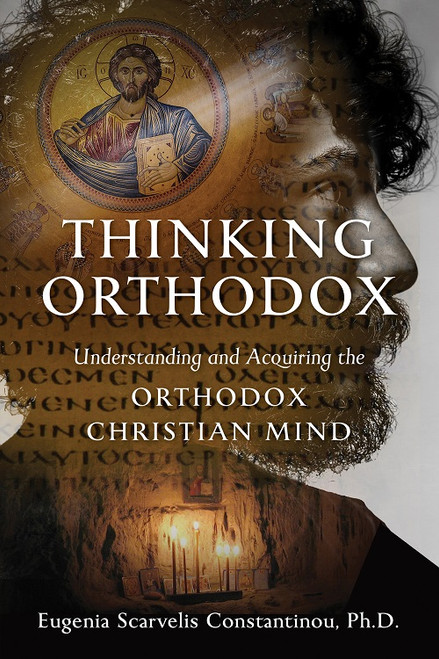
|
Thinking Orthodox: Unders... |
|
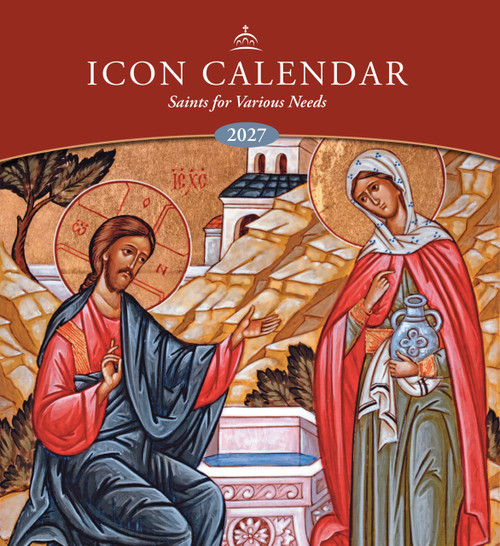
|
2027 Icon Calendar: Saint... |
|
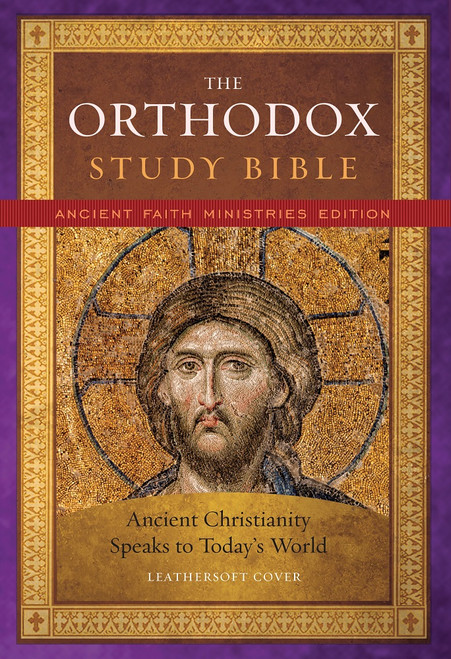
|
The Orthodox Study Bible,... |
|
Facebook
RaveCapture Commitment
RaveCapture transforms how businesses collect and showcase customer experiences. We take authenticity seriously and only allow 100% verified buyer reviews and UGC.
Guarantee
- RaveCapture Companies Are Held Accountable
- All Reviews Are Verified Customers
- Negative Reviews Can Never Be Deleted
With RaveCapture, you’re not just managing a reputation — you’re sharing the voice of your raving fans.
