
4.9
From 1
to 5
Reviews
7083
Recommend
10 / 10
TrustScore
9.9 / 10
Tammy
Verified Email
Rediscovering the Goodness of Creation: A Manual for Recovering Gnostics
"Rediscovering the Goodness of Creation: A Manual for Recovering Gnostics" by Robin Phillips is a must read for every Christian in the Western world. As a graduate from a non-Orthodox seminary, and now a catechumenate in the Orthodox Church, I was intrigued by Phillips' in depth look at how the West has adopted gnostic views without having realized we have done so.
Phillips begins with a short autobiography, sharing his early love of the arts and music, along with his theological journey toward finding means by which to integrate that love with his faith. This lays the groundwork for the remainder of the book, which compares ancient gnostic writings and arguments against gnostic beliefs with the general mindset of the Western world, including Western Christianity, and how many of us may need to adjust our thoughts to be more in line with that of Scripture and the teachings of the early Church.
Phillips speaks of the rupture in relationship between humanity and creation and how this has led to the view of the earth as a supplier of resources to which we humans are entitled, rather than as part of the gift of life granted to us by God, and for which we are to be stewards.
According to Phillips, there were "dynamic processes that [God] set in motion during the Creation week," and "God has coordinated bodies and organisms to flourish according to the telos (final goal) appropriate to the nature of each thing." Then he goes on to expound on humanity's God-given telos of guiding and caring for each of these things, to help each along its own telos.
One can barely scratch the surface of Phillips' work in a review such as this. Suffice it to say that, he not only looks at humanity's role in creation, but also gives practical how-to advice for changing our gnostic-leaning mindset to one of viewing creation as part of our relationship with our Creator, including our views of our day-to-day tasks, our gifts and our abilities.
Part autobiography, part theological treatise, part "how-to" manual, in "Rediscovering the Goodness of Creation, Phillips" has given us a reference to which we may find ourselves returning again and again.
GREG W
Verified Buyer
A Sacred Beginning: Nurturing Your Body, Mind, and Soul during Baby's First Forty Days
This definitely fills a need for new (or not so new)mothers. I loved reading through this even though this is my fifth baby!
CATHY M
Verified Buyer
Keychain, Virgin of Vladimir
Beautiful, well made, like a small portable icon. Purchased the angel one as well. Please make one with Christ the Teacher. Thank you.
Cynthia T
Verified Email
Healing Work: Giving Humanity a Second Chance
As a clinical psychologist and practicing Orthodox Christian, who is striving to integrate psychotherapy and healing with our Christian belief system, I very strongly recommend Fr Joshua’s book to everyone. It is essential reading. Fr Joshua comprehensively summarizes how and what we can choose to do to promote healing in ourselves and others. He invites us and encourages us in a gentle, compassionate manner to be gentle, kind and compassionate to ourselves and others. Fr Joshua explains how working towards healing is what God wants for us, how we can become freed from past limitations and traumas. He reassures us we are not alone in this struggle and hard work. Fr Joshua educates the reader regarding basic approaches to therapy and why some may experience limitations with traditional therapy (cognitive-behavioral therapy and insight-oriented talk therapy) and offers information on alternative cutting-edge approaches, e.g., limbic system therapy and specifically how memory and traumas are held in our body and brain. He emphasizes the importance of an experiential approach that allows us to heal from new experiences, with others in a community. Fr Joshua explains the important paradox of how experiences in present relationships can heal us from the pain of past experiences. He reassures us that these specific therapy approaches are consistent with the teachings of our Church and how through healing our past wounds, barriers to experiencing and accepting God’s love can be removed. The chapters on Healing the Brain and Navigating Healing Work are excellent and Fr Joshua offers a straightforward step by step approach.
Thank you, Fr Joshua, for writing this wonderful book!
Thank you, Fr Joshua, for writing this wonderful book!
THOMAS B
Verified Buyer
Wooden Icon Box, Perpetual Help, large
Well made and very beautiful. Looks great on my dresser.
JOHN D
Verified Buyer
The Orthodox Study Bible, Ancient Faith Edition, Leathersoft: Ancient Christianity Speaks to Today’s World
A well made Bible!
JAMES S
Verified Buyer
Face to Face: Knowing God beyond Our Shame
This is probably the most profound book next to Holy Scripture I have read. Extremely helpful in learning more deeply who I really am. As Roman Catholics for 23 years, Susan, my wife, and I are seriously contemplating becoming Orthodox. Pray for us as we continue progressing in our search. Peace and all good in Jesus and Mary. Jim Swain
Dn J
Verified Email
Apostle to the Plains: The Life of Father Nicola Yanney
This is a remarkable book. Father Nicola was an immigrant from Syria when thst country was still under the Ottoman Yoke. The normal persecution was compounded by a particularly bad economy.
He married young and emigrated to America, settling on a farm in Nebraska after having first spent time working as a peddler. His wife dies young after giving birth to their fifth child.
The community, in need of a priest, raises him up as a candidate. He is ordained in New York by Bishop (now Saint) Raphael. This was St Raphael's first ordination- and St Raphael was the first bishop consecrated in the America's, so a double first.
While assigned to the parish in Kearney, Nebraska, he was also given a large mission field to care after the Syrian Diaspora. It was all the territory from the Canadian border to the Mexican, between the Mississippi and the Rockies. And he took this seriously spending months traveling from community to community baptizing, hearing confessions, and praying the Divine Luliturgy.
This is also the Era of the Armenian Genocide. While the Armenians are the most famous victims the Turks also went to work murdering off the Pontic Greeks, Assyrian Christians, and the Syrian Christians. Fr. Nicola raised funds and awareness about these crimes and their victims.
He ends up dying during the Spanish Flu (yes, it was from Kansas but that is what history inaccurately calls it) after ministering to his people who were suffering from it. He was only 45.
You also get a taste of the Syrian Christian confusion between the Maronites, Melkites, and Orthodox, as well as the divisions that cropped up in the Orthodox Community following St Raphael's death.
It is written in an easy narrative style and doesn't lean too heavily into hagiography. A good read.
JESÚS
Verified Buyer
Cross Ornament, Three-Bar Crucifix, wooden with plexiglass cover
This was a Great purchase loved it!
Robin H
Verified Buyer
Mixed Pack of 10 Classic Blessings cards
Love them! They are vibrant and classic.
Dn J
Verified Email
Face to Face: Knowing God beyond Our Shame
In "Face to Face: Knowing God beyond Our Shame," Father Stephen Freeman delivers a powerful exploration of shame, its varying forms, and its profound impact on our lives. The book begins with a thought-provoking introduction that sets the stage for the subsequent chapters. Freeman eloquently states, "Shame can be healthy or it can be toxic. Healthy shame describes the emotional experience of boundaries... It gives us vital information." This distinction between healthy and toxic shame forms the foundation for the enlightening journey that follows.
Here is a lengthy quote from the introductory chapter that sets the context for the rest of the book:
"Shame can be healthy or it can be toxic. Healthy shame describes the emotional experience of boundaries. It gives signals of vulnerability, nakedness, a desire to hide or protect oneself, or a sense of not-belonging and exposure. These responses can be described as "healthy" in that they are necessary or our well-being. Just as the sense of touch can warn us about the presence of heat, so healthy shame warns us of emotional and social danger. It gives us vital information.
Toxic shame describes the experience of shame gone wild. Rather than being an emotional signal of a boundary, toxic shame is the result of shame as an identity. Such shame is incorporated into the person we experience ourselves to be. As such, it distorts who we are and becomes a foundation for emotional sickness and destructive behaviors. Toxic shame is generally a result of trauma and abuse, both of which magnify the normative experience of healthy shame into a relentless identity that begins to smother our ability to manage shameful feelings."
Throughout the book, Fr Stephen skillfully delves into the concept of shame, offering valuable insights and perspectives. He challenges the traditional Western views of sin as a crime and instead presents it in the Eastern Christian view as a malady in need of healing. By reframing sin as an illness, he encourages readers to seek the necessary spiritual medicine rather than dwelling on punitive measures. Is sin a crime, or a disease? If it is a crime, then there must be punishment, and we will think of ourselves as criminals. If it's a malady, then we are ill and in need of medicine. This simple question changes so much - going to confession in a criminal model is to look at a list of sins as a list of crimes that must be accounted for. If it is an illness, then these are maladies that plague us that we need healing from and tools to keep us healthy going forward and confession becomes a place of healing. And isn’t this idea of “go and sin no more” in relation to healing much more in line with what we see Christ do in the Gospel?
One of the book's strengths lies in Father Stephen Freeman's personal anecdotes and openness about his own struggles. He candidly shares his experiences with anxiety and panic attacks resulting from toxic shame, and as someone that has suffered from both in the past I felt a real connection here. He also discusses, briefly, his religious biography from Baptist, through a sort of atheism, to Episcapleonism with a slight detour as a Jesus Freak, and finally to Orthodoxy. But he wasn't running from anything wrong, but towards something right. He didn't speak poorly of his former communities. I appreciate that a great deal.
The Orthodox spiritual practice is not all in our heads and hearts, it has a physical side. From long prayers said while standing, lengthy services full of prostrations, and a full calendar of fasting days and seasons, we don't separate the body from the spiritual. We need to come to grips with our human nature, and that includes some things we may not prefer to dwell on, such as shame. This book is a fine exploration of the topic, carried well with biographical, biblical, and patristic references along the way. By tackling the often uncomfortable topic of shame, the book invites readers to confront their own struggles and find healing within the embrace of God's humble love.
I listened to this on Audible, and it was read by the author. He has a kind and patient voice that made listening a pleasure.
Jane C
Verified Buyer
Mixed Pack of 10 Consolation and Sympathy cards
just what I was looking for.
Patrice T
Verified Email
Prayer Bracelet, with "Tears of the Mother of God" (from Serbia)
My bracelet was very small in diameter, but there was a little stretchiness to it. I have small hands and it just fits without binding. The beads are about 6mm and are a medium grayish/beige hue--not at all the dark color shown on this website. The silver cross is plastic. The story of the beads on the reverse side of the illustrated card that came with it was in Serbian, but customer service told me that it's the same as what appears here online under product information.
CHRISTINA M
Verified Buyer
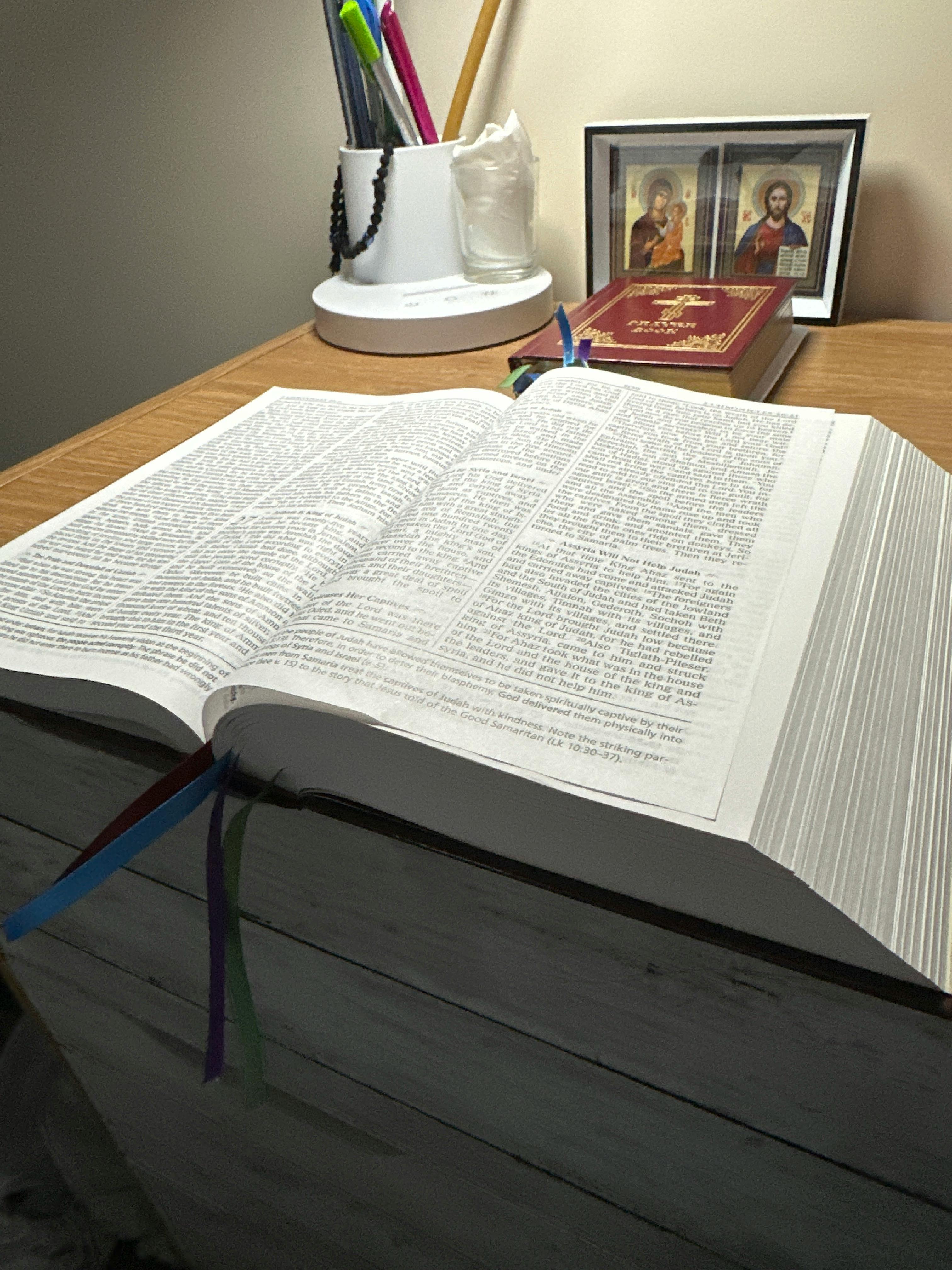
The Orthodox Study Bible, Ancient Faith Edition, Hardcover: Ancient Christianity Speaks to Today’s World
I’ve been really enjoying my Bible study times and the AFR app as my copilot Fr Alexis Cory has really brought into my life a blessing, and routine establishment.
Dino A
Verified Buyer
The Whole Counsel of God: An Introduction to Your Bible
Very informative. A blessing from God 🙏🏽
CARYL M
Verified Buyer
The Ladder of Divine Ascent (hardcover)
Wonderful!
HELEN
Verified Buyer
New Testament and Psalms: Orthodox Youth Edition
Excellent and beautiful . Thank you very much!
Christopher M
Verified Buyer
Prayer Bracelet, with "Tears of the Mother of God" (from Serbia)
A beautiful bracelet, only issue is that the string that the heads are on are very tiny and does not stretch much.
Kyriaki K
Verified Buyer
Wise Lives: Orthodox Christian Reflections on the Wisdom of Sirach
This is an excellent and concisely written commentary that we found essential to the understanding of the book of Sirach.
Bryan t cormier
Great intro to Orthodoxy!
Ask for the Ancient Paths: Discovering What Church Is Meant to Be
I'm so greatful I received this book!
 Originally Posted on Amazon
About Ancient Faith Store
At Ancient Faith Store, we are dedicated to providing a rich collection of resources that celebrate and preserve the Orthodox Christian faith. Our mission is to help individuals and families grow in their spiritual journey through a wide array of products, including books, music, icons, and gifts that reflect the beauty and depth of Orthodox Christianity.
We believe that faith is a journey, and we strive to accompany you every step of the way with materials that inspire, educate, and uplift. Whether you're looking for a profound theological work, a children’s book that teaches the values of our faith, or a beautifully crafted icon to adorn your home, you'll find it here.
Our commitment to quality and authenticity means that every item is carefully selected to ensure it aligns with the teachings of the Church. We are passionate about fostering a vibrant Orthodox community, and we invite you to explore our store to find the tools that will enrich your spiritual life and connect you more deeply to the traditions of our faith. Thank you for being a part of our journey.
Visit Website
We believe that faith is a journey, and we strive to accompany you every step of the way with materials that inspire, educate, and uplift. Whether you're looking for a profound theological work, a children’s book that teaches the values of our faith, or a beautifully crafted icon to adorn your home, you'll find it here.
Our commitment to quality and authenticity means that every item is carefully selected to ensure it aligns with the teachings of the Church. We are passionate about fostering a vibrant Orthodox community, and we invite you to explore our store to find the tools that will enrich your spiritual life and connect you more deeply to the traditions of our faith. Thank you for being a part of our journey.
Ancient Faith Store is a Verified Merchant
Questions? Contact Us
support@ancientfaith.com
800-967-7377
Mon-Fri (9am-5pm CST)
Top Rated Products
|
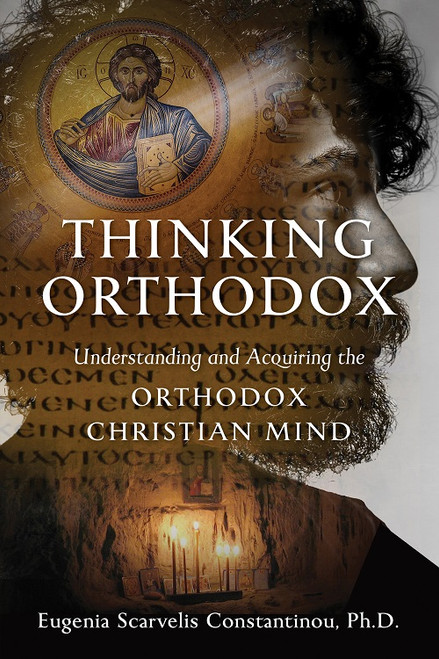
Thinking Orthodox: Unders... |
|
|
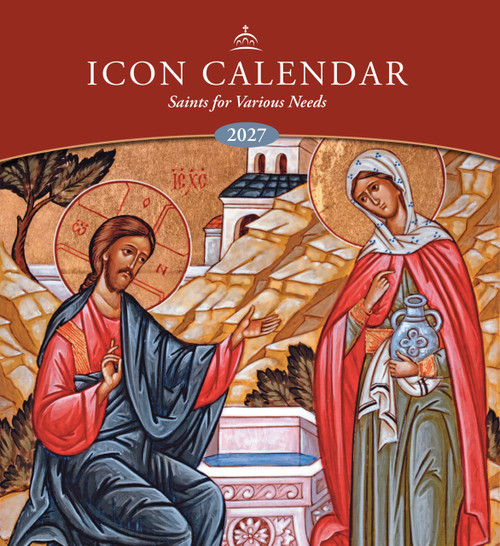
2027 Icon Calendar: Saint... |
|
|
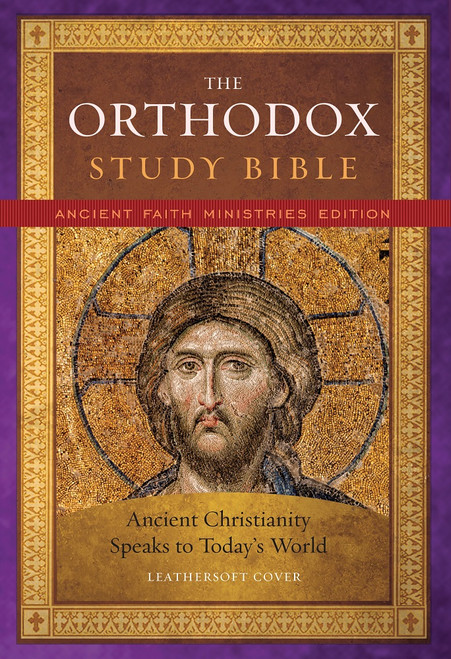
The Orthodox Study Bible,... |
|
Facebook
RaveCapture Commitment
RaveCapture transforms how businesses collect and showcase customer experiences. We take authenticity seriously and only allow 100% verified buyer reviews and UGC.
Guarantee
- RaveCapture Companies Are Held Accountable
- All Reviews Are Verified Customers
- Negative Reviews Can Never Be Deleted
With RaveCapture, you’re not just managing a reputation — you’re sharing the voice of your raving fans.
