
4.9
From 1
to 5
Reviews
7083
Recommend
10 / 10
TrustScore
9.9 / 10
Vasyl D
Verified Buyer
Memory Eternal: Living with Grief as Orthodox Christians
Great book. My opinion is that everyone should read this and remember.
Kathleen K
Verified Buyer
God Is a Man of War: The Problem of Violence in the Old Testament
A very valuable resource for how to understand some of the things that are troubling to the inquirer and the believer, and the skeptic as well. Thanks for another great book from Fr. Stephen.
MARY S
Verified Buyer
The Orthodox Study Bible, Ancient Faith Edition, Hardcover: Ancient Christianity Speaks to Today’s World
Wonderful quality. Thicker pages than the average Bible, which I appreciate. The study notes are so helpful to truly grasp the text.
SUE K
Verified Buyer
The Gospel of Mark: The Suffering Servant
Excellent study, with clear, easy to understand comments and background information. Can use alone for study, or in a group setting for discussion.
RAY R
Verified Buyer
Memory Eternal: Living with Grief as Orthodox Christians
very helpful and pertinent to my orthodox faith. tyvm
Betsey R
Verified Email
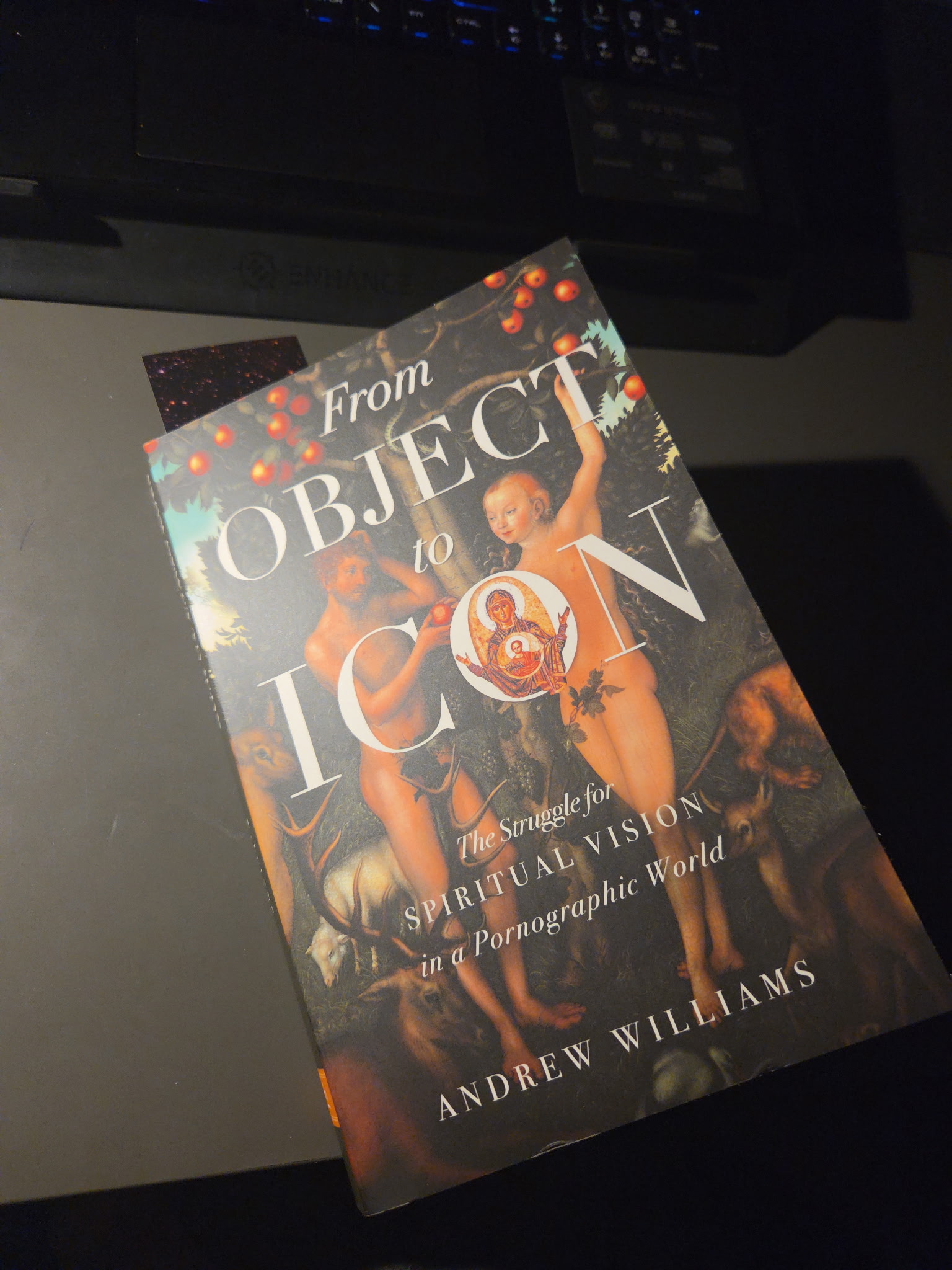
From Object to Icon: The Struggle for Spiritual Vision in a Pornographic World
I was very excited to start reading From Object to Icon: The Struggle for Spiritual Vision in a Pornographic World by Andrew Williams, especially when I heard that this book was not just for pornography addicts. As we find out in the book, pornography is simply a symptom of a much wider problem – not viewing people (including ourselves) as icons of Christ. As a recent convert to Orthodox Christianity, I am eager to see the world in new ways, especially if it will help me to love God and my neighbors better. I suspected this work would help me do so, but it has even gone beyond that. I have learned more about icons and the reasons behind venerating them – why they are so necessary to Orthodoxy and an Orthodox phronema.
There are also several chapters devoted to the masks we create that keep us separated from our neighbors and the path toward communion – whether it be healing/wholeness, an iconographic vision of God’s creation, or ultimately, theosis. In preparation for communion, in all its meanings, we must confess and reveal our true face by removing our masks. It truly was an answer to prayer to read the chapter about confession, which talks about confessing our true faces, not simply the deeds we have done or not done.
Another thing that impressed me is how Mr. Williams identifies with the reader. Mr. Williams explains about his usage of the first person in the book and how we need to identify with all sorts of sins that, on the surface, we may think we’re not guilty of but really are.
I have also found that the author did a podcast for AFR called Finding the Freedom to Live, which seems to cover a lot of the book’s content, but I haven’t listened to all of the episodes yet. It is a great supplement to the printed book, which surprises me because I am a usually retain information better from printed material. Even after listening to the podcast, I imagine I will be re-reading the book at least one more time so I can further internalize this important shift in mindset for me.
MICHAEL B
Verified Buyer
Indication of the Way into the Kingdom of Heaven: An Introduction to Christian Life (St. Innocent)
Prayer can change your life... This book helped open my heart to prayer
MICHAEL B
Verified Buyer
Courage to Pray (Metropolitan Anthony Bloom)
Prayer can change your life. Please pray for us Metropolitan Bloom.
Angela H
Verified Email
The Lost Saint
I was looking for a book that my son and I could read together. Thank God I found this book! We aren't done with it because we only read a chapter a day but man do I want to finish it already. Such a great book so far. I can't wait to get to the next chapter tomorrow. I hope the author writes more like this!
John E
Verified Email
From Object to Icon: The Struggle for Spiritual Vision in a Pornographic World
Pornography is increasingly a powerful force in our modern world. However, the pornographic mindset that Williams describes is even more prevalent.
The main structure of the book sets pornography against iconography as antithetical worldviews.
A man who sees pornographically sees the whole world as object, including himself. To see iconographically, on the other hand, is to see through the veil of material things and physical people, to the deeper realities underlying them, and ultimately to God.
Williams does a really good job developing these ideas, and elaborates by using a comparison to masks (pornographic mindset) and veils (iconographic mindset).
To wear a mask is to hide, disfigure, deceive, or obscure reality.
To wear a veil is to invite, to reveal intentionally, to trust and rely on the deeper realities of life.
The essence of these two worldviews then, are sexual pornography on the one hand, and icons of saints, Christ, and the Theotokos on the other hand.
Porn is the complete objectification of the other, and as Williams points out, ultimately objectification of the self.
Icons within the church, however, are images that are made to convey spiritual truths and realities far beyond the wood and paint that compose them physically.
Our goal then, according to Williams, is to pursue an iconographic vision to the extent that we begin to see the whole world this way. That each person we run into would be an icon of Christ to be venerated and loved.
This is a great book, and Williams does a very good job of maintaining a humble and edifying tone while discussing a very challenging topic.
EMERALD
Verified Buyer
The Orthodox Study Bible, Ancient Faith Edition, Hardcover: Ancient Christianity Speaks to Today’s World
Such a beautiful cover and lots of helpful footnotes, that tie the Old Testament with the New.
SANDRA F
Verified Buyer
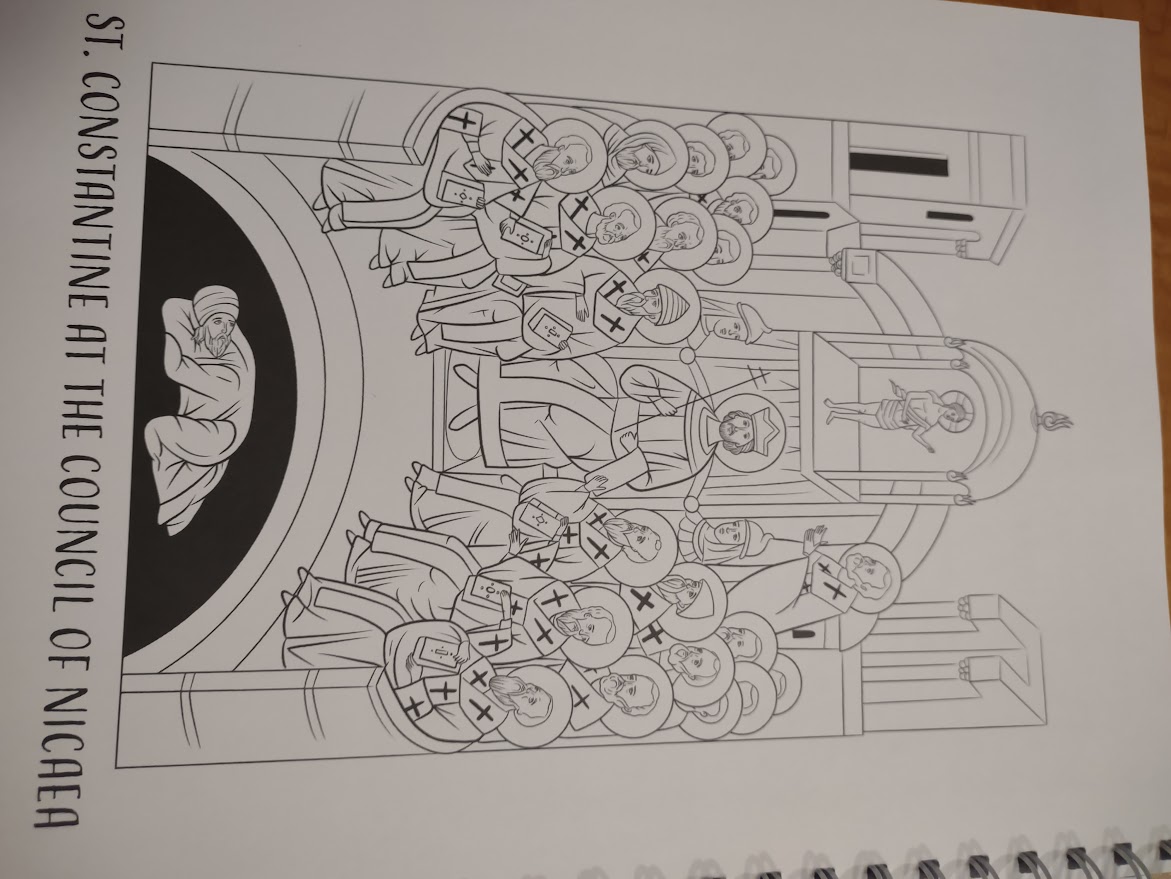
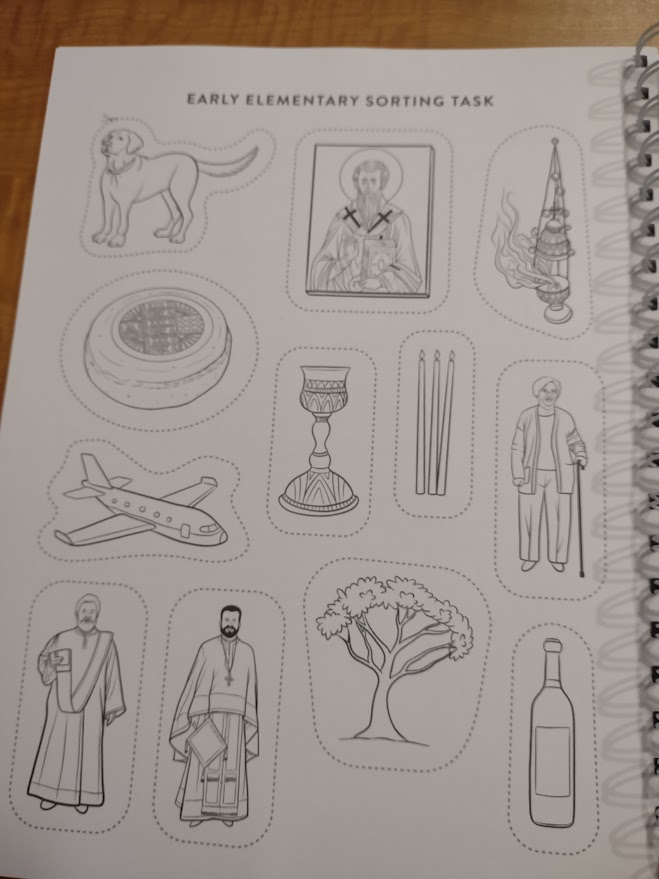
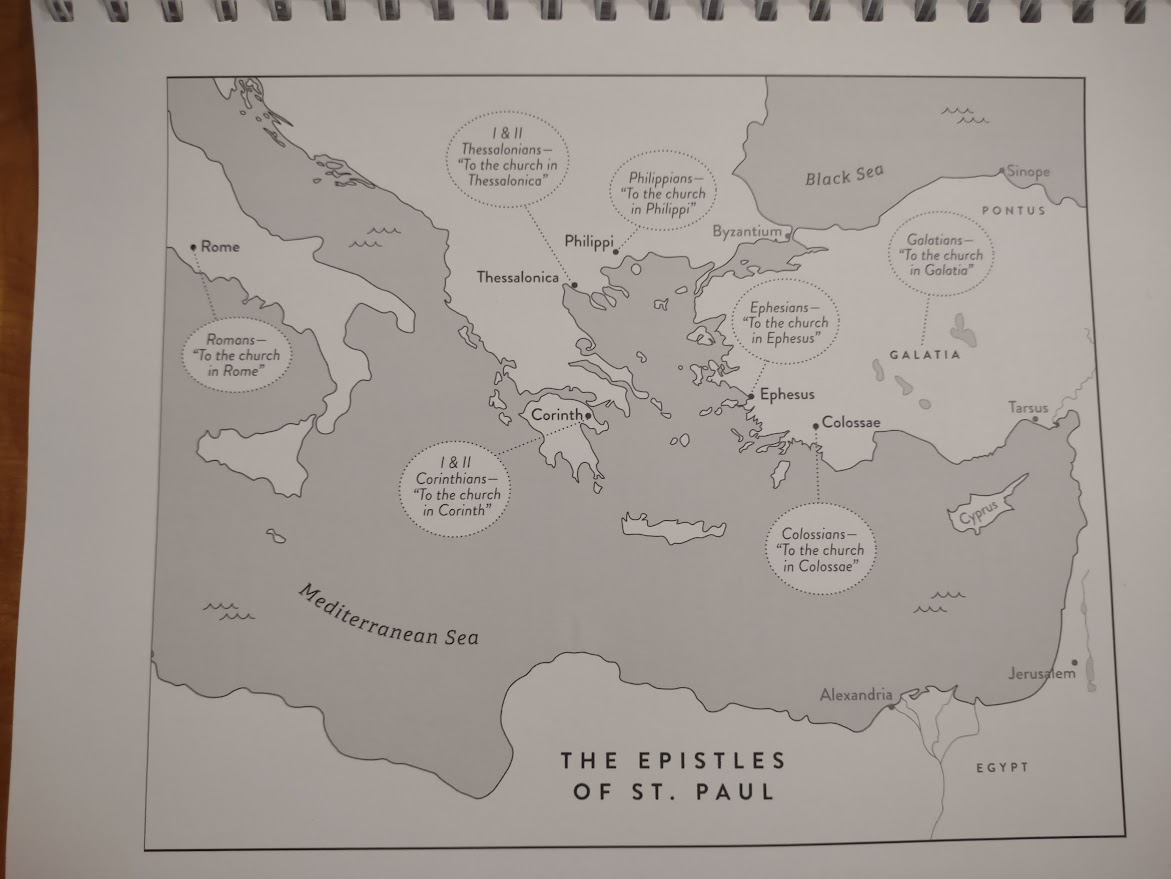
Beautiful Things: An Orthodox Coloring Book for Children
It’s beautiful. I wish it had moreOrthodox specific pages for Church School teaching.
SAINT D
Verified Buyer
Padre Arsenio, 1893–1973: Sacerdote, Prisionero, Padre Espiritual
It is rare to find Orthodox Christian literature in Spanish. It is rarer to find Orthodox Christian literature of this quality, and in Spanish. Thank you for making this publication available for Orthodox Christians, who are sometimes frustrated about their inability to find material in the language in which they are most comfortable.
DAVID R
Verified Buyer
Paradise and Utopia 4-Book Set (The Age of Paradise, The Age of Division, The Age of Utopia, and The Age of Nihilism)
This series provides the perspective orthodox, and all Christians, need for these times.
DAVID R
Verified Buyer
From Object to Icon: The Struggle for Spiritual Vision in a Pornographic World
This book deserves more than one reading. I has between its covers small group discussions especially fot those with maturing youngsters at home.
DARINE E
Verified Buyer
Mother of the Light & Light of the World 2-Book Set
Beautiful prayer books
Shawn J
Verified Buyer
Orthodox Christian Prayers
Great prayer book! I use it everyday!
GREGORY C
Verified Buyer
From Object to Icon: The Struggle for Spiritual Vision in a Pornographic World
Excellent
Gabriel T
Verified Email
The Prayer of a Broken Heart: An Orthodox Christian Reflection on African American Spirituality
Fr. Paul Abernathy’s “The Prayer of a Broken Heart” is an exploration of the Black Church, the protestant church that rose from the black slave population in the antebellum south of the United States. It appears that Fr. Paul’s intended audience are Orthodox Christians, endeavoring to inform them about black church and drawing parallels with their spiritual practice with Orthodox practices, though the primary emphasis is the “spirituality” of these practices, as the Black church was a decidedly “low church” in it’s worship. The most troubling thing about this entire analysis is that it is examined in the lens of “Black Liberation Theology”, an ideology derived from the Marxist “Liberation Theology”.
Through out Fr. Paul’s book, the Black American population is explicitly depicted as morally superior to their white counterparts, whether they are in the era of slavery or contemporary times. Following the pattern of Black Liberation Theology, Black Americans are an “oppressed” class, thus they are inherently morally superior to ethnic groups who are more privileged, such as whites. The end result is that you have Fr. Paul talking about Blacks as a spiritually enlightened, soulful, almost fairy-like people, and Whites are brutish, carnal, mean savages who just can’t understand Black’s spiritual character. Fr. Paul goes to great length to give unconvincing arguments on how the Black Church is closer to Orthodoxy than it’s White Protestant counterparts, a futile and pointless line of argumentation, particularly because the Black Church origins lie in the Protestant White Churches and have inherited all their theological heresies.
Even this analysis of the Black Church is quite surface, as something as fundamental as their theological beliefs are not covered. Some historical names and dates are brought up, the practice of spirituals, and many accounts of black slaves being abused by their masters are referenced, but all at a very quick pace. Strangely enough, Fr. Paul tries to argue that the Black African Pagan Religions play a part in the Black Church’s practices more closely resembling Orthodox practices than it’s White counterpart. Even in this misguided effort, he is exceedingly vague in describing these pagan practices; let alone inaccurate, as witchcraft plays a major role in many of these pagan traditions and that fact is suspiciously absent in Fr. Paul’s analysis.
Dr. Albert J. Raboteau (+ 2021) serves as his biggest source when it comes to analyzing the African Pagan traditions and synching up parallels with Orthodoxy, he himself being an Orthodox Convert. The treatment of the subject is far from holistic, as we are given seven isolated attributes that relate the paganism to Orthodoxy. In a vacuum, many religious systems can have similar parallels, especially because they are removed from their context; for example, the practice of asking for intercessions of ancestor is a pagan parallel offered, similar to intercessions asked of the saints in Orthodoxy; what is glanced over is that these intercessions are also requested to “spirits”; what Orthodoxy would equate to demons. I believe one can find practices in pagan religions that can more closely resemble Orthodoxy than Protestantism and it’s select heresies, but this biased, unbalanced and shallow examination of the topic is careless and is done as an attempt to show the Black African as spiritually superior to Whites.
A special mention should go to Fr. Paul’s coverage of contemporary Black American Issues; the high crime and dysfunctional family unit that characterizes the underprivileged black neighborhoods is solely due to racism and nothing more. The sins of one people group (Whites) is responsible for the sins of another people group (Blacks). High incarceration rate of Blacks is the equivalent of slavery according to Fr. Paul. It’s Black Liberation Theology on full display and no where present is the spirit of Orthodoxy Christianity.
A pernicious element of this book is that the author never explicitly names or references his ideology; he never lets the reader know that he is writing a work promoting Black Liberation Theology, and that is what informs his world view. Within the text Fr. Paul cites various Orthodox saints to exposit Orthodox Theology, in an attempt to draw parallels between the black church and Orthodoxy, but his Ideological talking points are not given the same treatment. As he hold two masters degrees, I don’t suspect he has no familiarity with the academic origins if his ideology, particularly because Black Liberation Theology is very invested in discussing the origins of the black church. Fr. Paul is clandestinely feeding his Orthodox audience Black Liberation Theology, hoping they won’t realize it.
Lastly, Fr. Paul’s prose is dreadfully dull. It’s overtly pretentious, repeating itself often and doesn’t have the slightest hint of subtly or discretion. Some of the mundane scenarios he describes in his pastoral experience has such absurd, gratuitously melodramatic language it borders upon parody. As the foundation philosophy of the book is not explicitly stated, many presuppositions of Black Liberation Theology are presented as a given, making Fr. Paul Abernathy come across as a rank propagandist. He also reproduces text from other sources without providing a proper citation or quotation, which is a hallmark of lazy writing.
In conclusion, this book is a piece of Black Liberation Theology propaganda, as this wicked, unchristian ideology attempts to worm it’s way into Orthodox Christianity through Fr. Paul Abernathy’s Book. This is a harmful title and should be avoided at all costs.
Ben
Verified Email
From Object to Icon: The Struggle for Spiritual Vision in a Pornographic World
While on the surface this appears to be a book about pornography, on a far deeper level, it is about how to see. "From Object to Icon" teaches how to see the world iconographically, including how to see people. It does this by observing the ways in which pornography is a kind of negative iconography. From this we can learn to see the world iconographically, as through a veil, in order to better see God and His creation. Not only is this a wonderful book for those struggling with pornography or who are close to someone who struggles, but frankly it is a wonderful book for anyone to better understand the role of icons in the Orthodox Church. More so, as mentioned above, it is a wonderful book for those who want to learn how to see the world for what it is: a mystical revelation of God. The book also does a wonderful job of showing how disordered desires do not need to be suppressed but rather transfigured by seeing the world iconographically. When the world is an icon, everyone we meet becomes an opportunity for communion, rather than consumption. I cannot recommend this book highly enough!
About Ancient Faith Store
At Ancient Faith Store, we are dedicated to providing a rich collection of resources that celebrate and preserve the Orthodox Christian faith. Our mission is to help individuals and families grow in their spiritual journey through a wide array of products, including books, music, icons, and gifts that reflect the beauty and depth of Orthodox Christianity.
We believe that faith is a journey, and we strive to accompany you every step of the way with materials that inspire, educate, and uplift. Whether you're looking for a profound theological work, a children’s book that teaches the values of our faith, or a beautifully crafted icon to adorn your home, you'll find it here.
Our commitment to quality and authenticity means that every item is carefully selected to ensure it aligns with the teachings of the Church. We are passionate about fostering a vibrant Orthodox community, and we invite you to explore our store to find the tools that will enrich your spiritual life and connect you more deeply to the traditions of our faith. Thank you for being a part of our journey.
Visit Website
We believe that faith is a journey, and we strive to accompany you every step of the way with materials that inspire, educate, and uplift. Whether you're looking for a profound theological work, a children’s book that teaches the values of our faith, or a beautifully crafted icon to adorn your home, you'll find it here.
Our commitment to quality and authenticity means that every item is carefully selected to ensure it aligns with the teachings of the Church. We are passionate about fostering a vibrant Orthodox community, and we invite you to explore our store to find the tools that will enrich your spiritual life and connect you more deeply to the traditions of our faith. Thank you for being a part of our journey.
Ancient Faith Store is a Verified Merchant
Questions? Contact Us
support@ancientfaith.com
800-967-7377
Mon-Fri (9am-5pm CST)
Top Rated Products
|
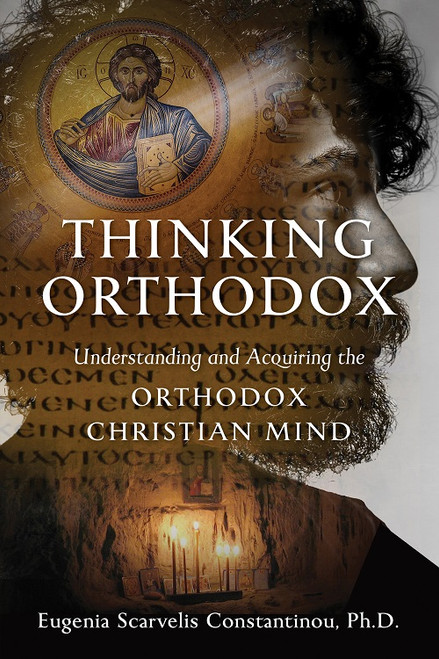
Thinking Orthodox: Unders... |
|
|
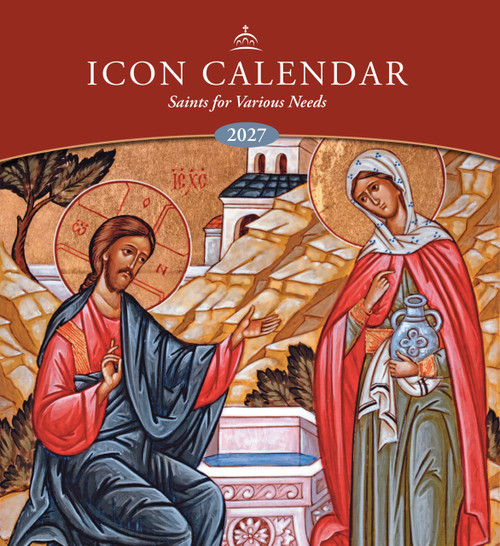
2027 Icon Calendar: Saint... |
|
|
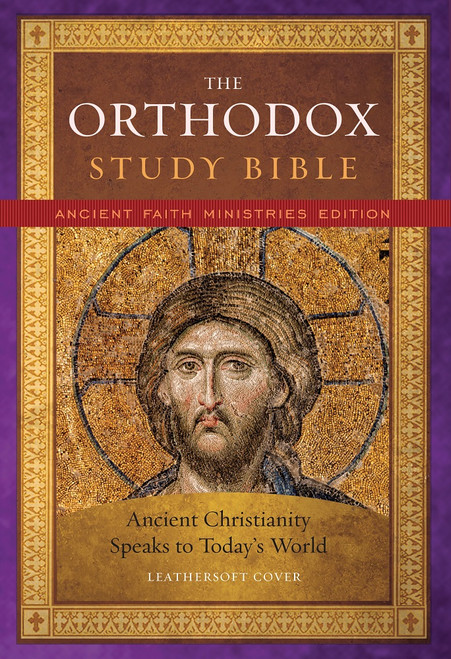
The Orthodox Study Bible,... |
|
Facebook
RaveCapture Commitment
RaveCapture transforms how businesses collect and showcase customer experiences. We take authenticity seriously and only allow 100% verified buyer reviews and UGC.
Guarantee
- RaveCapture Companies Are Held Accountable
- All Reviews Are Verified Customers
- Negative Reviews Can Never Be Deleted
With RaveCapture, you’re not just managing a reputation — you’re sharing the voice of your raving fans.
